Market & Regulation
Big Five Publishers Use AI Behind Closed Doors
WIRED AIhigh confidence
Why it matters
- →Reveals a significant hypocrisy between public anti-AI PR and internal enterprise adoption at major media firms.
- →Highlights emerging risks of using open LLMs with unpublished manuscripts, raising serious copyright concerns.
- →Signals that AI is moving from experimental tools to core operational workflows in creative industries.

Internal reports indicate that major US publishers HarperCollins, Simon & Schuster, and Hachette are using generative AI for editorial and marketing tasks despite public anti-AI stances. Employees report LLMs being used to draft back-cover copy, design covers, and write rejection emails, often without author consent. Staff resistance has grown due to concerns over data privacy, ethical implications, and increased workloads following layoffs. The company spokespeople maintain that AI is for operational support only, but worker accounts suggest widespread integration into core creative processes.
Read originalThe story around this
TopicAmazon Artificial Intelligence
Earlier coverage that leads up to this article, and what followed. Lines connect each piece to the closest one after it, converging here.
How we got here
- 1Google sued by publishers over AI training practices
TechCrunch AI · July 14, 2026 · Background
- 2Artists Challenge AI Firms Over Copyright Violations
The Verge AI · July 29, 2026 · Background
- 3AI Detectors Fuel Distrust in Writing
The Verge AI · August 9, 2026 · Background
- 4Amazon Uses Rare Books for AI Training
TechCrunch AI · August 17, 2026 · Background
- 5Pangram: AI Detection Startup Gains Prominence
WIRED AI · September 2, 2026 · Background
- 6UK Startup Launches 'Organic' Human-Authored Book Certification
WIRED AI · October 7, 2026 · Background
More from WIRED AI
 © WIRED AI
Researchagents
Researchers Drive Car with GPT-6 Astra
Three engineers at Axiom proved that general-purpose language models can control physical hardware without task-specific training. By linking OpenAI’s GPT-6 Astra to a Toyota Corolla’s steering system, they navigated the vehicle through an In-N-Out drive-thru using only prompt engineering and camera input. While the car moved slowly and required a safety driver, the experiment reveals that multimodal models are developing emergent spatial reasoning capabilities previously thought to require dedicated robotics stacks. This blurs the line between digital assistants and physical agents, suggesting that scaling text-and-image training yields unexpected real-world utility.
WIRED AI
 © WIRED AI
Models & Labsother
OpenAI launches GPT-6 with interactive 'Intelligent UI'
OpenAI is shifting ChatGPT from static text to dynamic, interactive interfaces powered by the new GPT-6 model. The update generates custom tools like calculators and clickable diagrams directly within the chat, moving beyond simple image insertion. This generative UI approach mirrors Google’s recent Search updates but targets OpenAI’s massive user base immediately. It marks a tangible step toward AI-generated software components rather than just content generation. Users can now interact with data through sliders and maps instead of reading about them.
WIRED AI
 © WIRED AI
Market & Regulationbusiness
Pentagon Speeds AI Procurement With 5-Minute Video Pitches
The Pentagon’s Tradewinds program is bypassing months of red tape by letting companies pitch AI tools in five-minute videos for immediate 'post-competitive' status. This shift allows the military to award contracts in under a week, targeting OpenAI, Anthropic, and Google directly rather than traditional defense primes. The move signals a desperate attempt to inject competition into a market dominated by Silicon Valley giants who now hold more leverage than the government itself. While it accelerates deployment for lethal AI agents, it also raises serious transparency concerns about unreported 'other transaction' spending.
WIRED AI
More in Market & Regulation
 © TechCrunch AI
Investment · $870M
Market & Regulationbusiness
TypeSafe AI raises $870M for non-text model Jev
TypeSafe AI’s $870 million raise signals a pivot away from the text-generation arms race toward structured decision-making. Jev bypasses LLMs entirely, outputting calibrated probabilities instead of tokens to automate enterprise workflows faster and cheaper. With claims that a third of Fortune 500 companies are already using it, this validates a niche but high-value market for non-linguistic AI. The funding from Andreessen Horowitz and Sequoia confirms investors are betting on automation over conversation.
TechCrunch AI
 © Lev Selector
Market & Regulationbusiness
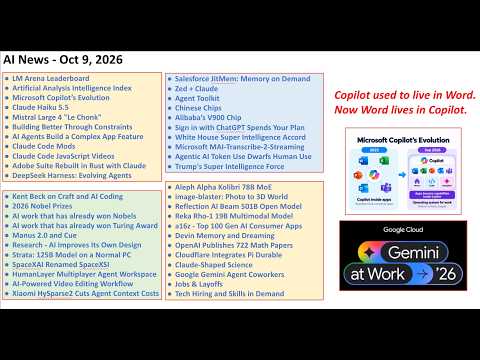
White House Announces Super Intelligence Accord
The White House has introduced a new 'Super Intelligence Accord' alongside the formation of a dedicated Super Intelligence Force.
Lev Selector
© Lev SelectorMarket & Regulationbusiness
Alibaba Unveils V900 AI Chip
Alibaba announces its new V900 semiconductor chip, expanding domestic supply for AI training and inference workloads.
Lev Selector