Models & Labs
NVIDIA Uses Vera CPU to Enhance Chip Design
NVIDIA Bloghigh confidence
Why it matters
- →NVIDIA's use of Vera CPU highlights the role of high-performance CPUs in accelerating chip design workflows.
- →Early results show significant performance gains in critical EDA applications, potentially reducing design time.
- →This approach creates a feedback loop that could continuously improve NVIDIA's silicon design processes.
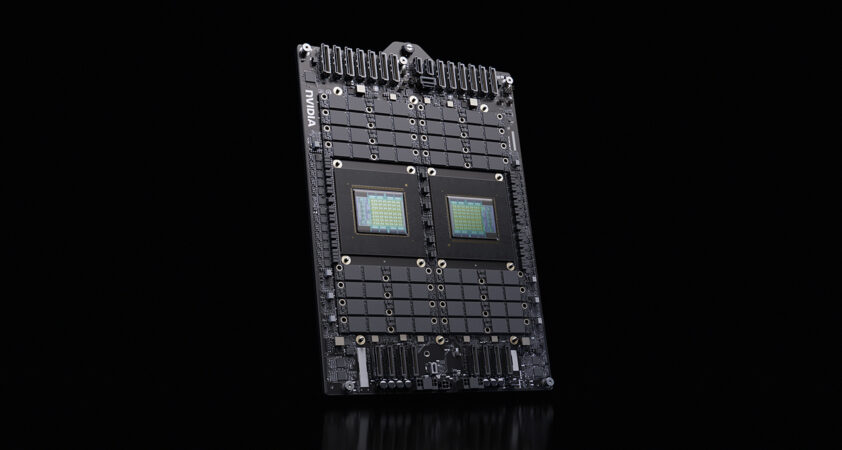
NVIDIA is deploying its Vera CPU to speed up the design of its next-generation CPUs and GPUs, working with Cadence and Synopsys to optimize electronic design automation (EDA) applications. The Vera CPU, featuring 88 custom cores and a high-efficiency memory subsystem, is showing promising results in early tests, with up to 1.5x performance improvements in critical EDA workloads. This initiative reflects NVIDIA's strategy to use high-performance CPUs alongside GPUs and AI to enhance the overall chip design cycle. The company plans to continue this approach with future CPUs, creating a continuous improvement loop in its design processes.
Read originalThe story around this
Earlier coverage that leads up to this article, and what followed. Lines connect each piece to the closest one after it, converging here.
More in Models & Labs
Models & Labsother
llama.cpp b11193 adds Snapdragon Hexagon and ROCm 10
This release quietly expands llama.cpp's hardware support to include Qualcomm's Hexagon NPU on Linux arm64, a significant step for local inference on Snapdragon devices. It also updates CUDA builds to version 13.4 and introduces ROCm 10.0 binaries, keeping the project aligned with the latest NVIDIA and AMD driver ecosystems. KleidiAI on Apple Silicon is temporarily disabled in this build, likely due to stability checks rather than a feature rollback. For developers targeting edge AI or diverse GPU stacks, this update ensures broader compatibility without requiring custom compilation.
llama.cpp Releases
 © Lev Selector
Models & Labsmodels
NVIDIA NVFP4 and SoL-Pi Token Efficiency
NVIDIA introduced the NVFP4 4-bit format and SoL-Pi technology, which uses 2x fewer tokens for improved efficiency.