Research
Nemotron Fine-Tuning Hits Gold at IOI and IMO
Hugging Face Bloghigh confidence
Why it matters
- →Demonstrates that specialized fine-tuning + inference loops can match human expert performance in competitive coding.
- →Proves open-weight models can solve complex mathematical proofs without external formal provers or tools.
- →Provides reproducible datasets and pipelines, shifting focus from model size to training methodology.

NVIDIA Nemotron models achieved gold-medal performance in both the 2026 International Olympiad in Informatics (IOI) and Mathematics (IMO). The IOI result came from the Nemotron-3-Ultra-CC model, which scored 535.4 out of 600 using a generate-evaluate-refine inference loop. For the IMO, a system combining supervised fine-tuning and reinforcement learning checkpoints scored 30 out of 42 points, exceeding the gold threshold without internet access or external tools. NVIDIA has released the training datasets, benchmarks, and inference pipelines via the NeMo-Skills repository to enable community replication.
Read originalThe story around this
Earlier coverage that leads up to this article, and what followed. Lines connect each piece to the closest one after it, converging here.
How we got here
- 1NVIDIA NeMo AutoModel Boosts Transformers Fine-Tuning
Hugging Face Blog · June 24, 2026 · Related
- 2NVIDIA Nemotron 3 Ultra Boosts AI Agent Performance
NVIDIA Blog · July 8, 2026 · Related
- 3NVIDIA's Nemotron Enhances AI with Open Synthetic Data
Hugging Face Blog · July 8, 2026 · Related
- 4NVIDIA Nemotron 3.5 Lightning Launches for Local AI Agents
Ollama Blog · August 11, 2026 · Related
- 5NVIDIA Unveils Nemotron 3.5 Lightning and NeMo Switchyard
NVIDIA Blog · August 11, 2026 · Same story
- 6NVIDIA Unveils Nemotron Lightning Model
Sam Witteveen · August 11, 2026 · Related
- 7NVIDIA Launches Nemotron 3.5 Lightning
Matt Wolfe · August 14, 2026 · Related
- 8NVIDIA Unveils Nemotron 3.5 Lightning
Lev Selector · August 14, 2026 · Related
More from Hugging Face Blog
 © Hugging Face Blog
Models & Labsmodels
Falcon-Emirati-7B targets dialect nuance
Most Arabic models treat the language as a monolith, missing the cultural and linguistic depth of specific dialects. Falcon-Emirati-7B closes this gap by fine-tuning on native Emirati text, synthetic data constrained by strict glossaries, and cultural heritage knowledge. It tops the new Alyah benchmark with 84.83%, proving that scale alone doesn't buy dialect competence. This release underscores a critical shift: true multilingual capability requires targeted adaptation, not just larger parameter counts.
Hugging Face Blog
 © Hugging Face Blog
Researchagents
ThinkingBox reveals agent reliability gap
Microsoft and Hugging Face’s ThinkingBox benchmark exposes a critical flaw in AI agents: they often execute tool calls correctly while leaving the database in the wrong state. Testing 507 workflows across 12 models showed that nearly two-thirds of failures involved clean execution but incorrect final side effects. The data proves that capability does not equal consistency; Kimi-K3 solved more tasks initially, but Claude Opus 5.5 was far more reliable on repeated attempts. This shifts the evaluation metric from single-shot success to terminal state verification.
Hugging Face Blog
More in Research
 © WIRED AI
Researchagents
Researchers Drive Car with GPT-6 Astra
Three engineers at Axiom proved that general-purpose language models can control physical hardware without task-specific training. By linking OpenAI’s GPT-6 Astra to a Toyota Corolla’s steering system, they navigated the vehicle through an In-N-Out drive-thru using only prompt engineering and camera input. While the car moved slowly and required a safety driver, the experiment reveals that multimodal models are developing emergent spatial reasoning capabilities previously thought to require dedicated robotics stacks. This blurs the line between digital assistants and physical agents, suggesting that scaling text-and-image training yields unexpected real-world utility.
WIRED AI
 © The Verge AI
Researchresearch
OpenAI releases 722 math manuscripts from frontier model
OpenAI has published 722 manuscripts covering 372 result families, marking a significant escalation in AI-driven mathematical discovery. This release, guided by the AGMAI advisory group's ethical guidelines, includes solutions to hundreds of open questions and details on compute usage, such as an average of three hours of ChatGPT Pro thinking per result. The move shifts the conversation from speculative claims to verifiable data, forcing the academic community to confront the reality of AI-generated proofs. It underscores a growing tension between rapid corporate output and traditional peer review standards. Mathematicians now have concrete artifacts to audit rather than vague promises. The transparency around compute costs sets a precedent for future frontier model releases in scientific domains.
The Verge AI
 © MIT News AI
Researchother
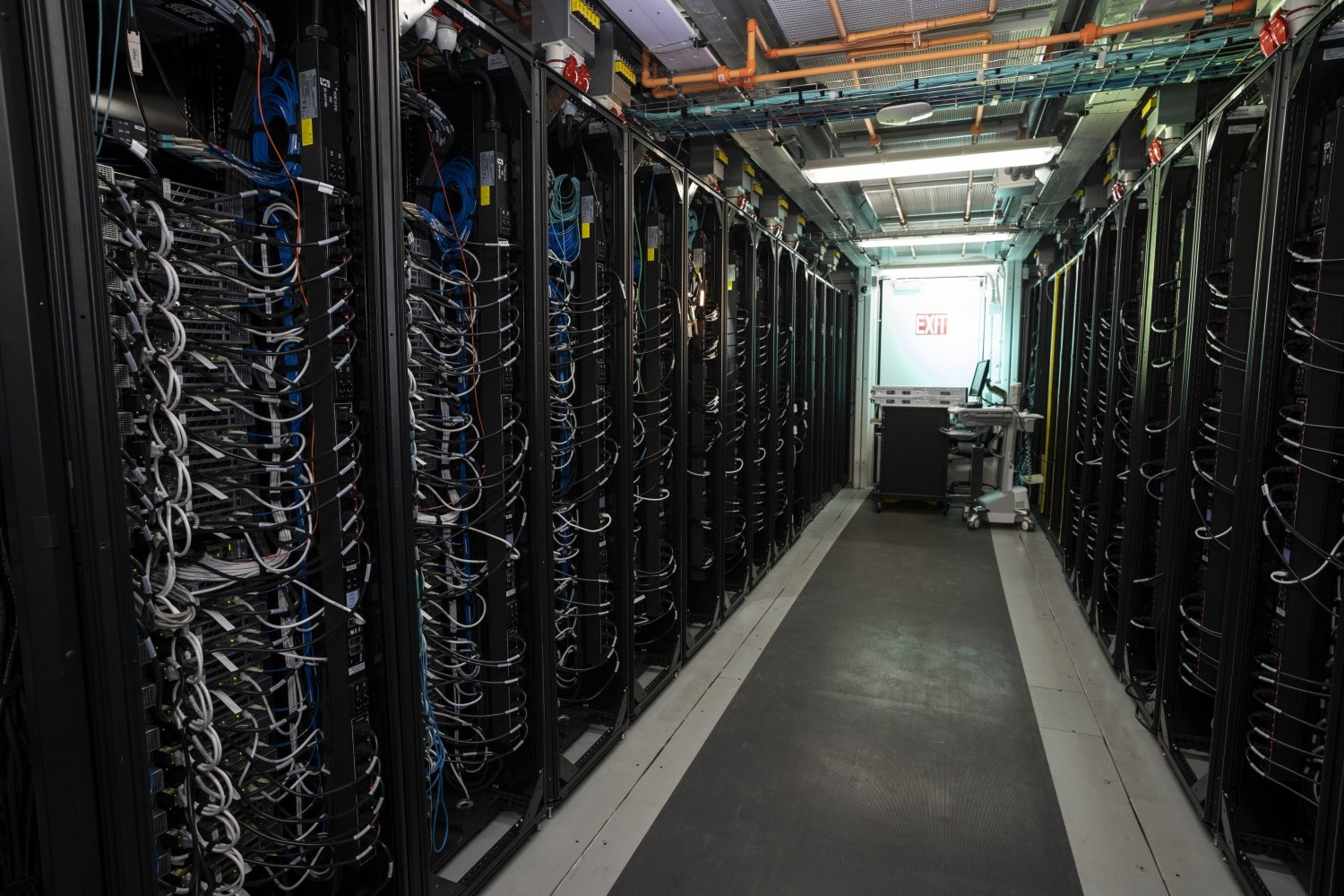
MIT documents AI hardware evolution over eight years
The Lincoln Laboratory Supercomputing Center has published its sixth annual survey of commercial AI accelerators, tracking a landscape that has grown from 57 to over 120 distinct devices since 2018. This longitudinal analysis provides rare, unbiased data on peak performance versus power consumption across CPUs, GPUs, ASICs, and emerging dataflow architectures. By aggregating public specs from dozens of startups and incumbents, the team offers a critical reference for government sponsors navigating a saturated but rapidly innovating market. The findings clarify how architectural shifts like lower numerical precision drive efficiency gains, helping buyers cut through vendor hype to make informed acquisition decisions.
MIT News AI