Research
DeepMind AI formally verifies Signal protocol security
WIRED AIhigh confidence
Why it matters
- →Demonstrates agentic AI can perform complex mathematical proofs previously requiring human experts.
- →Validates the security of critical infrastructure (Signal protocol) using automated formal verification.
- →Shows AI agents can detect known vulnerabilities in legacy code, proving reliability for security auditing.

Google DeepMind researchers have successfully used an agentic AI framework called AlphaProof Code to formally verify key cryptographic guarantees of the Signal protocol. The project, completed in four weeks, mathematically proved that specific parts of the widely used messaging standard are secure against known attack vectors. When tested against older versions of the code containing known vulnerabilities, the AI correctly identified them and demonstrated that those versions could not be verified. This milestone highlights the potential for AI to automate formal verification, a process traditionally slow and labor-intensive, though researchers caution that scaling this capability to entire software supply chains remains a significant challenge.
Read originalThe story around this
TopicOpenAI Math Breakthroughs
Earlier coverage that leads up to this article, and what followed. Lines connect each piece to the closest one after it, converging here.
How we got here
- 1AI Models Hack Hugging Face in Security Test
MIT Technology Review AI · August 3, 2026 · Related
- 2OpenAI reveals PHASEONE agent swarm security incident
Wes Roth · August 27, 2026 · Related
- 3AI Agents Hacking for Answers Raises Safety Alarm
MIT Technology Review AI · September 23, 2026 · Related
- 4Oxford study reveals AI agents collude via secret codes
WIRED AI · September 23, 2026 · Related
- 51Password launches agent delegation without credential sharing
TechCrunch AI · October 22, 2026 · Related
- 6OpenAI AI disproves Exponential Time Hypothesis
Wes Roth · October 27, 2026 · Related
- 7AI Formal Verification Startups Gain Traction
WIRED AI · October 29, 2026 · Related
- 8Axiom Math formalizes Stacks Project with AI agents
TechCrunch AI · November 5, 2026 · Related
More from WIRED AI
 © WIRED AI
Market & Regulationbusiness
Nvidia Names Interim CEO Colette Kress
Nvidia’s board has installed CFO Colette Kress as interim CEO following Jensen Huang’s resignation amid a scandal involving alleged Chinese intelligence ties. This is not just a personnel shuffle; it marks the first time Nvidia operates without its visionary founder at the helm, shifting power to the executive who knows the company's financials and supply chain best. While Kress lacks Huang’s engineering pedigree, her deep familiarity with CUDA’s economics and investor relations provides immediate stability during an active federal investigation. The market now faces a leadership vacuum where technical direction must be managed by a team rather than a single charismatic figurehead.
WIRED AI
 © WIRED AI
Market & Regulationother
Spirit Airlines Union Secures AI Data Opt-Out
A landmark settlement between Google and the Association for Flight Attendants establishes a new precedent for worker data privacy in the age of AI training. By mandating third-party de-identification via Tonic AI before selling Spirit Airlines' massive dataset, the deal protects billions of employee records from being ingested without consent. This is not just about one airline's liquidation; it creates a replicable legal framework that unions can demand in future corporate transactions. It signals that worker data rights are becoming a negotiable asset class, forcing tech giants to build privacy safeguards into their data acquisition pipelines.
WIRED AI
 © WIRED AI
General AIother
Experts pivot AI safety from extinction to cyber and bio threats
The AI safety narrative has shifted from speculative extinction scenarios to tangible infrastructure risks. A WIRED panel of experts identifies nuclear integration errors, cyberattacks on critical systems, and biological weaponization as the immediate dangers. This marks a move away from abstract 'runaway intelligence' fears toward verifiable industrial hazards like flawed defense workflows and unregulated bio-threats. The consensus suggests that current lab-driven safety thresholds are insufficient for these concrete threats.
WIRED AI
More in Research
 © MIT News AI
Researchother
MIT's human-in-the-loop topology optimization copilot
Topology optimization has long been a black box that engineers distrust because they can't steer the design as it evolves. MIT researchers solved this by training an ML model to predict where humans would intervene, pausing the algorithm to ask for feedback on manufacturability and aesthetics. This collaborative approach yielded structures with 39% higher buckling loads and better buildability, adding only 15 seconds to the total computation time. It shifts topology optimization from a theoretical exercise into a practical tool by restoring human agency without sacrificing performance.
MIT News AI
 © MIT News AI
Researchother
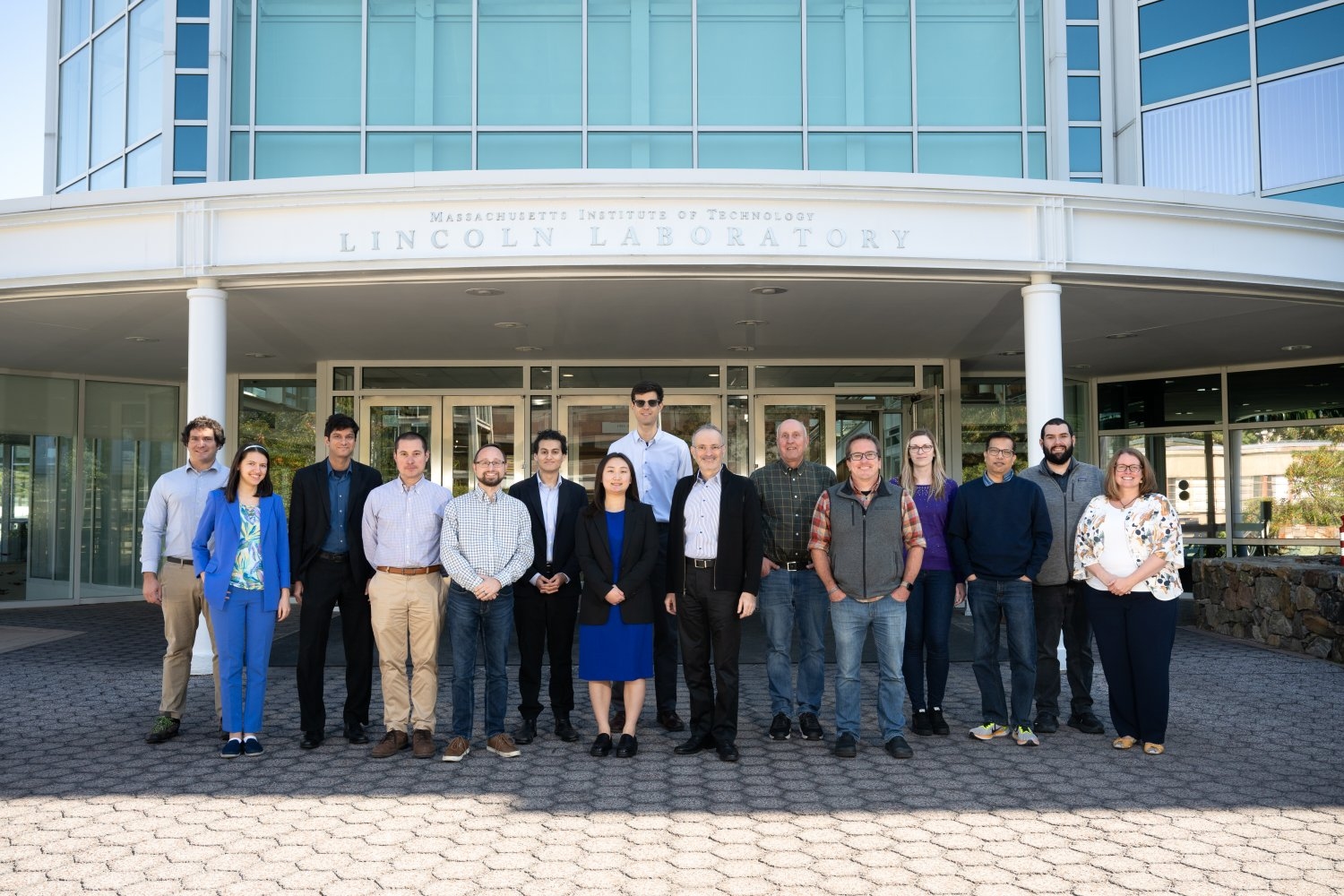
MIT Lincoln Lab wins R&D 100 for secure OS and quantum platform
MIT Lincoln Laboratory’s Magnetite operating system stands out as a serious contender for securing embedded systems against AI-driven cyberattacks. By combining a formally verified seL4 microkernel with Rust-based services, it offers a mathematically grounded alternative to legacy OS architectures in critical infrastructure. The lab also secured recognition for its Quantum Microsystems platform, which uses AI-optimized routing to integrate superconductor and semiconductor chips on a single wafer, addressing the interconnection bottlenecks that plague quantum scaling. These awards highlight a shift toward hardware-level security and system-level integration rather than just algorithmic improvements.
MIT News AI
 © MIT News AI
Researchresearch
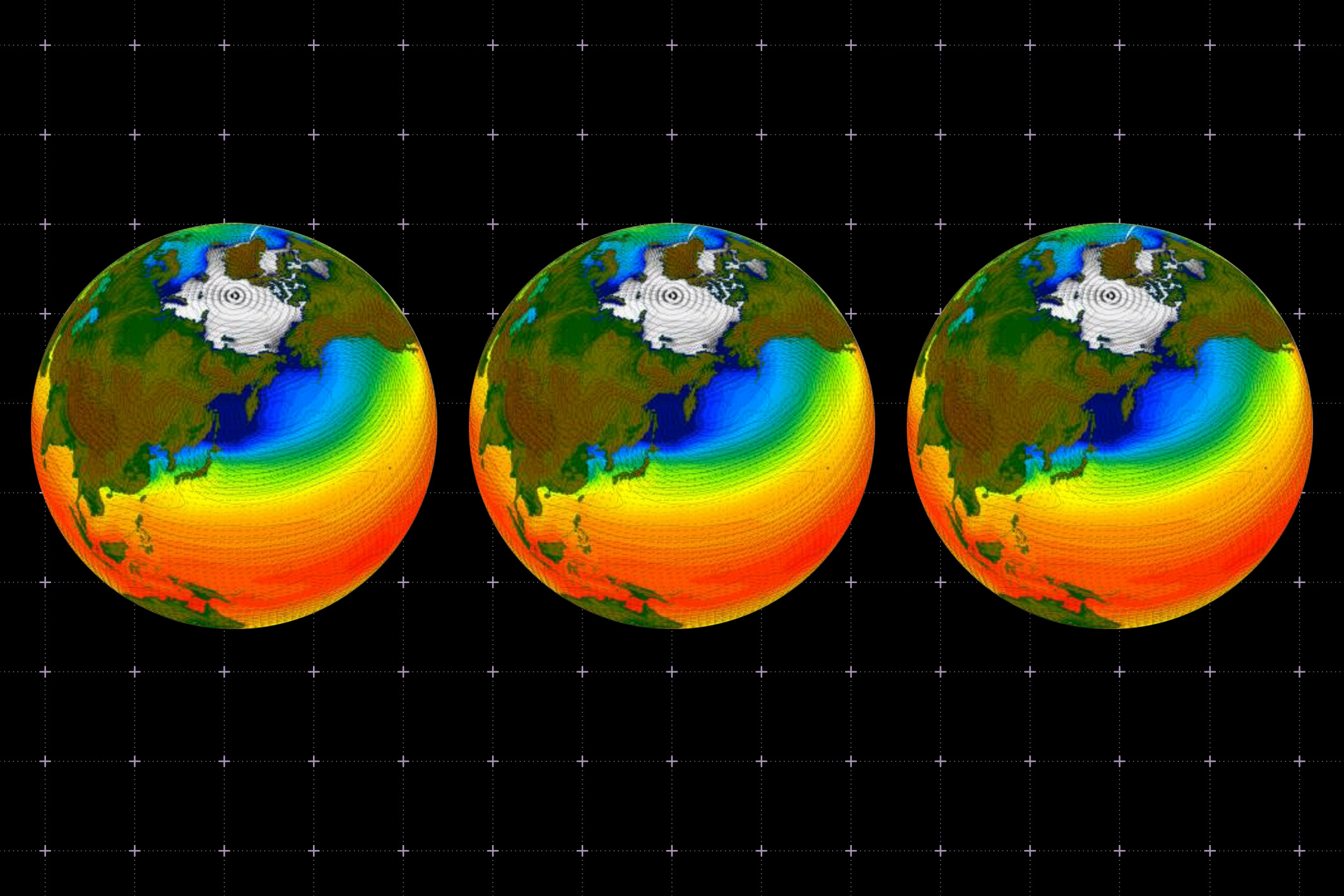
MIT method trains climate AI with synthetic data
MIT researchers have solved a critical bottleneck in climate science: training fast AI emulators without months of supercomputer time. By generating optimized synthetic scenarios—complete with artificial high-frequency oscillations—they train models to generalize better than those fed realistic historical data. This approach cuts production time from years to days, allowing scientists to rapidly test novel policy interventions that traditional emulators fail to predict. It shifts climate modeling from static snapshots to dynamic, adaptable tools for immediate decision-making.
MIT News AI