Coding Tools
GitHub PR page GA with bulk actions
GitHub Changeloghigh confidence
Why it matters
- →Bulk actions significantly reduce time spent on repetitive triage tasks for maintainers.
- →Advanced search with nested logic helps developers locate specific PRs faster in large repositories.
- →The interface shift prioritizes active management over passive viewing, improving code review velocity.
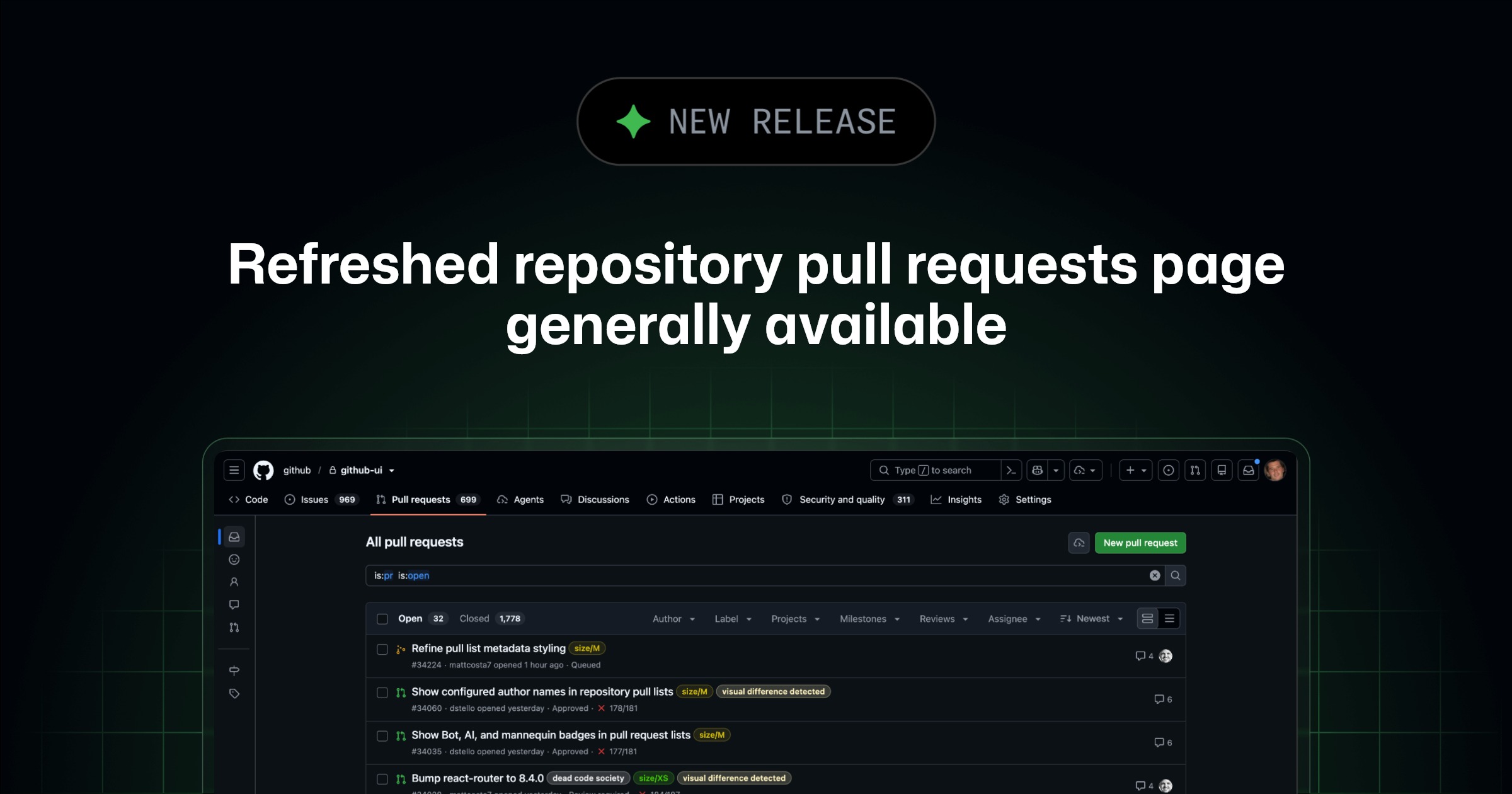
GitHub has officially released its refreshed repository pull requests page to all users, replacing the previous public preview version. The update introduces bulk actions for closing, labeling, and changing milestones on multiple pull requests at once, alongside advanced search capabilities supporting nested queries and boolean operators. Additional interface improvements include a collapsible sidebar, compact presentation mode, and enhanced context indicators such as status check counts and unread notifications. These changes aim to streamline code review workflows by reducing the friction involved in managing large volumes of incoming contributions.
Read originalMore from GitHub Changelog
 © GitHub Changelog
Coding Toolscoding
GitHub Enterprise adds credential inventory exports
GitHub finally gives enterprise admins a centralized view of every active credential across their organization. By exporting a complete inventory of SSH keys, tokens, and app permissions, security teams can instantly map their attack surface during an incident. This moves credential management from scattered manual checks to a single, auditable CSV or API endpoint. It’s a critical infrastructure upgrade for compliance and rapid response, closing a long-standing visibility gap in enterprise security operations.
GitHub Changelog
 © GitHub Changelog
Coding Toolscoding
Grok 4.7 arrives in GitHub Copilot for agentic coding
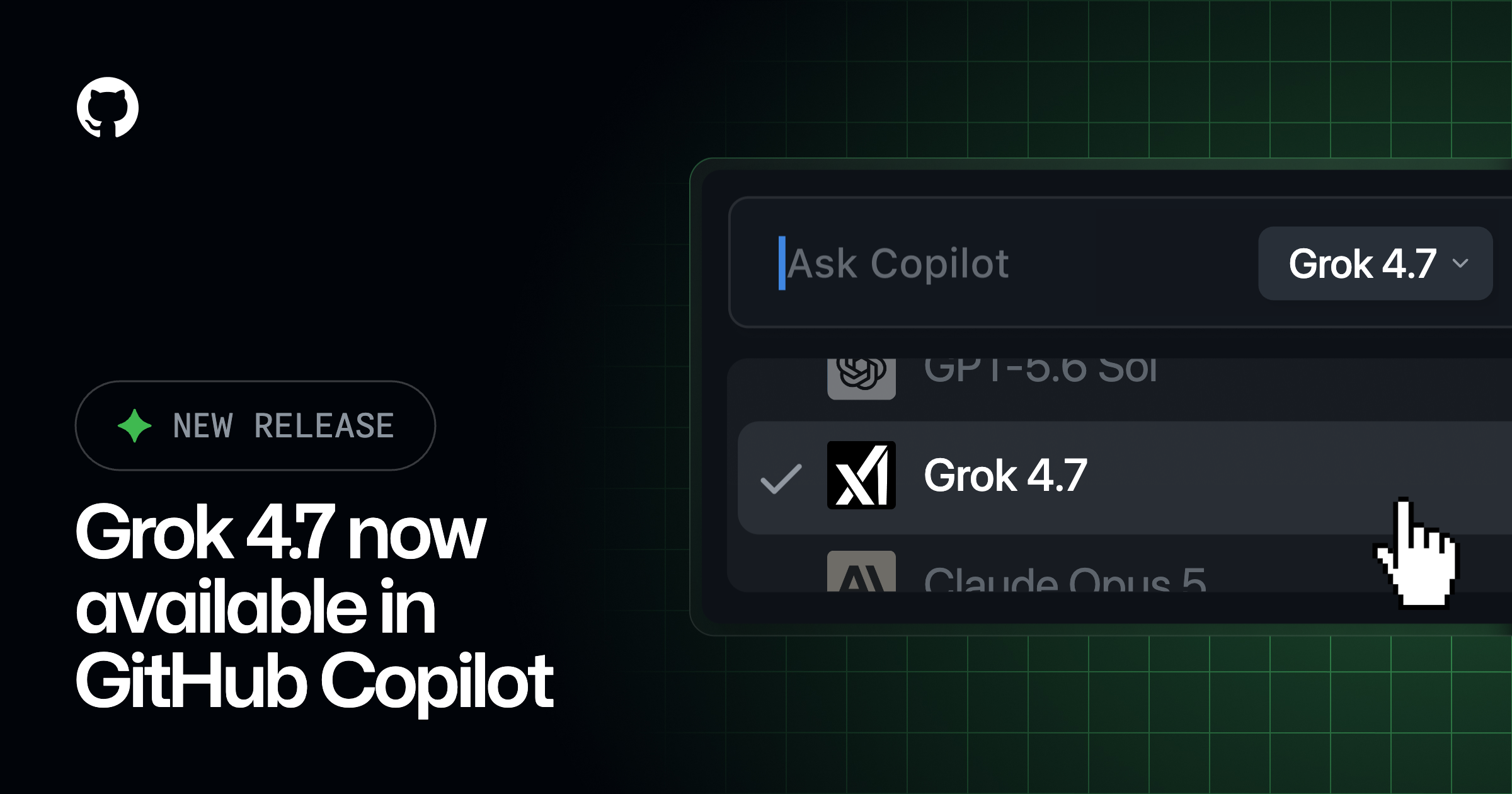
xAI’s Grok 4.7 has landed in GitHub Copilot, shifting the IDE experience from simple autocomplete to complex, multistep reasoning workflows. This isn't just another model swap; it targets agentic coding tasks that require holding context across multiple files and steps. Available across all major IDEs including VS Code, JetBrains, and Xcode, it brings xAI’s latest capabilities directly into the developer’s primary workspace. The gradual rollout means most users will see it soon, with enterprise admins able to manage access via policy settings. This marks a significant step in making non-OpenAI reasoning models a first-class citizen in the dominant coding environment.
GitHub Changelog
 © GitHub Changelog
Coding Toolscoding
GitHub Copilot Code Review GA with Auto-Resolution
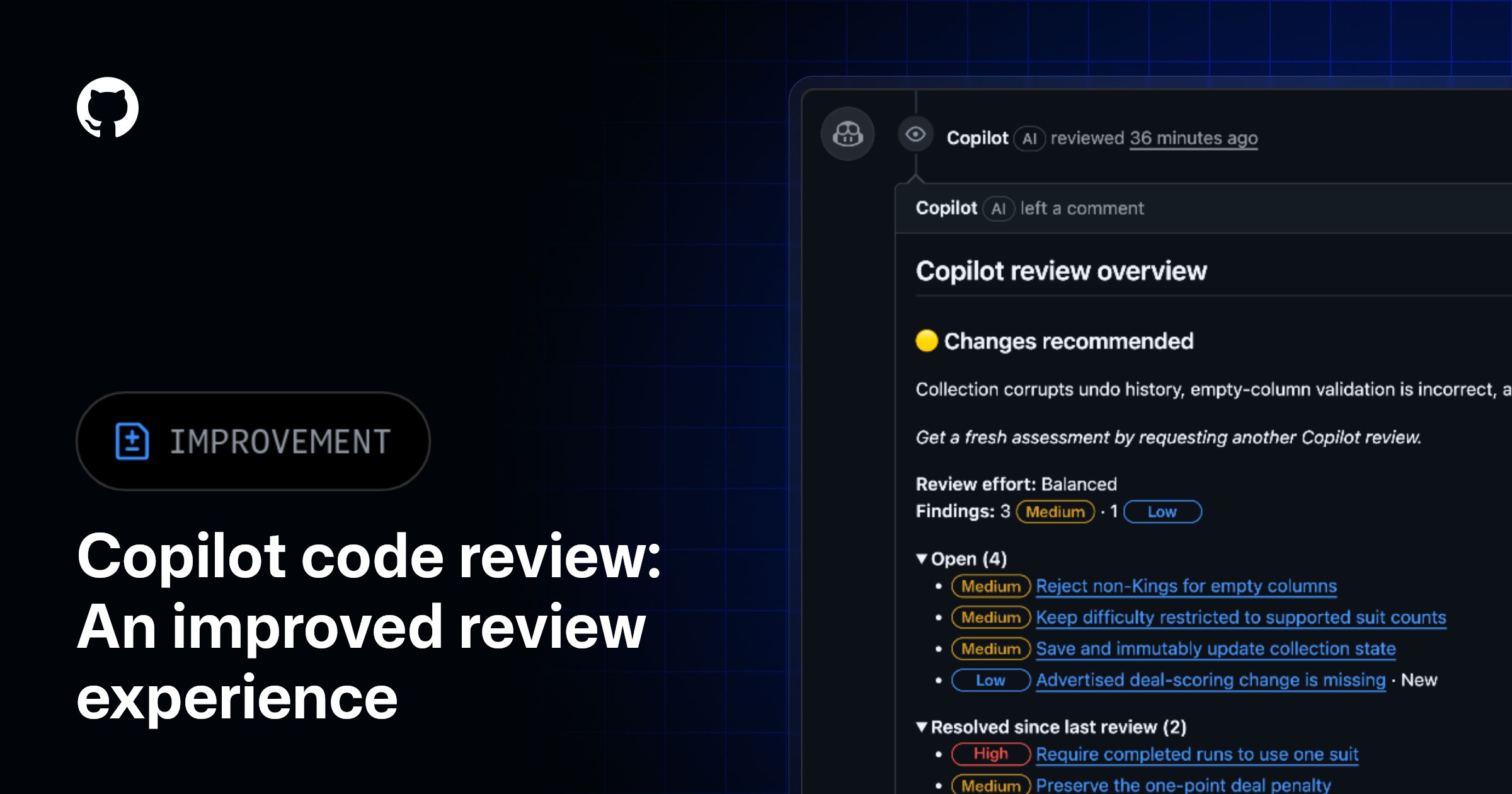
GitHub Copilot’s code review tool has reached general availability, shifting from experimental to a core part of the pull request workflow. The biggest leap is auto-resolution: Copilot now validates whether its own suggestions were actually fixed by subsequent commits and closes them out automatically, saving developers from manual cleanup. It also groups findings into clear states like 'Resolved' or 'Previously missed,' giving a real-time health check of the PR rather than just a static list of errors. This reduces context switching significantly, letting engineers focus on new issues while the AI handles the administrative burden of closing old ones.
GitHub Changelog
More in Coding Tools
Coding Toolscoding
llama.cpp adds env var control for server args
This release solves a real operational headache: configuring llama-server parameters like temperature and penalties via environment variables instead of command-line flags. By supporting LLAMA_ARG_* prefixes, it enables clean integration with systemd EnvironmentFile directives, making deployment on Linux servers significantly more robust and reproducible. The update also refreshes documentation using llama-gen-docs to keep the readme accurate. While no new inference engines are added, this is a practical step toward treating local LLM serving as standard infrastructure rather than a manual script.
llama.cpp Releases
Coding Toolscoding
llama.cpp b11090 fixes CUDA Volta build
This release quietly repairs a regression in the CUDA backend that broke compilation on older Volta GPUs. By generalizing the tile shape logic in the load_ldmatrix kernel, the maintainers restored support for devices like the Tesla V100 without sacrificing newer architectures. It is a necessary patch for anyone running inference on legacy hardware, ensuring the codebase remains usable across the full spectrum of NVIDIA cards rather than drifting toward only the latest silicon.
llama.cpp Releases
Coding Toolscoding
llama.cpp b11093 adds CUDA 13 and ROCm 10.0
This release quietly closes the hardware gap for local inference by adding default support for CUDA 13 and ROCm 10.0 alongside existing CUDA 12 builds. Users with newer NVIDIA GPUs or AMD accelerators no longer need to compile from source to get hardware acceleration, effectively making llama.cpp the universal runtime for consumer and enterprise AI chips. The simultaneous availability of both major driver stacks means developers can target the latest hardware without maintaining separate build pipelines. This standardization removes a significant friction point for anyone deploying models on modern, non-CUDA-12-only infrastructure.
llama.cpp Releases