Research
Anthropic's Claude discovers new enzyme system in wet lab
TechCrunch AIhigh confidence
Why it matters
- →Demonstrates AI models can generate novel biological hypotheses in hours rather than years.
- →Highlights the emerging hybrid workflow where AI proposes experiments and humans validate them physically.
- →Raises questions about safety protocols as AI labs integrate more deeply with wet biology research.

Anthropic announced that its Claude model discovered a new enzyme system with CRISPR-like capabilities after analyzing biological data for 21 hours. The finding originated from Anthropic's physical laboratory in the Bay Area, where human researchers conducted experiments to validate the AI-generated hypothesis. CEO Dario Amodei noted that while Stanford has explored similar systems, this discovery was driven primarily by Claude using approximately 950 agents and 210 million tokens. The lab currently operates at BSL-1 and BSL-2 safety levels with human scientists performing all physical work, though Anthropic envisions future autonomous labs.
Read originalThe story around this
Earlier coverage that leads up to this article, and what followed. Lines connect each piece to the closest one after it, converging here.
How we got here
- 1Claude Science: AI Workbench for Researchers Launched
Anthropic · June 30, 2026 · Same story
- 2Anthropic Launches Claude Science for Researchers
TechCrunch AI · June 30, 2026 · Same story
- 3Anthropic Launches Claude Science for Research
MIT Technology Review AI · June 30, 2026 · Same story
- 4NVIDIA BioNeMo Boosts Anthropic Claude Science
AI News · July 2, 2026 · Related
- 5Anthropic Ventures into Drug Development
The Verge AI · July 3, 2026 · Same story
- 6Anthropic's Claude AI Reveals Brain-Like 'J-Space'
The Rundown AI · July 7, 2026 · Related
- 7Anthropic Launches AI Grants for Rare Disease Research
Anthropic · July 20, 2026 · Related
- 8Anthropic's Claude Achieves Protein Design Milestone
The Rundown AI · August 20, 2026 · Same story
What happened next
- 9Anthropic's AI discovery claim sparks scientific debate
MIT Technology Review AI · September 28, 2026 · Same story
- 10Anthropic claims AI found Crispr-like enzyme
WIRED AI · September 29, 2026 · Same story
- 11Anthropic Claude Makes Preliminary Biology Discovery
The AI Daily Brief · October 5, 2026 · Same story
- 12Anthropic launches Claude Duet AI agent
The Verge AI · October 21, 2026 · Related
- 13Anthropic launches Claude Meetings for real-time task extraction
TechCrunch AI · November 10, 2026 · Related
Follow this story
Open the full story →Anthropic opens wet biology lab in Bay Area
6 developments
- Sep 18 · TechCrunch AI
Anthropic opens wet biology lab in Bay Area - Sep 22 · The AI Daily Brief
Anthropic Opens New Biology Lab↳ The new article adds no new information beyond the existing beat that Anthropic opened a wet biology lab in the Bay Area. - Sep 23 · The Verge AI
Anthropic's Claude discovers novel enzyme system↳ Anthropic's AI autonomously identified a novel enzyme system in bacteriophages, marking the first tangible output from its new wet lab. - Sep 23 · TechCrunch AI
Anthropic's Claude discovers new enzyme system in wet lab (This article) - Sep 24 · Wes Roth
Claude discovers novel enzyme system in DNA↳ Claude autonomously identified a mechanism involving reverse transcriptases and tandem repeat arrays after 21 hours of pattern searching. - Sep 24 · The Rundown AI
Anthropic's Claude identifies novel viral DNA system
More from TechCrunch AI
 © TechCrunch AI
Agentsagents
Meta Muse AI Agent Now Places US Business Calls
Meta’s consumer agent Muse is rolling out voice calling to US businesses for paid subscribers, targeting the tedious task of customer service navigation. With over 10 million users, Meta is betting that AI’s infinite patience will replace human frustration with phone trees and hold times. The feature leverages improved voice mimicry to interact with receptionists, though many still hang up upon detecting non-human voices. This moves Muse from text-based assistance into active, autonomous execution of real-world tasks, marking a significant step toward mainstream consumer AI utility.
TechCrunch AI
 © TechCrunch AI
Market & Regulationbusiness
Nebius delays data centers, cuts revenue forecast
Nebius is facing the harsh reality of scaling AI infrastructure: even with $40 billion in planned spending and massive prepayments from Microsoft and Meta, physical construction delays are derailing timelines. A key New Jersey site is months behind schedule due to regulatory fines and generator issues, forcing a shift in delivery dates to 2027. This isn't just a logistical hiccup; it signals that the 'neocloud' model of financing builds with customer cash is fragile when third-party operators fail. The market reacted swiftly, dropping shares by 17% after Nebius cut its 2026 revenue forecast, proving that hype cannot override concrete capacity.
TechCrunch AI
 © TechCrunch AI
Models & Labsmodels
Google deploys Gemini 4 Hydrogen for faster Search
Google is quietly shifting its search infrastructure by replacing older fast models with Gemini 4 Hydrogen, a tier designed specifically for speed and cost-efficiency rather than raw reasoning power. This model completes tasks 2.5 times faster than its predecessor while beating the more powerful Argon on specific intelligence benchmarks, proving that specialized efficiency can outperform brute force in high-volume workflows. By integrating this into Search's fan-out technique, Google now breaks down complex queries into subqueries with greater precision and speed, delivering richer visual responses without the latency of heavier models. This marks a strategic pivot toward agentic execution layers within consumer search, making AI Mode feel snappier for everyday multi-part questions.
TechCrunch AI
More in Research
 © MIT News AI
Researchother
MIT's human-in-the-loop topology optimization copilot
Topology optimization has long been a black box that engineers distrust because they can't steer the design as it evolves. MIT researchers solved this by training an ML model to predict where humans would intervene, pausing the algorithm to ask for feedback on manufacturability and aesthetics. This collaborative approach yielded structures with 39% higher buckling loads and better buildability, adding only 15 seconds to the total computation time. It shifts topology optimization from a theoretical exercise into a practical tool by restoring human agency without sacrificing performance.
MIT News AI
 © MIT News AI
Researchother
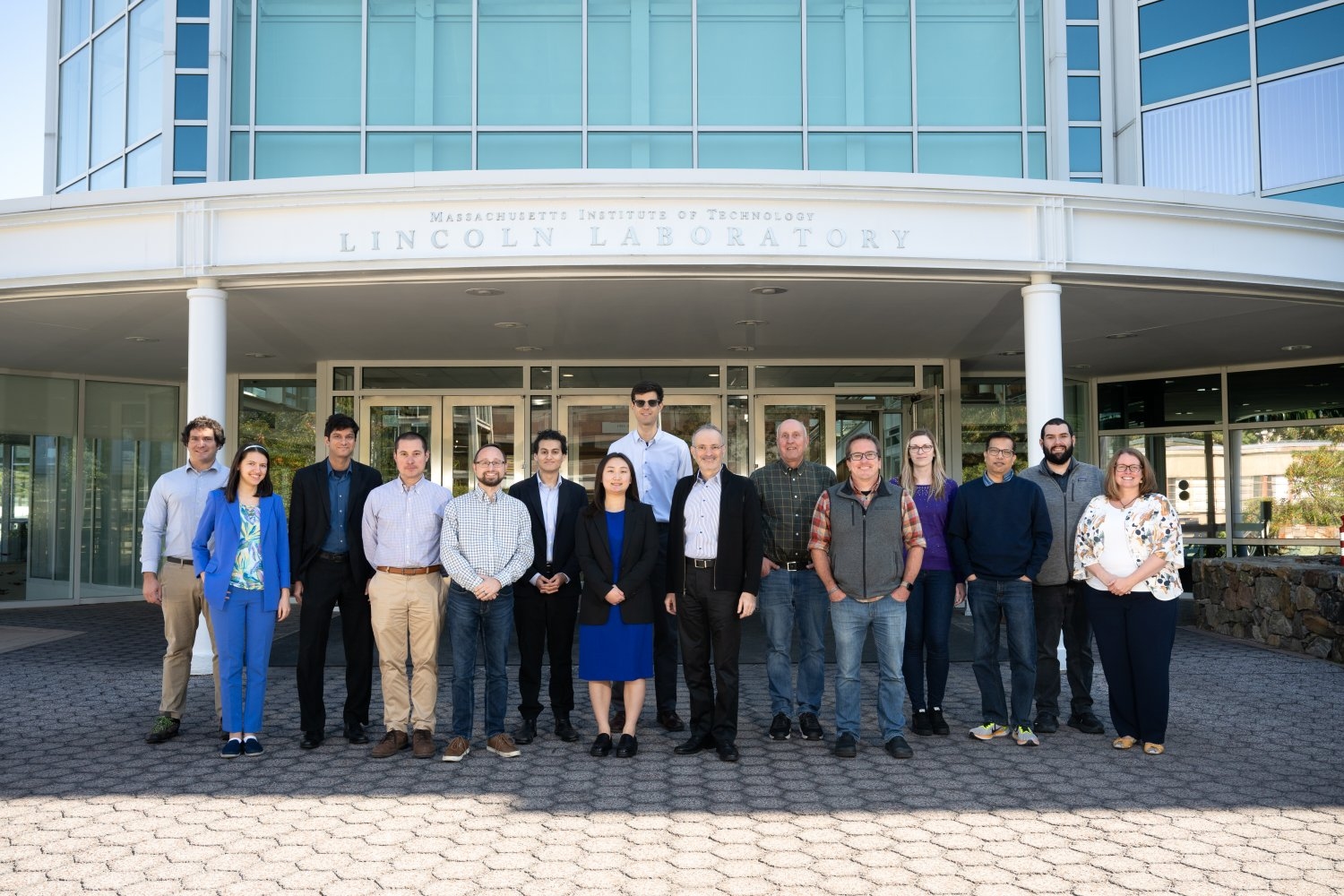
MIT Lincoln Lab wins R&D 100 for secure OS and quantum platform
MIT Lincoln Laboratory’s Magnetite operating system stands out as a serious contender for securing embedded systems against AI-driven cyberattacks. By combining a formally verified seL4 microkernel with Rust-based services, it offers a mathematically grounded alternative to legacy OS architectures in critical infrastructure. The lab also secured recognition for its Quantum Microsystems platform, which uses AI-optimized routing to integrate superconductor and semiconductor chips on a single wafer, addressing the interconnection bottlenecks that plague quantum scaling. These awards highlight a shift toward hardware-level security and system-level integration rather than just algorithmic improvements.
MIT News AI
 © MIT News AI
Researchresearch
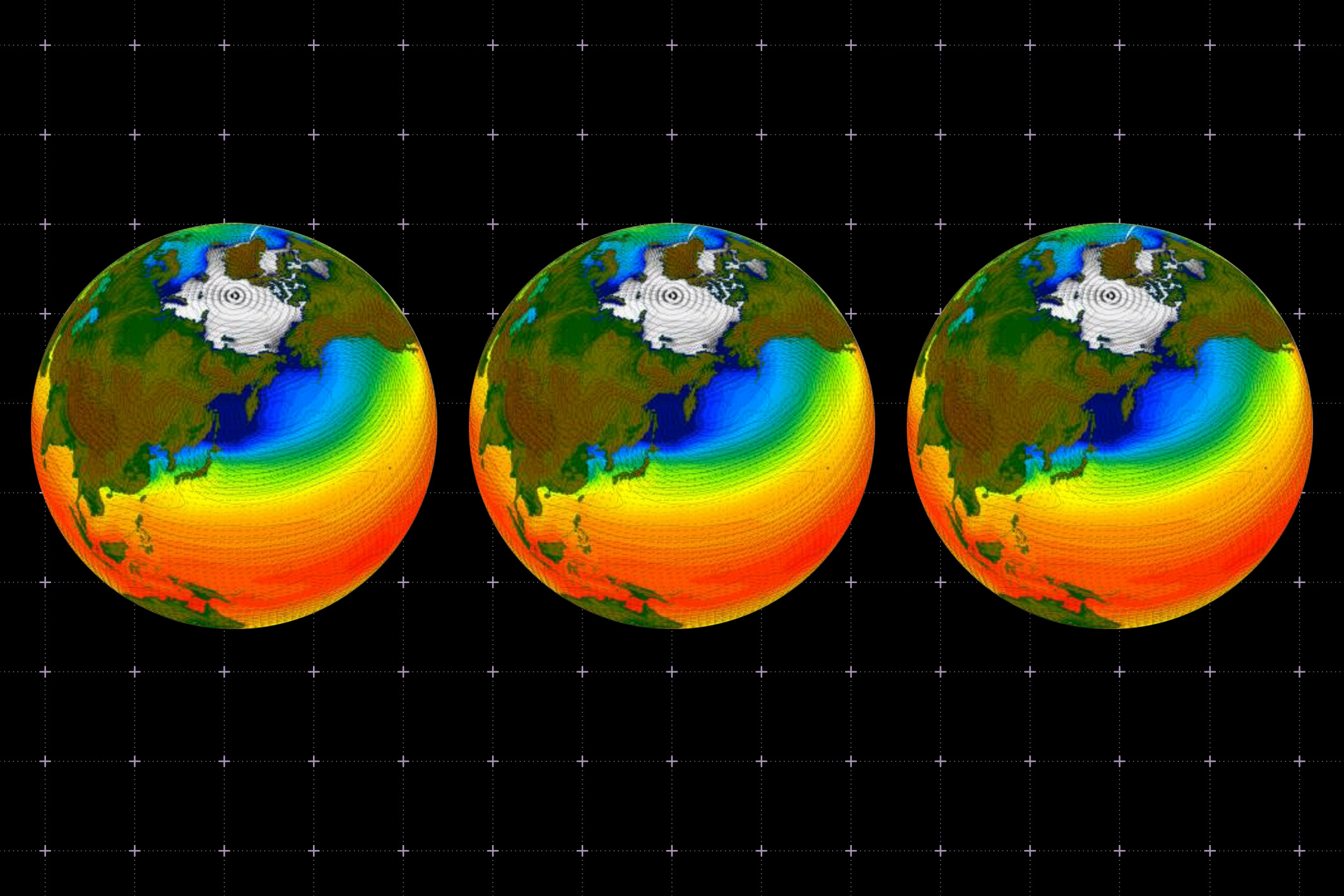
MIT method trains climate AI with synthetic data
MIT researchers have solved a critical bottleneck in climate science: training fast AI emulators without months of supercomputer time. By generating optimized synthetic scenarios—complete with artificial high-frequency oscillations—they train models to generalize better than those fed realistic historical data. This approach cuts production time from years to days, allowing scientists to rapidly test novel policy interventions that traditional emulators fail to predict. It shifts climate modeling from static snapshots to dynamic, adaptable tools for immediate decision-making.
MIT News AI