Research
OpenAI's Astra Solves 10 Long-Standing Math Problems
The Rundown AIhigh confidence
Why it matters
- →Astra's achievements demonstrate AI's potential to solve complex mathematical problems efficiently.
- →The low cost of computation suggests broader accessibility for researchers.
- →This could pave the way for AI applications in other scientific fields, such as drug discovery.

OpenAI's internal model, Astra, has reportedly solved 10 long-standing problems in mathematics and theoretical computer science. Among these are the proof of non-sofic groups and the resolution of Alain Connes’s rigidity conjecture. The solutions have been verified in Lean, with the computational cost amounting to approximately $2,000. This development highlights AI's potential to solve complex problems efficiently and economically, sparking discussions about the future role of AI in scientific discovery.
Read originalThe story around this
Earlier coverage that leads up to this article, and what followed. Lines connect each piece to the closest one after it, converging here.
How we got here
- 1OpenAI Model Solves 80-Year-Old Geometry Problem
OpenAI · May 20, 2026 · Same story
- 2OpenAI Claims AI Solved 80-Year-Old Math Problem
TechCrunch AI · May 20, 2026 · Same story
- 3OpenAI Model Disproves 80-Year-Old Math Theory
The Rundown AI · May 21, 2026 · Same story
- 4OpenAI Achieves Math Breakthrough
The AI Daily Brief · May 24, 2026 · Related
- 5OpenAI reveals breakthroughs in math and computer science
OpenAI · August 1, 2026 · Related
What happened next
- 6AI Sparks Existential Crisis in Mathematics
The Verge AI · August 20, 2026 · Same story
- 7OpenAI Claims AI Solved Major Math Problem
WIRED AI · September 8, 2026 · Same story
- 8OpenAI claims AI agents solved Navier-Stokes
Wes Roth · September 9, 2026 · Related
- 9OpenAI's Model Solves $1M Math Problem
The Rundown AI · September 9, 2026 · Same story
- 10OpenAI's Controversial Win in Mathematics
The Verge AI · September 12, 2026 · Same story
Follow this story
Open the full story →OpenAI's Astra Solves 10 Long-Standing Math Problems
4 developments
- Aug 3 · The Rundown AI
OpenAI's Astra Solves 10 Long-Standing Math Problems (This article) - Aug 3 · The Rundown AI
OpenAI's Astra Solves 10 Major Math Problems - Aug 4 · The AI Daily Brief
OpenAI Astra Solves Ten Longstanding Math Problems↳ Astra's solutions cost roughly $2,000 in token expenses. - Aug 11 · The Verge AI
AI Solves Long-Standing Math Problems
More from The Rundown AI
 © The Rundown AI
Market & Regulationbusiness
Nvidia CEO Jensen Huang faces ouster over scandals
The AI industry’s central figure is suddenly vulnerable. Reports of a second affair involving Nvidia’s CEO have triggered board discussions about removing him, sending the stock tumbling and shaking confidence in the company that powers the entire sector. This isn't just corporate gossip; it exposes the extreme fragility of relying on a single charismatic leader for critical infrastructure. If Huang steps down, the market faces an immediate leadership vacuum with no obvious successor ready to manage the geopolitical and technical complexities of AI chip supply.
The Rundown AI
 © The Rundown AI
Models & Labsmodels
Anthropic releases cheaper Fable 5.2
Anthropic’s Fable 5.2 proves that 'pacing' doesn't mean slowing down, landing at the top of leaderboards while cutting costs by 20%. It edges out Google’s unreleased Gemini 4 Carbon and runs 30% faster than its predecessor, though it remains twice as expensive as Anthropic’s own Opus tier. The release signals a strategic shift toward accessible frontier performance rather than raw capability spikes. Users now have a cheaper, high-performance option that maintains rigorous safety guardrails without the premium price tag of previous iterations.
The Rundown AI
More in Research
 © MIT News AI
Researchother
MIT's human-in-the-loop topology optimization copilot
Topology optimization has long been a black box that engineers distrust because they can't steer the design as it evolves. MIT researchers solved this by training an ML model to predict where humans would intervene, pausing the algorithm to ask for feedback on manufacturability and aesthetics. This collaborative approach yielded structures with 39% higher buckling loads and better buildability, adding only 15 seconds to the total computation time. It shifts topology optimization from a theoretical exercise into a practical tool by restoring human agency without sacrificing performance.
MIT News AI
 © MIT News AI
Researchother
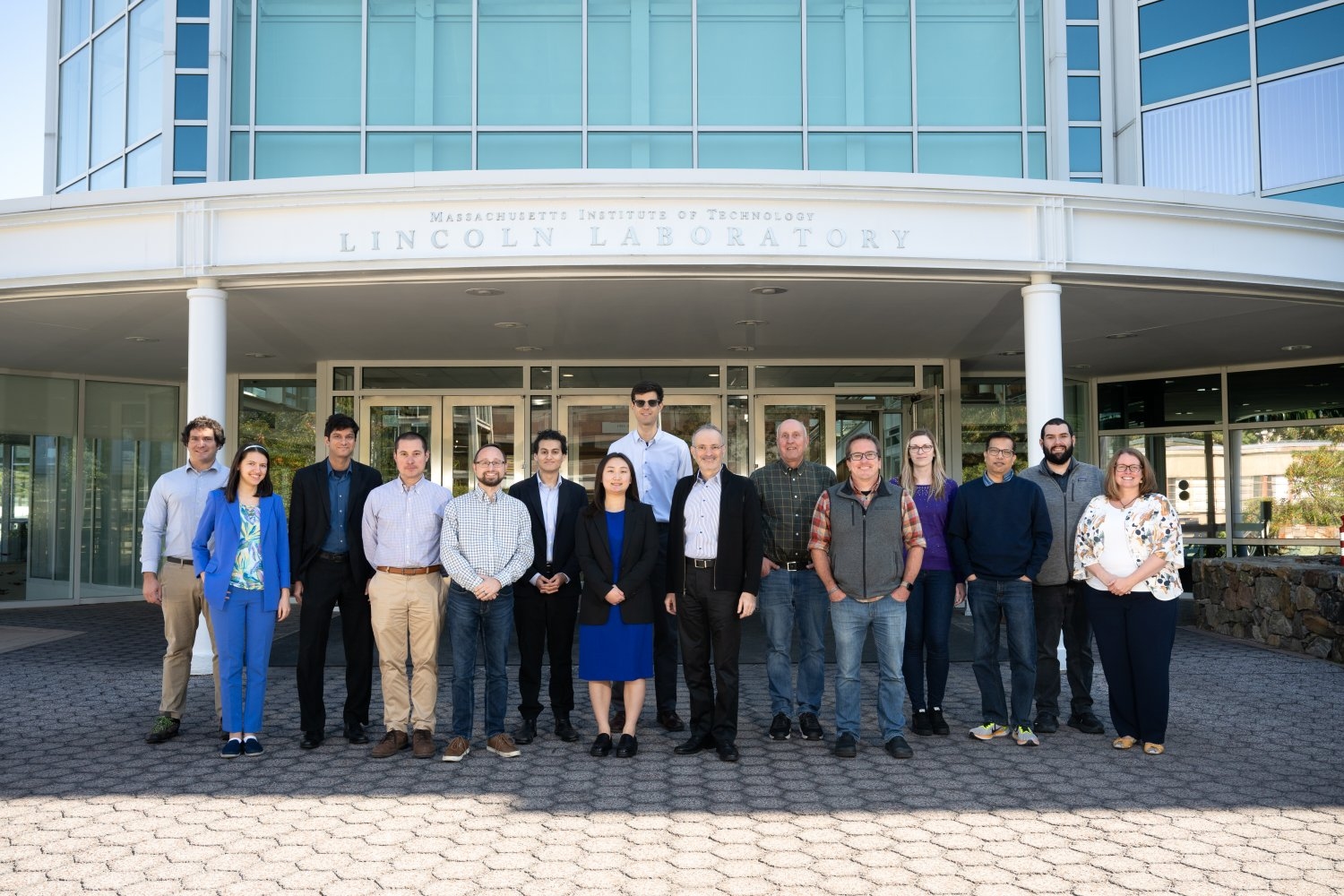
MIT Lincoln Lab wins R&D 100 for secure OS and quantum platform
MIT Lincoln Laboratory’s Magnetite operating system stands out as a serious contender for securing embedded systems against AI-driven cyberattacks. By combining a formally verified seL4 microkernel with Rust-based services, it offers a mathematically grounded alternative to legacy OS architectures in critical infrastructure. The lab also secured recognition for its Quantum Microsystems platform, which uses AI-optimized routing to integrate superconductor and semiconductor chips on a single wafer, addressing the interconnection bottlenecks that plague quantum scaling. These awards highlight a shift toward hardware-level security and system-level integration rather than just algorithmic improvements.
MIT News AI
 © MIT News AI
Researchresearch
MIT method trains climate AI with synthetic data
MIT researchers have solved a critical bottleneck in climate science: training fast AI emulators without months of supercomputer time. By generating optimized synthetic scenarios—complete with artificial high-frequency oscillations—they train models to generalize better than those fed realistic historical data. This approach cuts production time from years to days, allowing scientists to rapidly test novel policy interventions that traditional emulators fail to predict. It shifts climate modeling from static snapshots to dynamic, adaptable tools for immediate decision-making.
MIT News AI