Coding Tools
Grok 4.5 and Cognition SWE 1.7 Focus on Coding Efficiency
The AI Daily Briefhigh confidence
Why it matters
- →Increases coding speed and efficiency.
- →Reduces costs for developers.
- →Supports workflow automation.
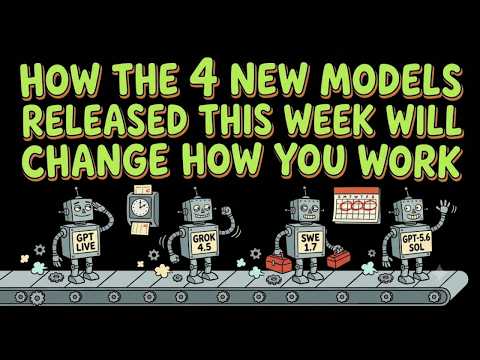
The release of Grok 4.5 and Cognition SWE 1.7 highlights a focus on improving coding efficiency and workflow automation. These models prioritize cost-effectiveness and speed, making them ideal for developers seeking to enhance productivity through agentic coding solutions. This development underscores the trend towards specialized AI tools tailored for specific industry needs.
Read originalThe story around this
Earlier coverage that leads up to this article, and what followed. Lines connect each piece to the closest one after it, converging here.
More from The AI Daily Brief

More in Coding Tools
Coding Toolscoding
Claude Code v2.1.282 patches critical session and UX bugs
This release stabilizes Claude Code by fixing a cascade of session-breaking errors that previously caused silent data loss or API drops. The most significant fix addresses resumed conversations re-sending messages in altered forms, which was corrupting reasoning traces and breaking extended thinking workflows. It also resolves persistent login refresh loops and managed setting parsing failures that plagued enterprise deployments. While the changelog is dense with UI tweaks like scrollbar fixes and vim mode corrections, the core value lies in restoring reliability for long-running agent sessions.
Claude Code Releases
Coding Toolscoding
Claude Code v2.1.283: Gateway hints and plugin fixes
This release quietly solves a major pain point for enterprise AI workflows by adding gateway hint headers, allowing LLM gateways to correctly group requests per user prompt instead of treating them as isolated events. The new managed settings for availableModelsMatch and deniedModels give organizations precise control over model access, blocking specific versions even when broader allowances exist. Beyond governance, the update stabilizes the plugin ecosystem with rigorous validation checks that prevent silent failures from broken or misconfigured extensions. These changes shift Claude Code from a developer tool to a manageable enterprise component.