Coding Tools
GitHub Copilot Enables Auto Model Selection for Enterprises
GitHub Changeloghigh confidence
Why it matters
- →Streamlines AI model management for enterprise users of GitHub Copilot.
- →Enhances governance by allowing default settings across an organization.
- →Maintains user flexibility with per-conversation model switching.
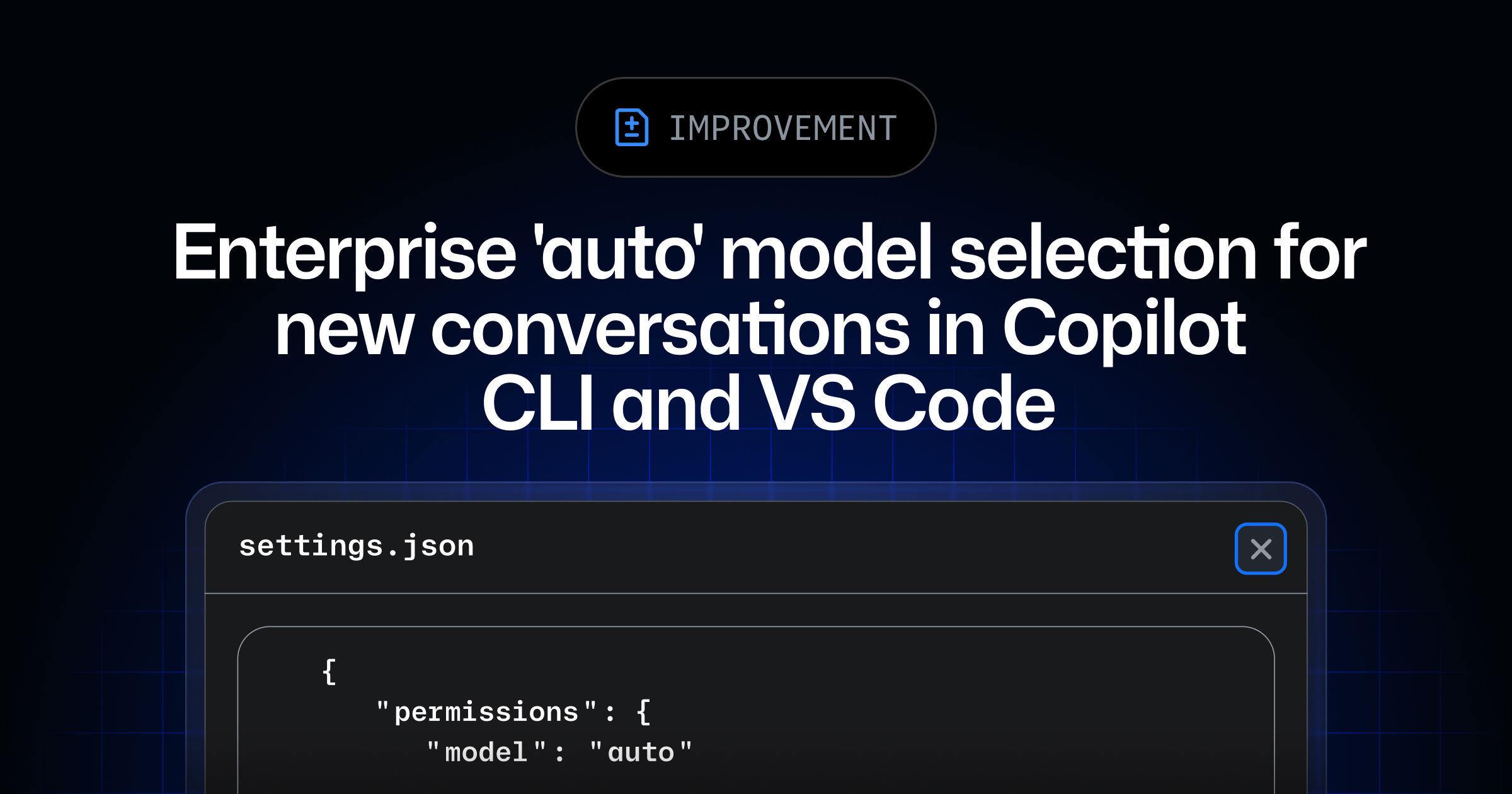
GitHub has rolled out a feature for enterprise users of Copilot, allowing administrators to set auto model selection as the default for new conversations. This is configured through the managed-settings.json file, ensuring a consistent setup for organizations using Copilot Business or Enterprise. Users still have the option to switch models on a per-conversation basis. This update aims to streamline the management of AI model settings for enterprises, enhancing governance and consistency.
Read originalMore from GitHub Changelog
More in Coding Tools
Coding Toolscoding
Claude Code v2.1.265 patches agent stability and plugin loading
This release stabilizes the core agent loop by fixing critical bugs in prompt caching and subagent resume logic that previously broke context reuse. Plugin management gets a significant upgrade with dynamic folder scanning, allowing developers to hot-load tools without restarting the session. The update also hardens security around symlink traversal and refines telemetry routing for enterprise gateways. While not feature-heavy, these fixes make Claude Code more reliable for complex, multi-step coding workflows.
Claude Code Releases
Coding Toolscoding
Claude Code v2.1.266 fixes gateway regression
Anthropic quietly patched a regression in Claude Code that broke LLM-gateway and proxy setups. The previous version incorrectly forced Cloud-gateway sign-in when the CLAUDE_CODE_USE_GATEWAY variable was set, even with API keys or custom auth headers configured. This update restores the expected behavior where the variable is ignored unless specific Anthropic credentials are present. Developers relying on custom authentication flows can now resume their workflows without configuration changes.