Coding Tools
GitHub external custom properties public preview
GitHub Changeloghigh confidence
Why it matters
- →Enables automated governance by syncing compliance and ownership data from external systems.
- →Prevents data conflicts by enforcing read-only access for externally managed properties.
- →Allows repository filtering and rulesets to react to real-time business context like service tier.
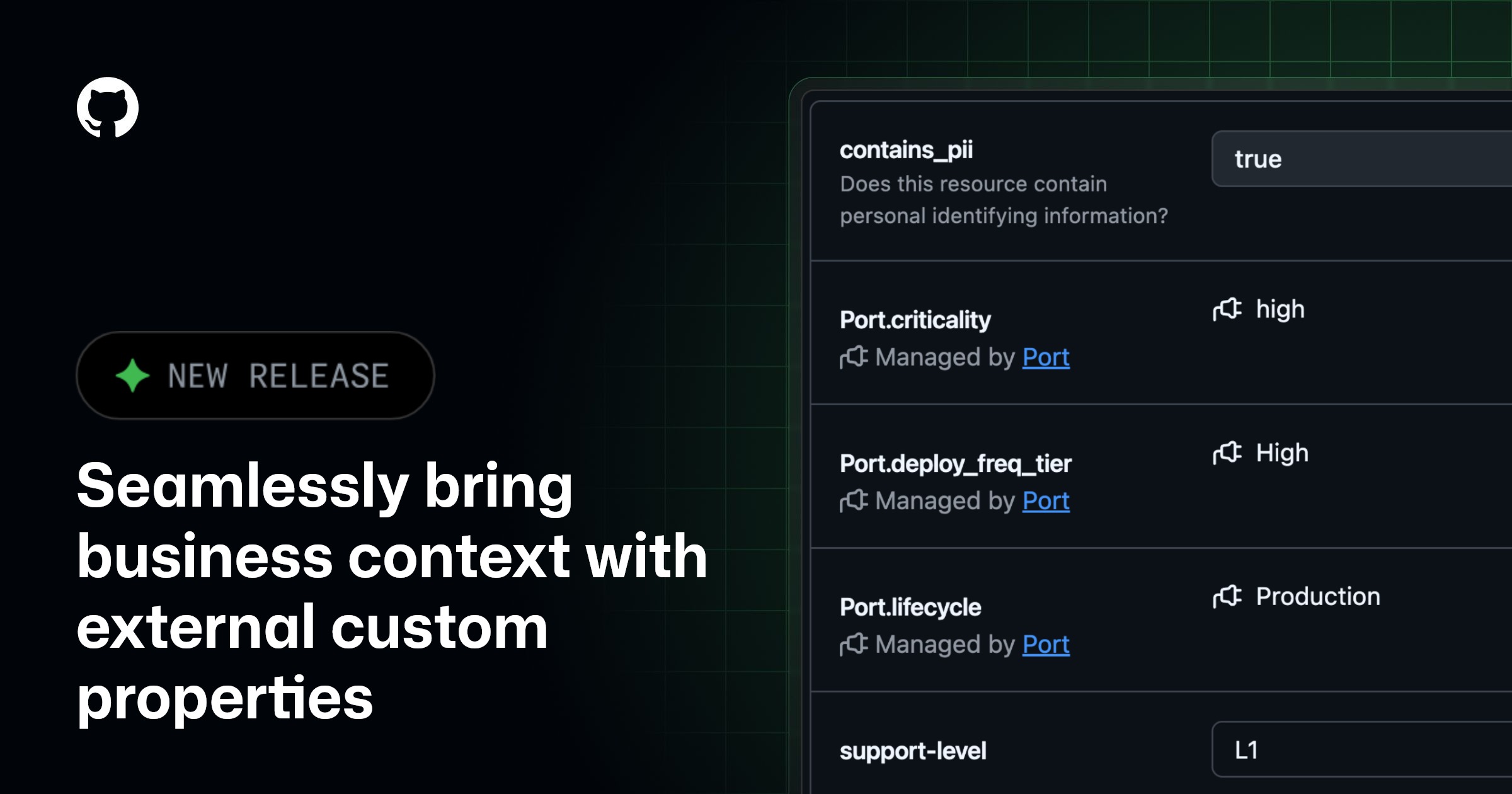
GitHub has launched a public preview for external custom properties, enabling organizations to sync business context from external systems like CMDBs or developer portals directly into repositories. The feature ensures data integrity by making synced properties read-only within GitHub while allowing continuous updates via APIs under a dedicated namespace. Port.io is the first partner integration, though enterprises can build custom connectors using fine-grained permissions. This capability allows repository filtering and ruleset targeting to leverage live business metadata such as compliance status and service tier.
Read originalMore from GitHub Changelog
 © GitHub Changelog
Coding Toolscoding
GitHub adds repo-level Dependabot runner config
Dependabot finally gets granular control over where its jobs run. Repository admins can now override the organization-level default to target specific self-hosted runners or larger GitHub-hosted environments using custom labels and groups. This closes a long-standing gap for teams managing private registries or specialized build environments, allowing security updates to run in isolated contexts without affecting other workflows. While public repos and Enterprise Server are currently excluded, this is a critical step toward secure, compliant dependency scanning at scale.
GitHub Changelog
 © GitHub Changelog
More in Coding Tools
Coding Toolscoding
Claude Code v2.1.284 adds Sonnet 5.5
Anthropic quietly upgrades its local coding agent with Sonnet 5.5 as the new default, bringing a massive 1M context window to developers' terminals. This isn't just a model swap; it fundamentally changes how much codebase history you can keep in memory without manual chunking. The release also patches critical stability issues like malformed image crashes and broken MCP reconnections, making the tool significantly more reliable for complex workflows. For builders, this means deeper context awareness and fewer interruptions during long coding sessions.
Claude Code Releases
Coding Toolscoding
Claude Code v2.1.285 patches security and stability
This release prioritizes security hygiene and session reliability over new features. The addition of CLAUDE_CODE_DISABLE_WEB_FETCH is a critical control for enterprise environments needing to restrict external data access. Bug fixes address subtle race conditions in cloud sessions and artifact publishing that could lead to data loss or incorrect state. SSH and plugin installation issues are resolved, ensuring smoother remote workflows. It’s a maintenance update that tightens the tool's operational boundaries.