Coding Tools
GitHub adds repo-level Dependabot runner config
GitHub Changeloghigh confidence
Why it matters
- →Enables isolated execution of security scans in specialized self-hosted environments.
- →Allows granular control over compute resources for dependency updates at the repo level.
- →Reduces risk of credential leakage by keeping scanning jobs off shared default runners.
GitHub has introduced repository-level configuration options for Dependabot runners, allowing administrators to specify runner types, custom labels, and runner groups for version and security updates. This feature extends existing organization-level controls, enabling teams to direct Dependabot jobs to self-hosted runners with access to private package registries or specialized environments. The setting is available for private and internal repositories on github.com but remains hidden for public repositories and GitHub Enterprise Server. Security configurations do not currently enforce these runner settings.
Read originalMore from GitHub Changelog
 © GitHub Changelog
Coding Toolscoding
GitHub external custom properties public preview
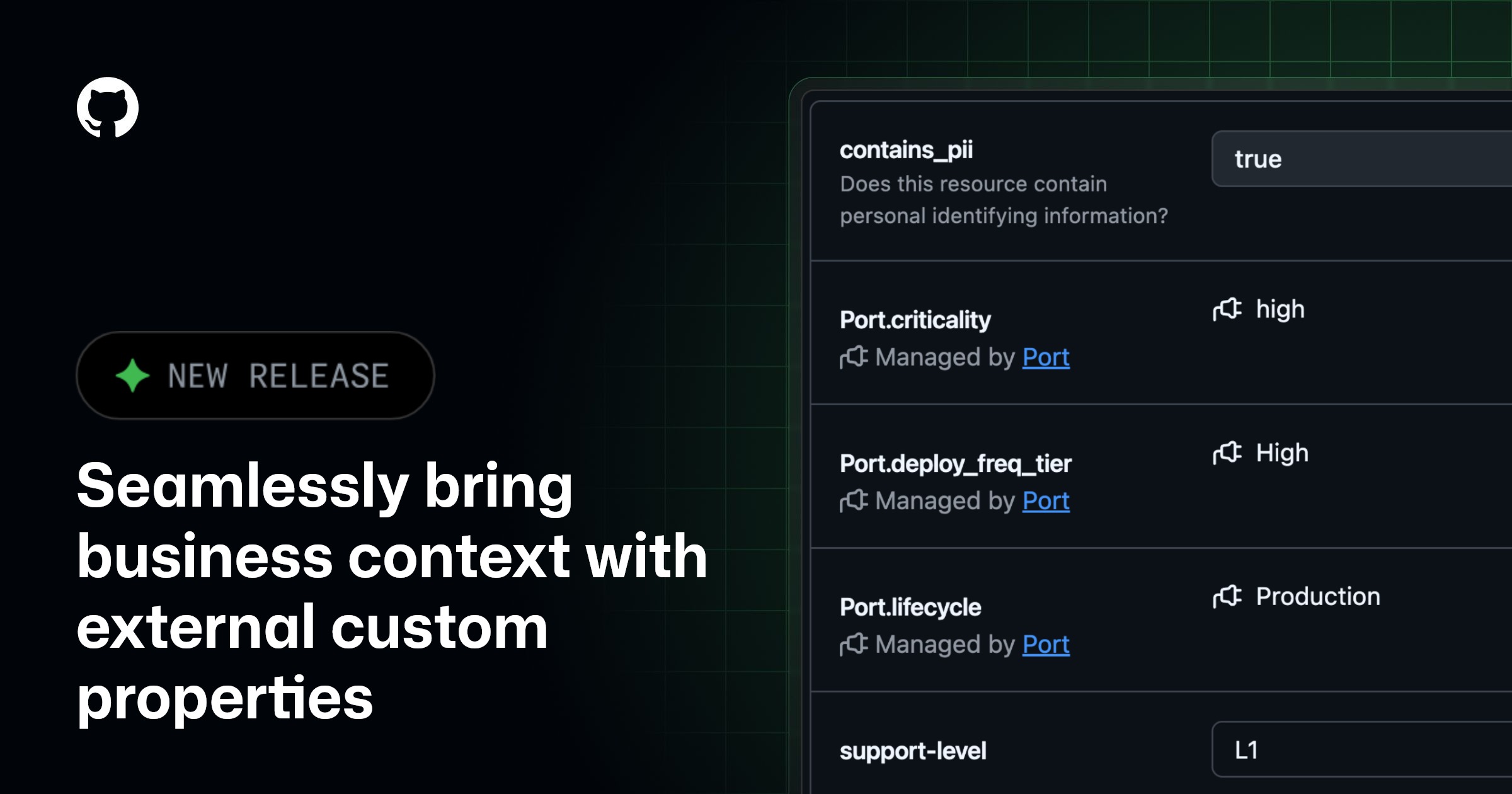
GitHub finally bridges the gap between code and corporate governance with external custom properties. By allowing systems like CMDBs to push read-only metadata—ownership, compliance status, service tiers—directly into repos, it stops developers from manually tagging repositories in silos. The real win is the dedicated namespace and strict read-only enforcement, which prevents data conflicts between GitHub’s UI and your internal source of truth. This turns repository filtering and ruleset targeting into dynamic, business-aware operations rather than static code-level checks.
GitHub Changelog
 © GitHub Changelog
More in Coding Tools
Coding Toolscoding
Claude Code v2.1.284 adds Sonnet 5.5
Anthropic quietly upgrades its local coding agent with Sonnet 5.5 as the new default, bringing a massive 1M context window to developers' terminals. This isn't just a model swap; it fundamentally changes how much codebase history you can keep in memory without manual chunking. The release also patches critical stability issues like malformed image crashes and broken MCP reconnections, making the tool significantly more reliable for complex workflows. For builders, this means deeper context awareness and fewer interruptions during long coding sessions.
Claude Code Releases
Coding Toolscoding
Claude Code v2.1.285 patches security and stability
This release prioritizes security hygiene and session reliability over new features. The addition of CLAUDE_CODE_DISABLE_WEB_FETCH is a critical control for enterprise environments needing to restrict external data access. Bug fixes address subtle race conditions in cloud sessions and artifact publishing that could lead to data loss or incorrect state. SSH and plugin installation issues are resolved, ensuring smoother remote workflows. It’s a maintenance update that tightens the tool's operational boundaries.