Open Source
GitHub Limits Open Pull Requests for Non-Writers
GitHub Changeloghigh confidence
Why it matters
- →Helps maintainers manage contribution volume effectively.
- →Reduces noise and unnecessary workload in busy repositories.
- →Allows focus on high-signal contributions, improving project quality.
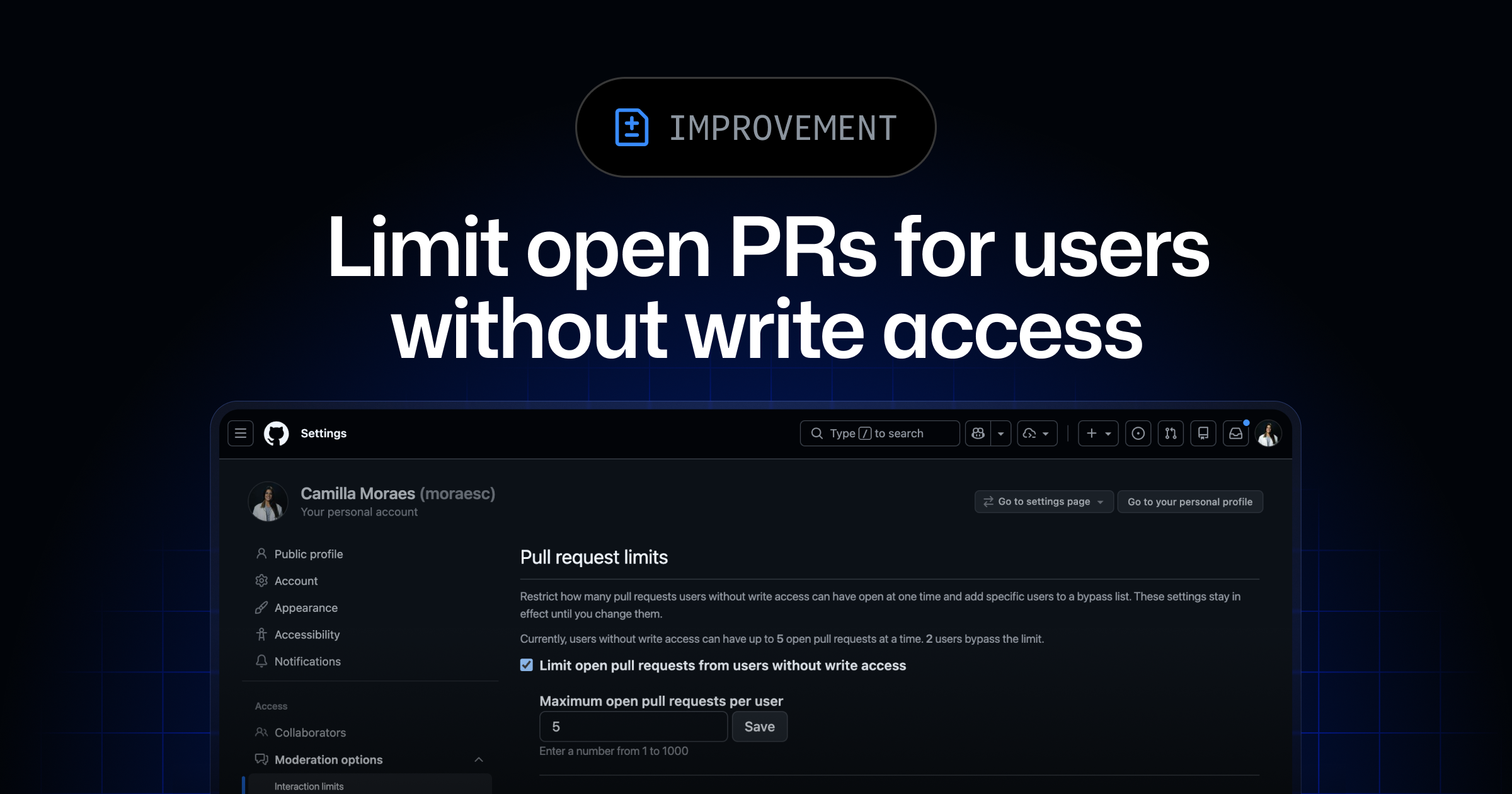
GitHub has rolled out a feature that lets maintainers limit the number of open pull requests from users without write access. This aims to tackle the issue of overwhelming low-quality contributions that can slow down the review process. Maintainers can also create a bypass list for trusted contributors, allowing them to exceed the limit without full access. This update is expected to help maintainers focus on high-quality contributions and reduce unnecessary workload.
Read originalMore from GitHub Changelog

More in Open Source
Open Sourcemodels
llama.cpp b10952 Release Expands Platform Support
The b10952 release of llama.cpp continues its trend of broadening platform compatibility, now supporting a wide array of systems including macOS, Linux, Windows, and openEuler. Notably, this update includes support for Vulkan and ROCm 10.0 on Ubuntu, as well as CUDA 12 and 13 on Windows, enhancing its utility for developers working across diverse hardware configurations. While KleidiAI support on macOS Apple Silicon is disabled, the release still marks a significant step in making llama.cpp a versatile tool for AI inference across different environments. This update doesn't introduce new models but solidifies llama.cpp's position as a flexible runtime option for developers beyond the NVIDIA ecosystem.
llama.cpp Releases
Open Sourcemodels
llama.cpp b10964 release expands platform support
The b10964 release of llama.cpp marks a significant expansion in platform support, particularly for Windows and Ubuntu users. With the addition of CUDA 13.4 DLLs for Windows arm64 and Vulkan support for Ubuntu, this update broadens the accessibility of llama.cpp across diverse hardware configurations. Notably, the inclusion of ROCm 10.0 for both Windows and Ubuntu x64 platforms enhances the performance capabilities for AMD GPU users. This release doesn't introduce new models but focuses on making llama.cpp a more versatile and inclusive tool for developers across different systems.