Coding Tools
GitHub Apps manage Copilot seats
GitHub Changeloghigh confidence
Why it matters
- →Automates the assignment and revocation of Copilot seats via API.
- →Enables integration with existing enterprise IAM workflows.
- →Reduces manual administrative overhead for IT teams.
GitHub has added a new fine-grained permission for Enterprise Apps: 'Enterprise Copilot license management.' This update allows GitHub Apps to call enterprise-level APIs to assign and manage Copilot seats for users and teams within an organization. The change enables automated provisioning workflows, allowing organizations to integrate seat allocation directly into their existing identity and access management systems.
Read originalThe story around this
Earlier coverage that leads up to this article, and what followed. Lines connect each piece to the closest one after it, converging here.
How we got here
- 1GitHub Introduces Managed Permissions for Copilot
GitHub Changelog · September 9, 2026 · Same story
- 2GitHub Copilot Automations go team-shared
GitHub Changelog · October 28, 2026 · Same story
More from GitHub Changelog
 © GitHub Changelog
Coding Toolscoding
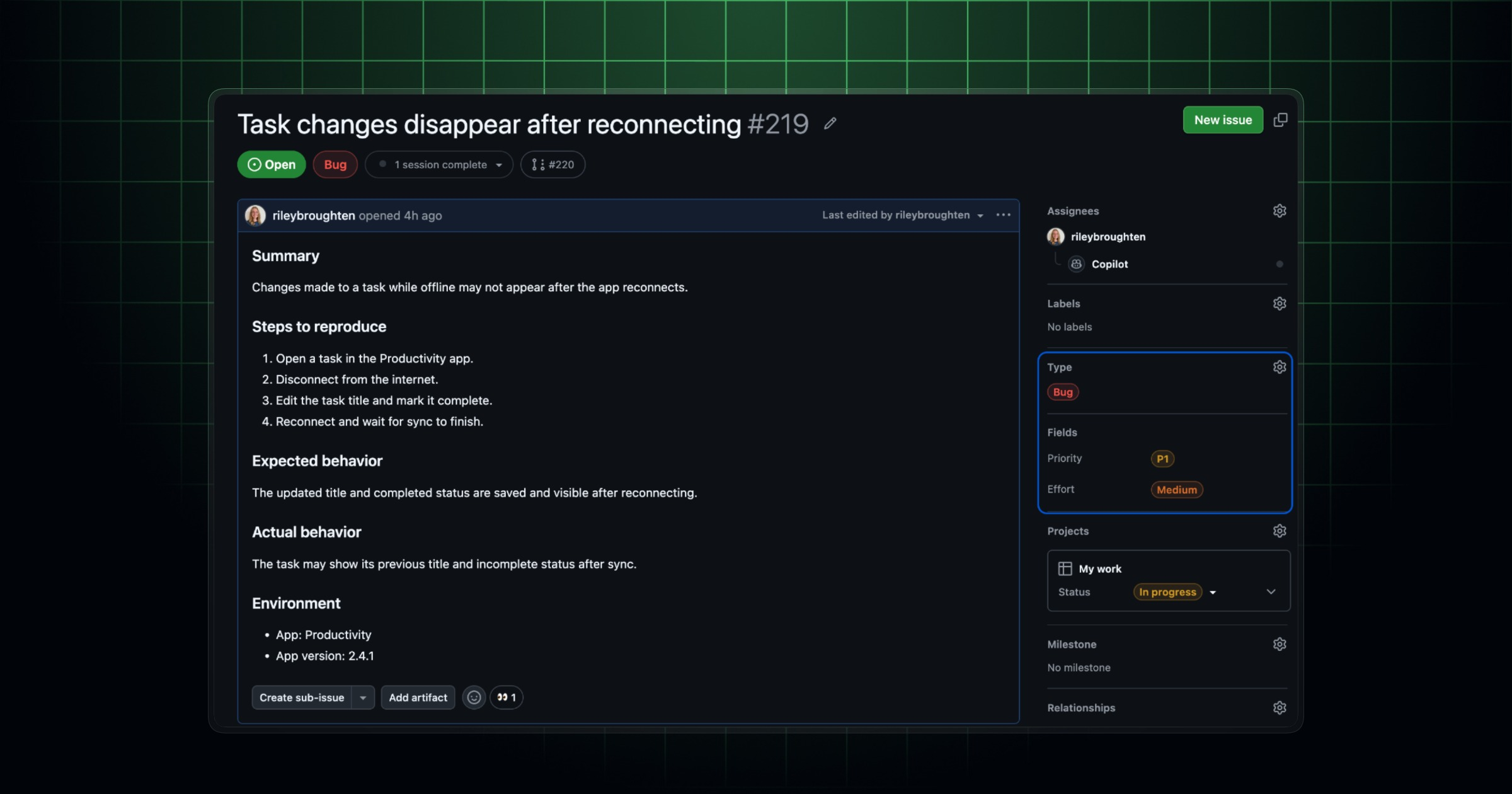
GitHub expands issue types to personal accounts
GitHub finally brings enterprise-grade planning structures to individual developers. Personal repositories now support customizable issue types and fields, allowing solo maintainers to standardize workflows with up to 25 distinct categories. This closes a long-standing gap where only organizations could enforce structured data schemas for bug tracking and feature management. The move signals that GitHub is treating personal open-source projects with the same operational seriousness as corporate codebases.
GitHub Changelog
 © GitHub Changelog
More in Coding Tools
Coding Toolscoding
Claude Code v2.1.323 adds experimental Code Mode and plugin safety
This release quietly introduces Code Mode, an opt-in feature where Claude writes JavaScript to call its own tools, marking a shift toward more autonomous agent-like behavior within the CLI. The update also hardens the plugin ecosystem by enforcing version ranges and adding strict TypeScript type checking for hooks, which should significantly reduce instability from third-party extensions. Beyond these features, the changelog is dominated by critical fixes for authentication drift in background sessions and memory leaks when handling large files, stabilizing the tool for heavy enterprise use.
Claude Code Releases
Coding Toolscoding
llama.cpp b12336 fixes HunyuanVL crash
This release quietly patches a critical memory overflow in the mtmd module that caused crashes when loading HunyuanVL models. The issue stemmed from F64 position embeddings overflowing an F32 buffer, a subtle bug that broke multimodal inference for users relying on this specific architecture. By enforcing strict F32 requirements, llama.cpp stabilizes support for Tencent's vision-language model without adding new features or changing the core API. It’s a necessary maintenance update that keeps local multimodal workflows from breaking unexpectedly.