Research
Anthropic Explores Self-Improving AI with New Paper
TechCrunch AIhigh confidence
Why it matters
- →Demonstrates potential for AI models to autonomously improve their alignment.
- →Could reduce reliance on human researchers, lowering costs significantly.
- →Highlights the importance of accurate benchmarks and quality literature for effective AI self-improvement.

Anthropic has published a new paper detailing a system that allows AI models to autonomously improve their alignment with benchmarks. The research, led by Chen Yueh-Han, shows that these automated systems can enhance performance more efficiently than human researchers, at a significantly lower cost. This advancement suggests a future where AI models could self-improve their training processes, potentially reducing the role of human researchers. However, the system's effectiveness depends on the accuracy of the benchmarks and the quality of the literature it uses.
Read originalMore from TechCrunch AI
 © TechCrunch AI
Investment · $1B
Market & Regulationbusiness
Lambda secures $1B debt for Nvidia AI chips
Lambda has secured $1 billion in private debt to acquire Nvidia AI chips, which it intends to lease to Microsoft. This strategic move, facilitated by JP Morgan Chase, aims to rapidly deploy these chips and generate revenue, enabling quick debt repayment. Following a recent $926 million loan for Nvidia GB300 GPUs, Lambda is aggressively expanding its AI infrastructure. The company's financial maneuvers position it as a significant player in the AI cloud market, leveraging debt to meet the increasing demand for AI computing power. With talks of a $3 billion pre-IPO round, Lambda is poised to capitalize on the AI boom.
TechCrunch AI
 © TechCrunch AI
Investment · $13B
Market & Regulationbusiness
Nvidia Eyes $13B Acquisition of Hugging Face
Nvidia is reportedly planning to acquire Hugging Face for $13 billion, marking a significant expansion into the open-weight AI model sector. This acquisition follows Nvidia's recent $6 billion deal with Poolside, highlighting its strategic move to diversify beyond traditional partnerships with major AI labs. As companies like OpenAI and Google develop their own inference chips, Nvidia aims to secure a foothold in the model-making business. By acquiring Hugging Face, Nvidia would gain access to a vast developer community, potentially increasing the adoption of its hardware. This move reflects the growing importance of open-weight models in the AI ecosystem, offering companies more control and configurability. The acquisition could reshape the landscape of AI development, as open-weight models become increasingly attractive to businesses.
TechCrunch AI
 © TechCrunch AI
Market & Regulationbusiness
Anthropic Wins Court Case Against Pentagon Label
Anthropic has achieved a notable legal victory by overturning the Pentagon's classification of the company as a supply-chain risk. The court found this designation to be an unlawful act of retaliation against Anthropic's critical stance on AI safety, which violated the First Amendment. This decision highlights the ongoing friction between AI companies and government agencies regarding the deployment of AI technologies in military contexts. By removing the risk label, the ruling reinforces the necessity of due process and challenges the blanket use of national security as a rationale for punitive actions against tech firms. This outcome could influence how future interactions between technology companies and government bodies are navigated.
TechCrunch AI
More in Research
 © WIRED AI
Researchresearch
AI May Surpass Doctors in Key Medical Tasks
A recent article in the Journal of the American Medical Association argues that AI could soon outperform human doctors in essential medical tasks. The authors, including Ezekiel Emanuel and Vinod Khosla, suggest that AI might provide superior care by 2030, challenging the traditional role of physicians. This prediction is based on a review of studies indicating AI's growing capabilities in diagnosis, treatment, and chronic disease management. While some experts, like John Whyte of the AMA, express skepticism, the potential shift raises questions about the future role of doctors in a healthcare system increasingly reliant on AI.
WIRED AI
 © Hugging Face Blog
Researchresearch
Open ASR Leaderboard Adds Hindi Language
The Open ASR Leaderboard has expanded to include Hindi, marking a significant step in representing Global South languages. This inclusion addresses the previous lack of non-European languages in speech recognition benchmarks. The new evaluation sets, Monsoon en-IN and Monsoon hi-IN, are crafted to capture diverse speaker characteristics and environments, ensuring a more equitable assessment of ASR systems. By integrating varied demographics and conditions, the leaderboard aims to highlight and mitigate biases present in current speech recognition technology. This development is crucial for creating more inclusive and accurate benchmarks in the field.
Hugging Face Blog
 © MIT News AI
Researchresearch
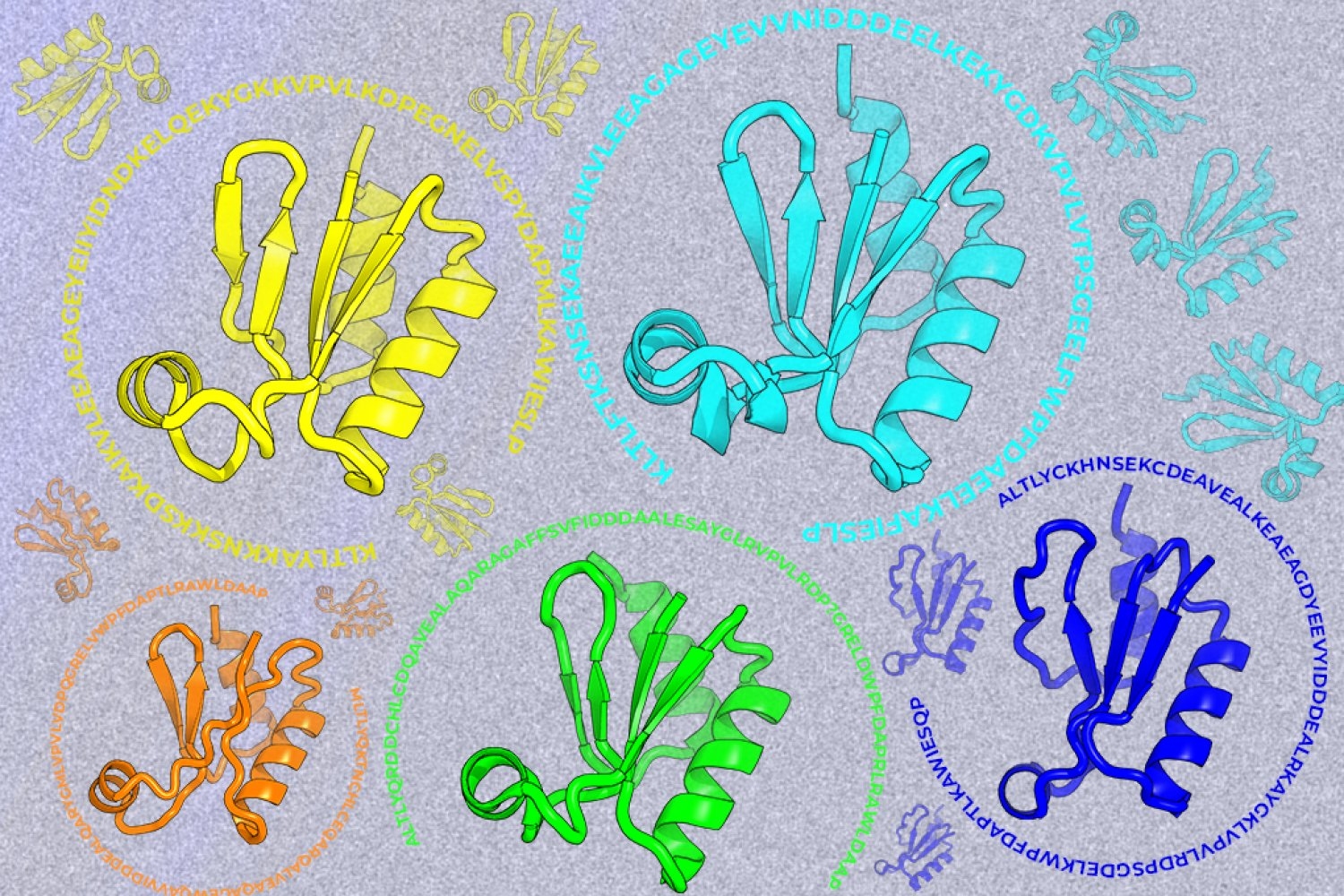
MIT Develops PottsMPNN for Protein Design
MIT researchers have introduced PottsMPNN, a machine-learning framework that enhances protein design by focusing on the sequence-energy landscape rather than mimicking native sequences. This approach allows for the creation of novel proteins with structures that don't resemble any found in nature, potentially revolutionizing biological engineering. By incorporating physical principles and evolutionary information, PottsMPNN improves the prediction of protein stability and the effects of mutations. This advancement could lead to significant breakthroughs in designing proteins for diverse applications, marking a shift in how AI is used in biological research.
MIT News AI