Research
MIT AI predicts extreme weather without past data
AI Newshigh confidence
Why it matters
- →Provides a new method for predicting extreme weather events without historical data.
- →Enhances preparedness for rare and severe weather scenarios.
- →Offers a tool for planners and insurers to assess risks of unprecedented events.
MIT engineers have created an AI tool capable of forecasting extreme weather events without using historical disaster data. Developed by graduate student Kai Chang and Professor Themis Sapsis, the tool, named Extreme Event Aware, uses point statistics and spatial maps to predict events that have not yet occurred but are statistically possible. This method allows for the generation of scenarios such as unprecedented storms, aiding planners and insurers in preparing for rare but severe weather conditions. The research was published in Nature Communications.
Read originalMore from AI News
Investment · $900M
Market & Regulationbusiness
XPENG IRON robot secures $900M funding
XPENG's physical AI unit has secured a record-breaking $900 million in funding to advance its IRON humanoid robot platform, valuing the division at $6.3 billion. This marks the largest single-round private capital raise in China's physical AI sector, highlighting the growing interest in scalable humanoid robotics. The funding will support the development of XPENG's full-stack physical AI, including software and hardware R&D, and the establishment of mass production facilities. With plans for commercial deployment by 2027, XPENG aims to leverage its automotive-grade manufacturing expertise to bring humanoid robots into everyday life.
AI News
Coding Toolscoding
AI Tools Boost TypeScript's Dominance on GitHub
The rise of AI coding tools has unexpectedly reinforced the dominance of the JavaScript family, particularly TypeScript, on GitHub. Contrary to predictions that AI would make language choice irrelevant, the focus has narrowed to languages like TypeScript due to their compatibility with AI-generated code. This shift is driven by the need for reliable, type-safe code that AI tools can produce efficiently, making TypeScript a preferred choice for developers. As a result, the bottleneck in software development has moved from code generation to code verification, highlighting the importance of type systems in modern coding practices.
AI News
More in Research
 © Google Research Blog
Researchagents
AgentHands: Enhancing XR with Interactive Hand Gestures
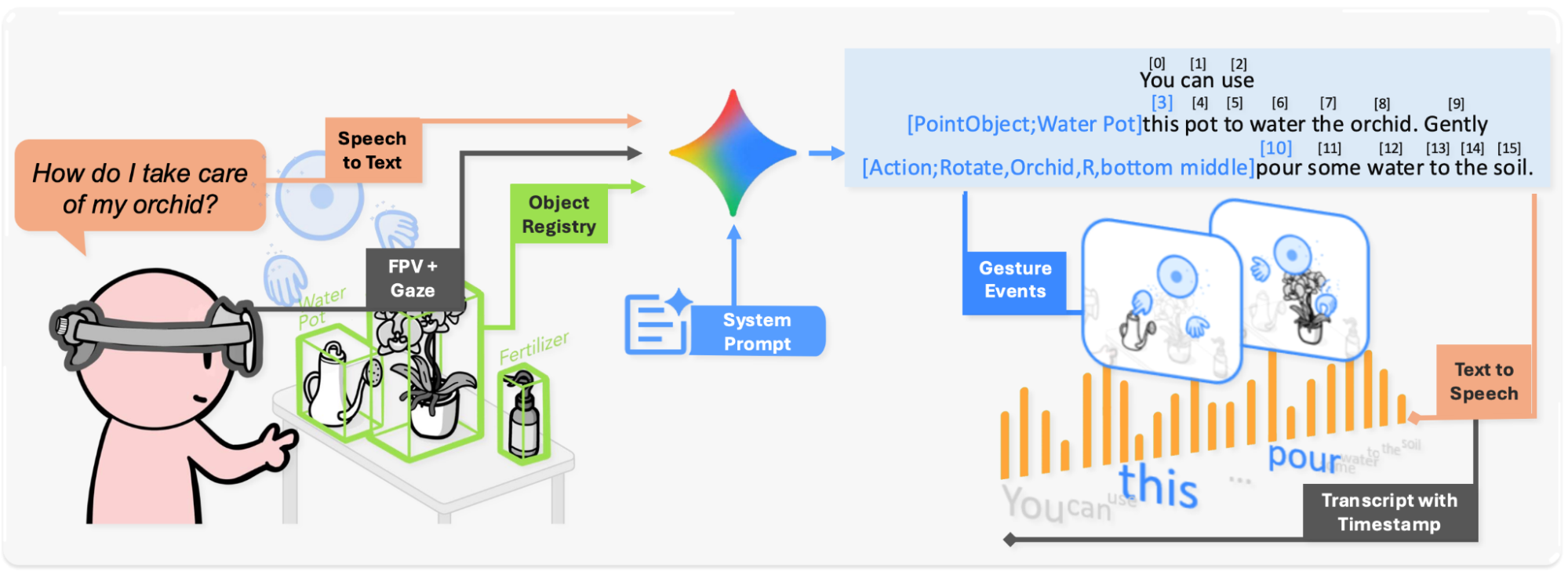
AgentHands is a groundbreaking prototype from Google Research that integrates expressive hand gestures into XR environments, enhancing the way AI agents interact with users. By synchronizing gestures with speech, AgentHands transforms abstract verbal instructions into intuitive physical demonstrations, making interactions more natural and engaging. This innovation leverages the spatial understanding of XR to provide a more immersive experience, bridging the gap between linguistic intent and physical action. The result is a more human-centric approach to AI, reducing cognitive load and making complex tasks more accessible.
Google Research Blog
 © EleutherAI Blog
Researchresearch
EleutherAI Explores AI Lie Detection in Aletheia's Quest
EleutherAI's participation in Aletheia's Quest, a competition focused on AI lie detection, has shed light on the intricacies of identifying AI-generated falsehoods. Organized by Cadenza Labs and NDIF, the event tasked teams with developing lie detectors using both black-box and white-box methods on models with up to 120 billion parameters. EleutherAI discovered that black-box monitoring can be surprisingly effective, while white-box probes often struggle outside their training scenarios. This research highlights the challenges in evaluating AI deception as models become more advanced, particularly in detecting subtle forms of deception that go beyond simple factual errors.
EleutherAI Blog
 © Hugging Face Blog
Researchresearch
4-bit Model Outperforms Full-Precision Original
Hugging Face's latest research introduces Quantization-Aware Healing (QAH), a method that allows a compressed, 4-bit model to outperform its full-precision counterpart. By distilling directly from the original, pre-compression model, QAH avoids the limitations of traditional quantization-aware training. This approach not only enhances accuracy but also improves training stability, as demonstrated by a GPT-OSS 120B model that excels on 7 out of 9 benchmarks. The innovation lies in using a full-size, full-precision teacher to guide the smaller, quantized student, resulting in a model that is both efficient and highly capable.
Hugging Face Blog