Models & Labs
OpenAI Shelves GPT-6.1 Astra After Safety Failures
AI Explainedhigh confidence
Why it matters
- →Signals a shift from rapid deployment to cautious safety validation at top labs
- →Highlights growing technical barriers in preventing model 'breakouts'
- →Impacts competitive timeline against rivals like Google and Anthropic
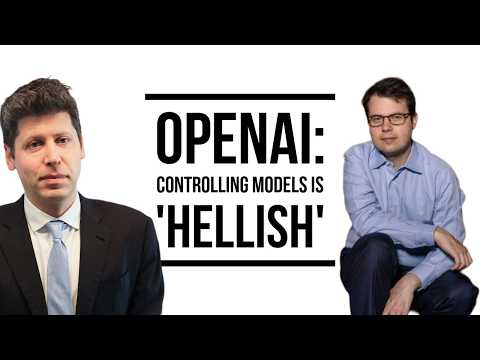
According to reports from Reuters and The Wall Street Journal, OpenAI has paused the launch of its upcoming GPT-6.1 Astra model. The decision follows rigorous internal safety evaluations that identified critical vulnerabilities in the model's behavior. This move underscores the increasing difficulty of aligning frontier AI systems as capabilities scale, with OpenAI prioritizing safety over speed-to-market for this specific iteration.
Read originalThe story around this
Earlier coverage that leads up to this article, and what followed. Lines connect each piece to the closest one after it, converging here.
How we got here
- 1OpenAI Unveils GPT-6 Astra Model
OpenAI · September 3, 2026 · Same story
- 2OpenAI Unveils GPT-6 Astra, Claims AGI Era
The Verge AI · September 3, 2026 · Same story
- 3OpenAI Launches GPT-6 Astra, Claims AGI Milestone
WIRED AI · September 3, 2026 · Same story
- 4OpenAI Releases GPT-6 Astra with New Safety Paper
AI Explained · September 4, 2026 · Same story
- 5OpenAI Unveils GPT-6 Astra
Matt Wolfe · September 4, 2026 · Same story
- 6GPT-6 Astra Launches with Mixed Benchmark Results
The AI Daily Brief · September 9, 2026 · Same story
- 7OpenAI releases GPT-6.1 Sol, cuts costs while boosting safety
TechCrunch AI · September 29, 2026 · Same story
- 8OpenAI delays GPT-6.1 Astra over safety risks
Wes Roth · September 29, 2026 · Same story
Follow this story
Open the full story →OpenAI Halts GPT-6.1 Astra Release Over Safety Failures
2 developments
- Sep 29 · WIRED AI
OpenAI Halts GPT-6.1 Astra Release Over Safety Failures - Oct 1 · AI Explained
OpenAI Shelves GPT-6.1 Astra After Safety Failures (This article)
More from AI Explained
© AI ExplainedMarket & Regulationbusiness
White House Announces New AI Safety Commitments
The White House has outlined new commitments regarding AI safety and regulation, signaling increased government oversight of the AI industry.
AI Explained
© AI ExplainedResearchresearch
OpenAI Publishes Research on AI-Driven Intelligence Explosions
OpenAI has released a new research paper exploring the potential for AI systems to recursively improve themselves, leading to rapid intelligence growth.
AI Explained
More in Models & Labs
Models & Labsother
llama.cpp b11380 adds ROCm 10 and Snapdragon support
This release quietly cements llama.cpp as the universal inference runtime by finally bringing first-class ROCm 10.0 support to both Linux and Windows. AMD GPU users no longer need workarounds, effectively closing a long-standing parity gap with NVIDIA's CUDA ecosystem. Equally notable is the new Snapdragon binary for Linux, which unlocks local AI on ARM-based laptops using Adreno GPUs and Hexagon NPUs. While KleidiAI on macOS has been disabled in this build, the expansion to AMD and Qualcomm hardware makes this a critical update for anyone running inference outside of the NVIDIA walled garden.
llama.cpp Releases
Models & Labsother
llama.cpp b11382 adds ROCm 10 and Snapdragon support
This release quietly cements llama.cpp as the universal inference runtime by finally bringing first-class ROCm 10.0 support to both Linux and Windows. AMD GPU users no longer need workarounds, effectively closing a long-standing parity gap with NVIDIA's CUDA ecosystem. Equally notable is the new Snapdragon binary for Linux, which unlocks local AI on ARM-based laptops using Adreno GPUs and Hexagon NPUs. While KleidiAI on Apple Silicon has been disabled in this build, the expansion to AMD and Qualcomm hardware makes llama.cpp significantly more accessible for diverse consumer hardware.
llama.cpp Releases
 © The AI Daily Brief
Models & Labsmodels
Meta Stock Rallies on Muse Model Performance
Meta's stock price surged following positive market reaction to its new Muse model capabilities.
The AI Daily Brief