Models & Labs
NVIDIA Cosmos 3 Advances Open World Models for Physical AI
NVIDIA Bloghigh confidence
Why it matters
- →Cosmos 3 provides a unified model for vision, simulation, and action prediction, streamlining AI development.
- →Open models allow for customization and adaptation, crucial for specialized AI applications.
- →This initiative fosters collaboration and innovation across industries, enhancing the development of physical AI.
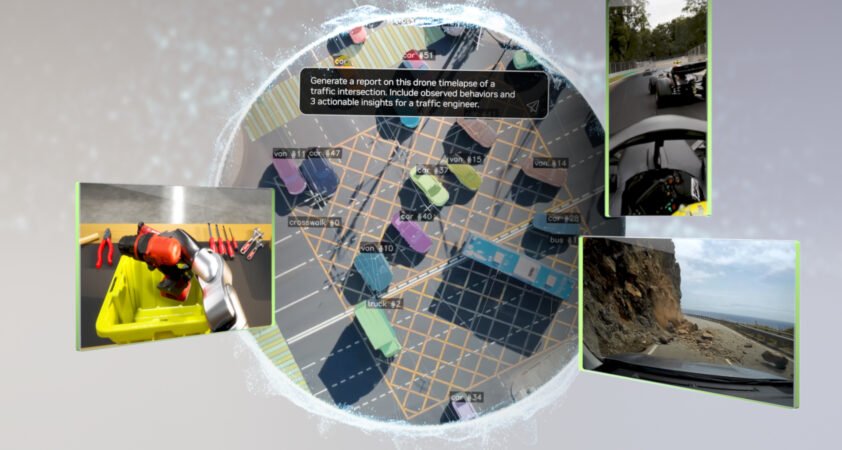
NVIDIA has unveiled Cosmos 3, an open model family designed to advance physical AI by integrating vision reasoning, world generation, and action prediction. This omni-model allows developers to simulate future states and generate synthetic data, providing a versatile foundation for specialized AI systems in robotics, autonomous vehicles, and vision AI. Cosmos 3's open nature under the Linux Foundation’s OpenMDW 1.1 license enables teams to adapt the models to their specific needs, fostering innovation and collaboration across industries. This development marks a significant step in making AI systems more adaptable and efficient.
Read originalThe story around this
Earlier coverage that leads up to this article, and what followed. Lines connect each piece to the closest one after it, converging here.
More in Models & Labs
Models & Labsother
llama.cpp b11193 adds Snapdragon Hexagon and ROCm 10
This release quietly expands llama.cpp's hardware support to include Qualcomm's Hexagon NPU on Linux arm64, a significant step for local inference on Snapdragon devices. It also updates CUDA builds to version 13.4 and introduces ROCm 10.0 binaries, keeping the project aligned with the latest NVIDIA and AMD driver ecosystems. KleidiAI on Apple Silicon is temporarily disabled in this build, likely due to stability checks rather than a feature rollback. For developers targeting edge AI or diverse GPU stacks, this update ensures broader compatibility without requiring custom compilation.
llama.cpp Releases
 © Lev Selector
Models & Labsmodels
NVIDIA NVFP4 and SoL-Pi Token Efficiency
NVIDIA introduced the NVFP4 4-bit format and SoL-Pi technology, which uses 2x fewer tokens for improved efficiency.