Coding Tools
llama.cpp b12596 adds ROCm 10 and CUDA 13 builds
llama.cpp Releaseshigh confidence
Why it matters
- →Enables immediate use of llama.cpp with NVIDIA Hopper/Blackwell GPUs via CUDA 13.
- →Supports AMD RDNA 4/MI300 series hardware through ROCm 10.0 integration.
- →Expands local inference capabilities to ARM-based mobile chips like Snapdragon.
llama.cpp has released version b12596, adding pre-built binaries for CUDA 13.5 and ROCm 10.0 across Linux and Windows platforms. The update also introduces support for Linux arm64 devices using Snapdragon processors, including CPU, Adreno GPU, and Hexagon NPU configurations. Existing builds for Apple Silicon, Vulkan, and OpenVINO remain available, though KleidiAI on macOS is currently disabled in this specific release.
Read originalThe story around this
Earlier coverage that leads up to this article, and what followed. Lines connect each piece to the closest one after it, converging here.
How we got here
- 1llama.cpp b11055 adds CUDA 13 and ROCm 10 builds
llama.cpp Releases · September 20, 2026 · Same story
- 2llama.cpp b12262 adds CUDA 13 and ROCm 10.0
llama.cpp Releases · November 11, 2026 · Same story
More from llama.cpp Releases
Models & Labscoding
llama.cpp b12641 adds CUDA 13 and ROCm 10
This release quietly closes the hardware gap for local inference by adding default support for CUDA 13 and ROCm 10.0 alongside existing CUDA 12 builds. NVIDIA users can now leverage newer driver stacks without manual configuration, while AMD GPU owners gain parity with the latest ROCm version. The build also expands to Linux s390x and Windows arm64, ensuring broader platform coverage for diverse hardware setups. There are no new model architectures or quantization methods here, just a robust infrastructure update that keeps llama.cpp compatible with the fastest available consumer and enterprise GPUs.
llama.cpp Releases
Coding Toolscoding
llama.cpp b12642 fixes MoE weight copying bug
This release patches a critical correctness bug in multi-node Mixture-of-Experts inference where shared expert weights were copied partially, leading to stale data and incorrect outputs. The fix ensures all experts are properly replicated across nodes before graph execution, stabilizing large-scale distributed runs. While the binary lineup remains consistent with previous versions—supporting CUDA 13, ROCm 10.0, and various CPU/GPU backends—the underlying logic correction is vital for anyone running complex MoE models like Inkling2 on multi-node setups. It’s a quiet but necessary fix for reliability in advanced deployment scenarios.
llama.cpp Releases
Coding Toolscoding
llama.cpp b12643 fixes Qwen3 audio tail
This release quietly patches a critical inference bug in llama.cpp’s multimodal handling of Qwen3-Omni and Qwen3-ASR models. Previously, zero-padding artifacts introduced extra tokens that corrupted audio output, a subtle but fatal flaw for speech recognition tasks. The fix replaces magic numbers with explicit token mapping logic, ensuring the model processes only valid audio frames. While not a new feature, it stabilizes one of the most popular open-source multimodal pipelines for developers relying on Qwen’s audio capabilities.
llama.cpp Releases
More in Coding Tools
Coding Toolscoding
Claude Code v2.1.329 patches critical memory and auth bugs
This release stabilizes Claude Code by fixing severe resource leaks that previously caused runaway memory usage in Code Mode and background agents. It also resolves persistent authentication failures on macOS where Keychain access issues led to repeated sign-outs, ensuring smoother session continuity. The update improves reliability for self-hosted runners and fixes how MCP servers handle file types and connection errors. These are essential maintenance patches for anyone running Claude Code in production or complex development environments.
Claude Code Releases
Coding Toolscoding
Claude Code v2.1.330 patches critical stability bugs
This release is less about new features and more about fixing the friction that makes Claude Code feel unreliable in complex workflows. The most impactful changes address session freezing during WebFetch and long conversation compaction, alongside race conditions that caused settings loss or worktree deletion when multiple processes interacted with the IDE. Enterprise users gain better control with organization-managed sign-ins, while self-hosted runners receive metrics to track latency. It’s a necessary cleanup of edge cases that previously hindered serious development usage.
Claude Code Releases
 © GitHub Changelog
Coding Toolscoding
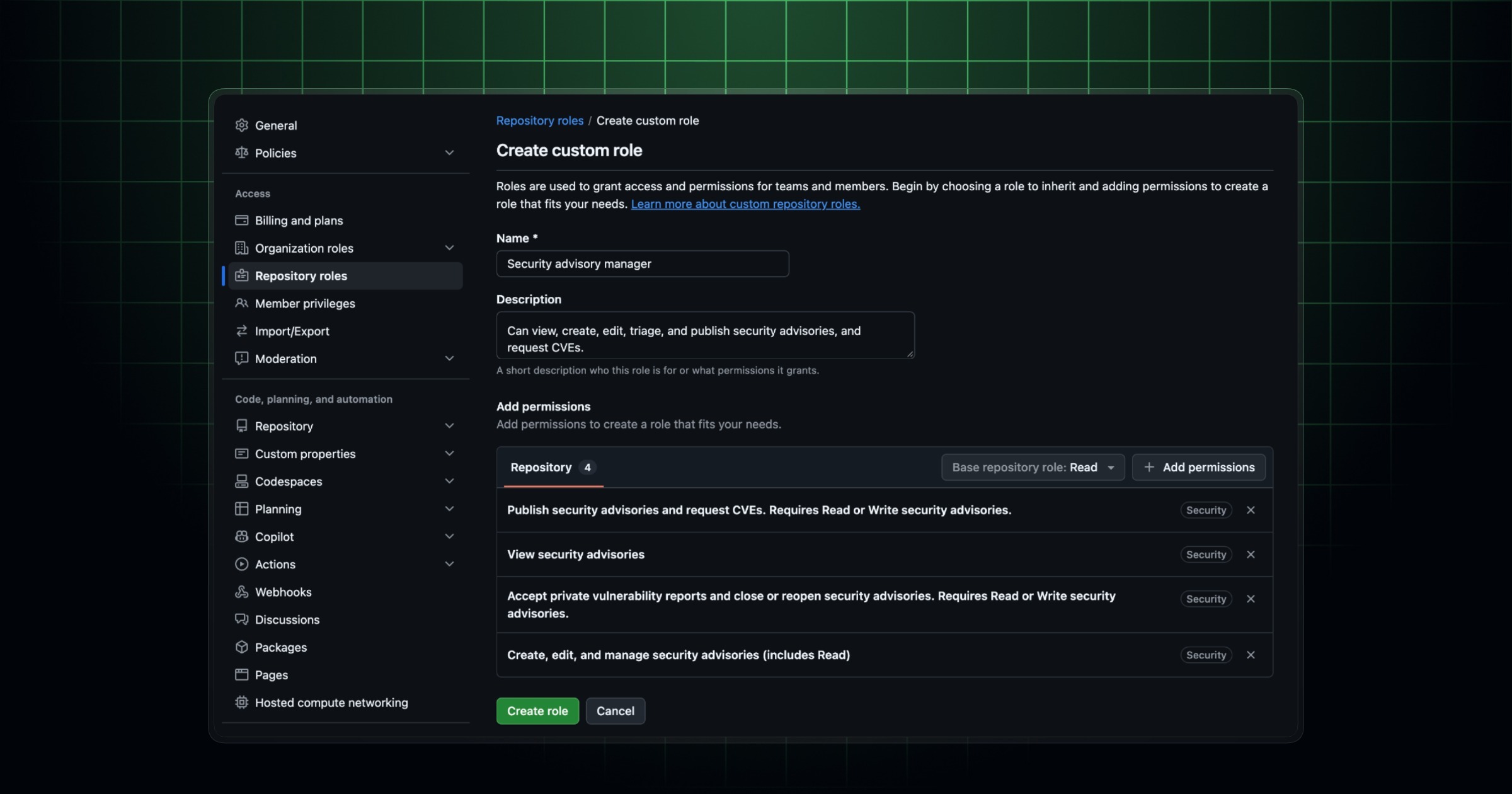
GitHub expands security advisory permissions
GitHub finally decouples security advisory management from full admin rights. By introducing granular custom repository roles, organizations can now grant specific teams access to private vulnerability reports without handing over the keys to the entire repo. This shift addresses a major friction point in secure software development, allowing for precise least-privilege access control. It moves GitHub closer to enterprise-grade security hygiene by separating code ownership from security oversight.
GitHub Changelog