Market & Regulation
NVIDIA Powers Global Robotaxi Expansion
NVIDIA Bloghigh confidence
Why it matters
- →NVIDIA's technology is central to scaling robotaxi fleets globally.
- →It provides a unified platform for AI training, simulation, and in-vehicle computing.
- →This development accelerates the adoption of autonomous vehicles in urban environments.
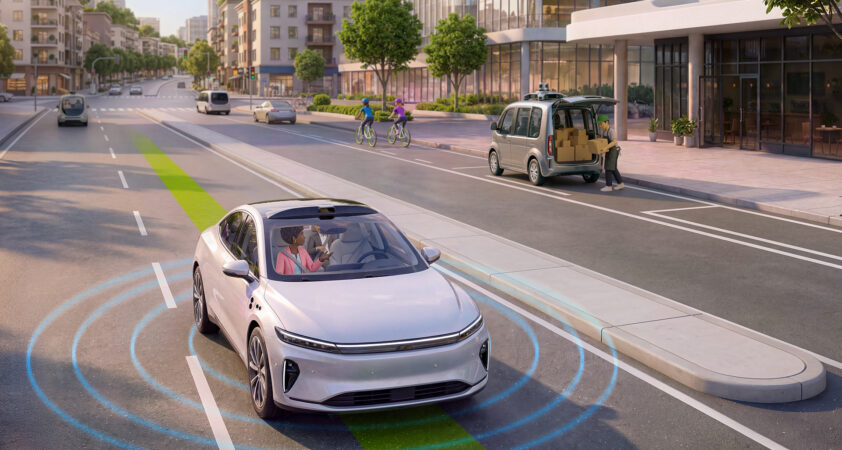
NVIDIA is playing a crucial role in the development and deployment of robotaxis worldwide, offering a comprehensive technology stack that includes AI training, simulation, and in-vehicle computing. Major players like Uber, Waymo, and Lyft are utilizing NVIDIA's platform to expand their autonomous vehicle fleets across various regions. This collaboration highlights NVIDIA's pivotal position in the robotaxi market, as its technology enables safe and efficient scaling of driverless services. The integration of NVIDIA's solutions is a significant advancement in the push towards autonomous urban mobility.
Read originalThe story around this
Earlier coverage that leads up to this article, and what followed. Lines connect each piece to the closest one after it, converging here.
More in Market & Regulation
 © TechCrunch AI
Market & Regulationother
Judge allows NAACP lawsuit over xAI pollution to proceed
xAI's attempt to dismiss the NAACP's Clean Air Act lawsuit failed after a federal judge ruled that its gas turbines are not exempt mobile sources and that plaintiffs have standing. This legal setback confirms that AI infrastructure operators cannot bypass environmental permitting by classifying heavy industrial equipment as temporary or mobile. The ruling forces xAI to face scrutiny over air quality impacts at its Colossus data center, setting a precedent for how large-scale compute facilities are regulated under existing environmental laws.
TechCrunch AI
 © TechCrunch AI
