Models & Labs
NVIDIA Vera Rubin Boosts AI Post-Training Efficiency
NVIDIA Bloghigh confidence
Why it matters
- →Vera Rubin reduces the GPU requirement for large-scale AI post-training, lowering costs.
- →Continuous post-training allows AI models to adapt and improve in real-time.
- →Maximizing intelligence per dollar enhances the economic viability of AI deployments.
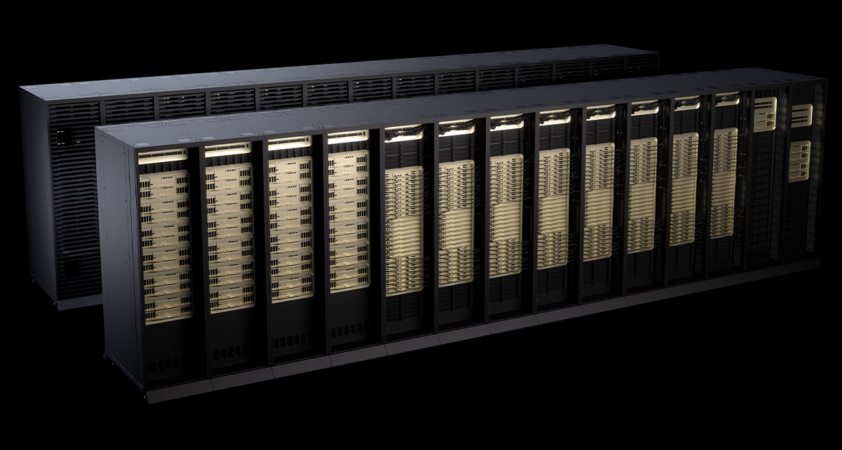
NVIDIA has introduced the Vera Rubin platform, designed to enhance the efficiency of AI post-training by maximizing intelligence per dollar. This platform supports continuous learning cycles, requiring fewer GPUs and enabling more rollouts per run. By integrating with NVIDIA's NeMo RL and Nemotron 3 Ultra, Vera Rubin facilitates large-scale reinforcement learning, allowing models to adapt and improve continuously. This development is significant for AI models that need to operate in dynamic environments, as it reduces costs while increasing the value of AI outputs.
Read originalThe story around this
Earlier coverage that leads up to this article, and what followed. Lines connect each piece to the closest one after it, converging here.
More in Models & Labs
Models & Labsother
llama.cpp b11193 adds Snapdragon Hexagon and ROCm 10
This release quietly expands llama.cpp's hardware support to include Qualcomm's Hexagon NPU on Linux arm64, a significant step for local inference on Snapdragon devices. It also updates CUDA builds to version 13.4 and introduces ROCm 10.0 binaries, keeping the project aligned with the latest NVIDIA and AMD driver ecosystems. KleidiAI on Apple Silicon is temporarily disabled in this build, likely due to stability checks rather than a feature rollback. For developers targeting edge AI or diverse GPU stacks, this update ensures broader compatibility without requiring custom compilation.
llama.cpp Releases
 © Lev Selector
Models & Labsmodels
NVIDIA NVFP4 and SoL-Pi Token Efficiency
NVIDIA introduced the NVFP4 4-bit format and SoL-Pi technology, which uses 2x fewer tokens for improved efficiency.