Models & Labs
NVIDIA Alpamayo 2 Super Now Available for AVs
NVIDIA Bloghigh confidence
Why it matters
- →Alpamayo 2 Super offers advanced reasoning for complex driving scenarios, crucial for AV safety.
- →Open licensing allows developers to adapt and deploy the model freely, fostering innovation.
- →The model's superior performance on benchmarks underscores its potential to lead AV technology.

NVIDIA has released the Alpamayo 2 Super model for commercial use in autonomous vehicles, including robotaxis. This model, part of the Alpamayo family, is built on the Cosmos 3 Super Reasoner and offers advanced reasoning capabilities for complex driving scenarios. It is available under the OpenMDW-1.1 license, allowing developers to adapt and deploy it freely. The model ranks first on several autonomous driving benchmarks, highlighting its superior performance. This release aims to enhance the development and deployment of autonomous vehicles by providing open access to cutting-edge AI technology.
Read originalMore from NVIDIA Blog
 © NVIDIA Blog
Market & Regulationresearch
NVIDIA Joins NSF AI Hubs Program
NVIDIA's participation in the NSF's State and Regional AI Hubs program represents a pivotal move to enhance AI research and education nationwide. By collaborating with educational institutions and other partners, NVIDIA aims to bolster AI infrastructure and resources, leveraging its successful AI initiative with the University of Florida as a blueprint. This effort will provide shared AI computing resources, which are crucial for accelerating scientific discovery and equipping students with skills for the AI economy. The initiative highlights the need to integrate AI infrastructure with workforce development, aligning with both regional and national priorities.
NVIDIA Blog
 © NVIDIA Blog
Models & Labsmodels
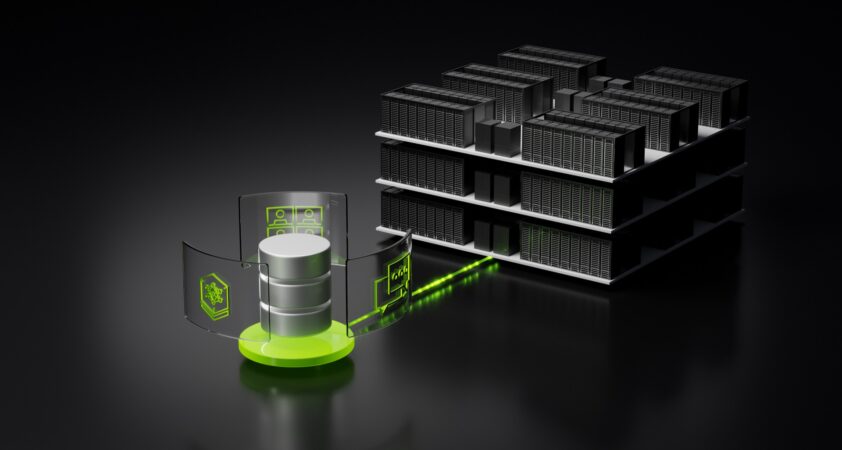
NVIDIA Unveils AI Storage Advancements at FMS
NVIDIA is reshaping the landscape of AI storage with new advancements unveiled at the Future of Memory and Storage conference. By open sourcing its cuFile APIs, NVIDIA enables GPUs to directly interact with storage, significantly reducing data access times to microseconds. This move, alongside the Storage-Next initiative, aims to create a unified, secure, and efficient storage ecosystem that meets the demands of AI's massive data consumption. The introduction of SCADA further enhances this by allowing GPUs to efficiently access only the necessary data, optimizing AI performance and infrastructure productivity. These developments mark a shift towards more integrated and responsive AI storage solutions.
NVIDIA Blog
 © NVIDIA Blog
Market & Regulationresearch
AI Leaders Propose SAFE Guidelines for Cybersecurity
The Open Secure AI Alliance, with over 120 organizations including NVIDIA, Cisco, and Red Hat, is developing the SAFE guidelines to enhance cybersecurity transparency in AI systems. These guidelines aim to transform AI cybersecurity incidents into shared knowledge, promoting collective defense across the ecosystem. By confidentially collecting and analyzing incidents, the initiative seeks to identify recurring failures and provide evidence-based recommendations. This collaborative approach could significantly bolster defenses against emerging threats, fostering a more secure AI landscape.
NVIDIA Blog
More in Models & Labs
Models & Labsmodels
llama.cpp b10278 Release Expands Platform Support
The latest b10278 release of llama.cpp continues its trend of broadening platform compatibility, making it a versatile choice for developers across different systems. Notably, the release includes support for ROCm 7.2 on Ubuntu x64, which is significant for AMD GPU users seeking alternatives to NVIDIA's CUDA. The inclusion of Vulkan support on both Ubuntu and Windows platforms further enhances its appeal for developers working with graphics-intensive applications. While there are no groundbreaking new features, this update solidifies llama.cpp's position as a flexible and inclusive inference runtime for diverse hardware configurations.
llama.cpp Releases
Models & Labsmodels
llama.cpp b10280 Release Expands Platform Support
The b10280 release of llama.cpp marks another step in broadening its reach across various platforms, making it more adaptable for different systems. This update introduces Vulkan support on both Ubuntu and Windows, alongside ROCm 7.2 for Ubuntu, which is a significant boost for AMD GPU users. Windows x64 now benefits from the inclusion of CUDA 12 and 13 DLLs, enhancing its utility for developers. While there are no new models or quantization methods, this release reinforces llama.cpp's role as a flexible and comprehensive solution for AI inference across a wide range of hardware configurations.
llama.cpp Releases
Models & Labsmodels
Llama.cpp b10285 Release Enhances Deepseek-OCR
The latest b10285 release of llama.cpp introduces significant improvements for deepseek-ocr, particularly with multi-row batching support. This update allows for more efficient processing by weaving deepseek-ocr rows in one shot rather than individually, which could enhance performance in OCR tasks. The release also includes a variety of platform-specific builds, such as support for ROCm 7.2 on Ubuntu and CUDA 13 on Windows. While there are no groundbreaking new features, these enhancements make llama.cpp a more versatile tool for developers working with OCR and other AI applications.
llama.cpp Releases