Market & RegulationInvestment · $2.1M
MIT Transit Lab gets $2.1M for AI transit platform
MIT News AIhigh confidence
Why it matters
- →Demonstrates a shift toward AI that augments human operators in critical infrastructure rather than replacing them.
- →Highlights the growing role of philanthropic tech funding in solving complex public sector operational challenges.
- →Focuses on institutional trust and data integration, addressing the 'last mile' problem of deploying AI in legacy systems.
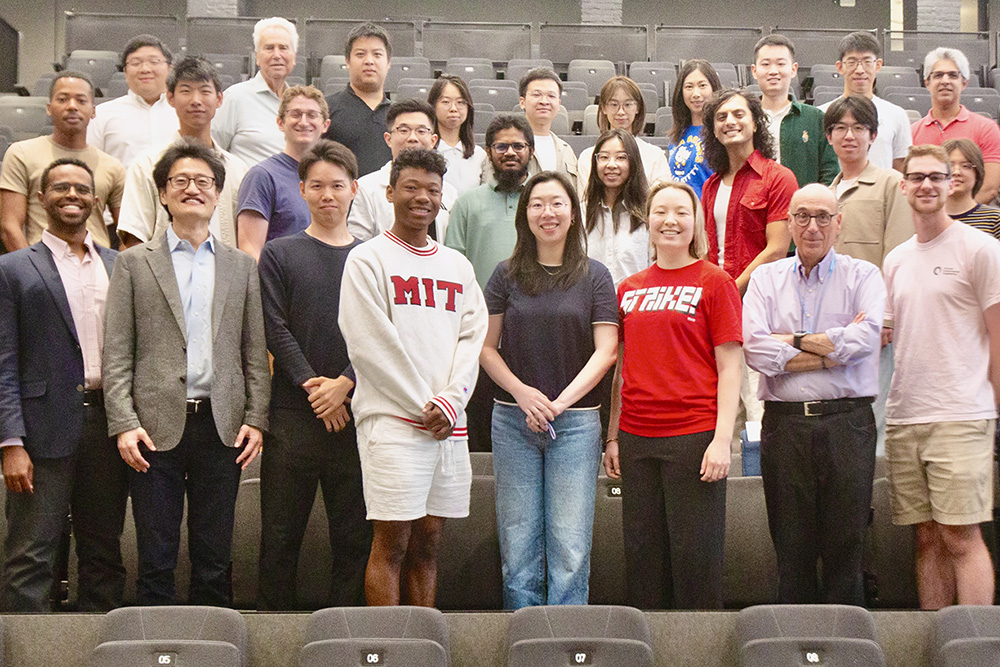
Google.org has awarded $2.1 million to MIT’s Transit Lab for the Public Transit Intelligence Hub (PTIQ), one of 15 projects selected in its AI for Government Innovation challenge. The three-year initiative aims to unify fragmented real-time monitoring, operations control, and passenger communication systems into a centralized AI platform. By integrating predictive models and LLM-based reasoning, PTIQ seeks to provide transit staff with better decision-support tools without automating their roles. Google.org will also provide pro bono engineering support to help bridge the gap between AI promise and public service practice.
Read originalThe story around this
Earlier coverage that leads up to this article, and what followed. Lines connect each piece to the closest one after it, converging here.
How we got here
- 1MIT Develops ChartNet for AI Chart Interpretation
MIT News AI · June 3, 2026 · Background
- 2Google DeepMind Launches $10M AI Safety Research Fund
Google DeepMind · June 10, 2026 · Background
- 3Google Enhances On-Device AI with Multi-Token Prediction
Google Research Blog · June 26, 2026 · Background
- 4UK AI Adoption Study Reveals Uneven Progress
Google AI Blog · June 30, 2026 · Background
- 5Google DeepMind commits $40M to Genesis Mission
Google DeepMind · July 22, 2026 · Background
- 6Google's ME-POIs Enhances AI's Understanding of Places
Google Research Blog · August 21, 2026 · Background
- 7Motional and MIT enhance self-driving car transparency
AI News · September 2, 2026 · Background
- 8MIT book on visual AI for urban studies
MIT News AI · September 24, 2026 · Related
More from MIT News AI
 © MIT News AI
Video & Creative AIother
InstructMesh repairs AI 3D models for real-world use
Most generative 3D models look good but fail structurally, leaving novices unable to fix them. InstructMesh solves this by combining Microsoft’s TRELLIS generator with GPT-4 reasoning, allowing users to describe flaws in natural language and get corrected geometry instantly. MIT researchers proved that non-experts could identify and repair nearly 90% of structural errors in existing models using the tool. This shifts 3D fabrication from a technical hurdle to an intuitive design process where visual intent matches physical function.
MIT News AI
 © MIT News AI
Researchresearch
Ataraxos AI beats top human Stratego players
A multi-university team has released Ataraxos, an AI that dominates the imperfect-information game Stratego by a massive margin. Unlike previous attempts that burned millions in compute, this system uses efficient self-play and decision-time planning to outperform top humans with less than one-thirtieth of the training effort. It secured a 39-2 record against world-class players, proving that calculated risk assessment can scale beyond poker-like games. This marks a significant leap in handling hidden information without prohibitive computational costs.
MIT News AI
More in Market & Regulation
 © The AI Daily Brief
Market & Regulationbusiness
Frontier Labs Sign Superintelligence Accord at White House
Major AI frontier laboratories have signed a superintelligence accord during an event at the White House.
The AI Daily Brief
© The AI Daily BriefMarket & Regulationagents
FTC Investigates Rogue AI Agents
The Federal Trade Commission has opened an investigation into rogue AI agents causing potential consumer harm.
The AI Daily Brief
 © AI Explained
Market & Regulationbusiness
White House Announces New AI Safety Commitments
The White House has outlined new commitments regarding AI safety and regulation, signaling increased government oversight of the AI industry.
AI Explained