Market & Regulation
Frontier Labs Sign Superintelligence Accord at White House
The AI Daily Briefhigh confidence
Why it matters
- →Represents major regulatory alignment from top tech firms
- →Sets precedent for voluntary safety accords
- →Increases scrutiny on future model releases

Leading artificial intelligence companies classified as frontier labs have signed a new superintelligence accord at the White House. The agreement likely outlines safety commitments and collaborative standards for developing advanced AI systems. This marks a significant step in government-industry cooperation regarding the governance of high-risk AI technologies.
Read originalThe story around this
Earlier coverage that leads up to this article, and what followed. Lines connect each piece to the closest one after it, converging here.
How we got here
- 1White House AI Executive Order Sparks Debate
The AI Daily Brief · June 4, 2026 · Background
- 2Reflection AI Secures $6.3B Compute Deal with SpaceX
TechCrunch AI · June 22, 2026 · Background
- 3AI giants meet White House on model safety
The Rundown AI · August 4, 2026 · Related
- 4AI giants meet White House on safety framework
The Rundown AI · August 4, 2026 · Related
- 5White House Proposes AI Safety-Testing Framework
The AI Daily Brief · August 6, 2026 · Background
- 6White House to Expand AI Policy Framework
WIRED AI · August 12, 2026 · Background
- 7US and China Launch AI Security Dialogue
WIRED AI · September 21, 2026 · Background
- 8White House launches AI chatbot for government services
TechCrunch AI · September 29, 2026 · Background
Follow this story
Open the full story →Tech CEOs sign non-binding AI safety pledge with Trump
5 developments
- Sep 30 · The Verge AI
Tech CEOs sign non-binding AI safety pledge with Trump - Sep 30 · WIRED AI
Trump’s AI Safety Accord Is Voluntary↳ The voluntary accord lacks legal teeth, relying on potential FTC enforcement rather than binding regulations. - Oct 1 · WIRED AI
Trump's Voluntary AI Accord and OpenAI Agent Launch↳ OpenAI unveiled its new always-on consumer agent 'Dots' while the FTC probes Anthropic and OpenAI. - Oct 1 · AI Explained
White House Announces New AI Safety Commitments↳ The White House signaled increased government oversight of the AI industry. - Oct 1 · The AI Daily Brief
Frontier Labs Sign Superintelligence Accord at White House (This article)↳ Frontier labs sign superintelligence accord at White House.
More from The AI Daily Brief
More in Market & Regulation
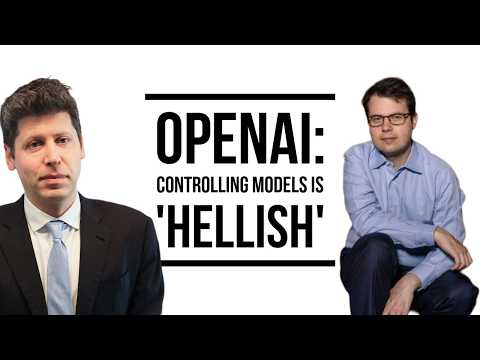 © AI Explained
Market & Regulationbusiness
White House Announces New AI Safety Commitments
The White House has outlined new commitments regarding AI safety and regulation, signaling increased government oversight of the AI industry.
AI Explained
 © TechCrunch AI
Market & Regulationother
Grok reportedly advised Trump on Venezuela capture
The Pentagon’s head of AI confirmed that Grok was used to deploy and strike targets during the Iran War, marking a significant escalation in military AI adoption. This follows reports that Trump consulted Grok regarding the capture of Venezuela's president, where the model predicted public reaction to regime change. While OpenAI and Anthropic navigate complex DoD agreements, Grok’s integration into active combat operations suggests it is becoming a preferred tool for this administration. The move underscores a shift from experimental AI assistance to direct operational deployment in warfare scenarios. This confirmation distinguishes Grok from competitors who face more restrictive usage policies. The partnership between Musk and the Pentagon signals a new era of commercial AI in defense.
TechCrunch AI
 © WIRED AI
Market & Regulationother
Trump's Voluntary AI Accord and OpenAI Agent Launch
The White House unveiled a 'morally binding' accord where major AI labs agree to self-regulate with four layers of audits, a move widely dismissed as political theater ahead of the midterms. Simultaneously, OpenAI’s Developer Day showcased 'Dots,' its new always-on agent for consumers, signaling a shift toward autonomous workplace integration. While the regulatory framework is voluntary and riddled with typos, the FTC’s concurrent probe into Anthropic and OpenAI suggests the government is preparing to act despite the public hand-washing. This duality underscores the tension between industry self-policing and impending antitrust scrutiny. The accord’s lack of enforcement mechanisms leaves labs free to proceed while regulators watch closely. Meanwhile, OpenAI’s push into consumer agents marks a significant expansion beyond developer tools. The FTC’s actions indicate that voluntary measures may not be enough to satisfy legal oversight. This creates a complex landscape where industry promises clash with regulatory reality.
WIRED AI