Coding Tools
CodeQL 2.26.4 Enhances Security Detection
GitHub Changeloghigh confidence
Why it matters
- →CodeQL 2.26.4 enhances security detection accuracy, crucial for developers relying on GitHub code scanning.
- →The update supports new language versions and improves alert precision, helping developers address vulnerabilities more effectively.
- →These enhancements reflect ongoing efforts to bolster code security across various programming languages and platforms.
GitHub has released CodeQL 2.26.4, enhancing its static analysis engine used for code scanning. This update includes support for Go 1.27 and improves alert precision for Rust data flow queries. Additionally, it refines security checks for C#, Java/Kotlin, and GitHub Actions, potentially increasing the number of alerts. These improvements aim to provide developers with more accurate tools for identifying and addressing security vulnerabilities in their code.
Read originalMore from GitHub Changelog
 © GitHub Changelog
Coding Toolscoding
GitHub Copilot Expands Model Options and Features
GitHub Copilot's latest update introduces new model options and enhanced content protections, marking a significant step in its evolution. With the addition of Claude Fable 5.1 and Gemini 3.8 Flash, users across various tiers can now access more powerful AI models. The update also includes content exclusions to safeguard sensitive code and a public preview of Agent Merge, which aids in resolving pull request issues. These enhancements, along with experimental features like multi-root workspaces and customizable chat backgrounds, aim to improve user experience and workflow efficiency.
GitHub Changelog
 © GitHub Changelog
Models & Labscoding
GPT-6 Astra now in GitHub Copilot
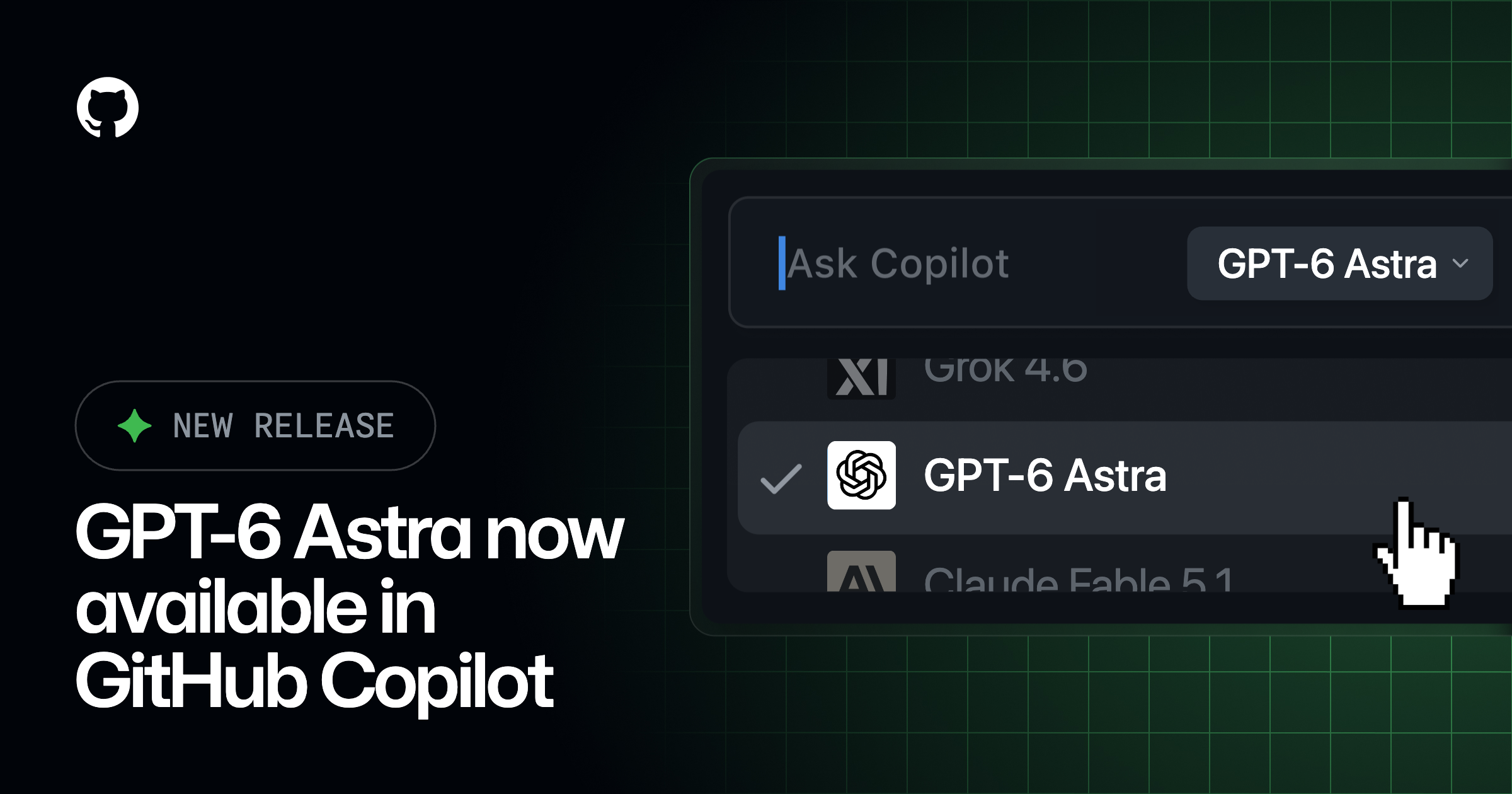
OpenAI's GPT-6 Astra is now part of GitHub Copilot, bringing advanced capabilities for complex coding tasks. This model excels in planning and validating its processes, which translates to more efficient coding with fewer steps. Users of Copilot Pro+, Max, Business, and Enterprise can now access GPT-6 Astra through tools like Visual Studio Code and JetBrains IDEs. This integration signifies a major leap in AI-driven coding assistance, enabling developers to tackle more sophisticated tasks with greater ease. The rollout is gradual, ensuring a smooth transition for users adopting this new model.
GitHub Changelog
 © GitHub Changelog
Coding Toolscoding
npm Enhances Trusted Publishing Configurations
npm has introduced multiple trusted publishing configurations per package, allowing maintainers to manage workflows for stable, prerelease, or staging versions more effectively. This update eliminates the need for workaround solutions or long-lived tokens, as each configuration operates independently with its own criteria. Additionally, staged packages now require malware scanning completion before approval, enhancing security. These changes streamline the publishing process and provide maintainers with greater control and transparency over their package versions.
GitHub Changelog
More in Coding Tools
Coding Toolscoding
Claude Code v2.1.259 Release
The latest update to Claude Code, version 2.1.259, brings significant improvements and fixes that enhance its functionality and user experience. With the addition of managed MCP servers and a new permission prompt mode for headless hosts, organizations can now manage their operations more efficiently. The update also resolves various bugs, such as issues with concurrent sessions and prompt cache invalidation, leading to smoother performance. These enhancements make Claude Code more reliable and user-friendly, especially for developers dealing with complex workflows and integrations.
Claude Code Releases
 © Hugging Face Blog
Coding Toolscoding
Hugging Face Introduces Funes for Agent Memory
Hugging Face has launched Funes, a tool that provides a durable memory layer for coding agents like Claude Code and Codex. This innovation allows agents to index, retrieve, and rank session logs, enabling them to recall past decisions and rationales during their workflow. Funes operates locally, ensuring privacy and control, and can also sync with a private Hugging Face dataset for broader accessibility. This development enhances the functionality of coding agents by allowing them to seamlessly integrate past knowledge into current tasks, making them more efficient and context-aware.
Hugging Face Blog
Coding Toolscoding
Claude Code v2.1.257 Release
The latest update to Claude Code, version 2.1.257, introduces several enhancements and fixes that improve user experience and functionality. Notably, the new Claude Fable 5.1 model becomes the default, offering a 1M context at competitive pricing. The update also adds new time format settings and a containment escape rule to enhance security. Numerous bug fixes address issues like session management, background processes, and permission handling, making the platform more robust and reliable. This release signifies a step forward in refining the tool's usability and performance for developers.
Claude Code Releases