General AI
Anthropic CEO Predicts AI Transformation by 2030
AI Explainedhigh confidence
Why it matters
- →This prediction emphasizes the urgency for AI practitioners to prepare for rapid changes in the industry.
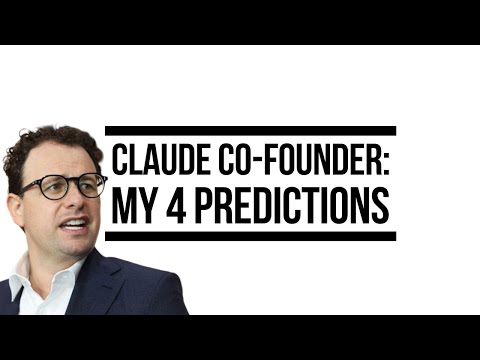
Dario Amodei, CEO of Anthropic, has published a nearly 20,000-word essay predicting significant advancements in AI by 2030. He argues that scaling and recursion will evolve AI from simple coding automation to comprehensive engineering automation. Amodei also warns of potential economic displacement within the next 1-2 years and highlights concerns regarding China's path toward AI-enabled totalitarianism.
Read originalThe story around this
Earlier coverage that leads up to this article, and what followed. Lines connect each piece to the closest one after it, converging here.
How we got here
- 1Anthropic CEO Claims Scaling to AGI Possible
AI Explained · December 5, 2025 · Background
What happened next
- 2AI Models to Feature Distinct Personas
AI Explained · January 28, 2026 · Background
- 3Anthropic unveils powerful AI through Project Glasswing
The Rundown AI · April 8, 2026 · Background
- 4Anthropic Tackles AI Misalignment with New Training
TechCrunch AI · May 10, 2026 · Background
- 5Thinking Machines Develops Real-Time AI Interaction Models
The Verge AI · May 11, 2026 · Background
- 6Anthropic's AI Vision: Anticipating User Needs
TechCrunch AI · May 13, 2026 · Background
More from AI Explained
 © AI Explained
Researchresearch
New Benchmarks: ExploitGym, BenchCAD, and IntegrityBench
Several new evaluation benchmarks have been released, including ExploitGym for security vulnerabilities and BenchCAD for design robustness.
AI Explained
© AI ExplainedResearchresearch
METR Report: AI R&D Acceleration at Anthropic
A new METR report assesses the acceleration of AI research and development within Anthropic, analyzing internal model improvements.
AI Explained
More in General AI
 © The Verge AI
General AIother
AI agent 'discovery' of Maya site debunked
A Google researcher’s claim that AI agents found a new Maya site collapsed when experts pointed out it was already documented in academic literature. The incident exposes a critical blind spot: autonomous systems lack the contextual knowledge to verify findings against existing research, leading to false positives and wasted expert time. While the agent successfully processed lidar data, it failed to cross-reference its output with known records, highlighting that automation without domain expertise is prone to error. This serves as a cautionary tale for using AI in scientific discovery, where verification requires more than just pattern recognition.
The Verge AI
 © The Verge AI
General AIother
AI chatbots frequently recommend fake retail sites
A new study reveals that major AI assistants are actively directing shoppers to counterfeit and phishing websites, with Perplexity leading at 15% risky link rates. This isn't just a hallucination quirk; it's a tangible security threat where models confidently endorse impersonators for brands like Lululemon and Birkenstock. While Google’s Gemini performed best by limiting risky outputs to 4%, the fact that these tools are becoming primary shopping assistants makes this reliability gap critical. Consumers can no longer treat AI search results as verified sources without manual cross-checking.
The Verge AI
 © WIRED AI
General AIother
Experts pivot AI safety from extinction to cyber and bio threats
The AI safety narrative has shifted from speculative extinction scenarios to tangible infrastructure risks. A WIRED panel of experts identifies nuclear integration errors, cyberattacks on critical systems, and biological weaponization as the immediate dangers. This marks a move away from abstract 'runaway intelligence' fears toward verifiable industrial hazards like flawed defense workflows and unregulated bio-threats. The consensus suggests that current lab-driven safety thresholds are insufficient for these concrete threats.
WIRED AI