16 × AIAI signal, amplified
AI newsAboutSources
TelegramFollow on Telegram
AI newsAboutSources
16 × AIAI signal, amplified

An AI news engine that ingests trusted sources, scores with Claude, and posts only what clears the bar.

Follow on Telegram →

Subscribe

  • Telegram
  • RSS
  • All channels

Legal

  • Privacy
  • Imprint
© 2026 16 × AI. All rights reserved.Curated by Claude. Posts every 6 hours. No newsletter, no funnel.
Home/Open Source
Open Source

WAXAL: Open Resource for African Language Speech Tech

Google Research Blog·March 6, 2026·high confidence

Why it matters

  • →The development of WAXAL is significant for AI practitioners as it addresses the gap in resources for African languages, promoting inclusivity in AI technologies.
WAXAL: Open Resource for African Language Speech Tech
©Google Research Blog

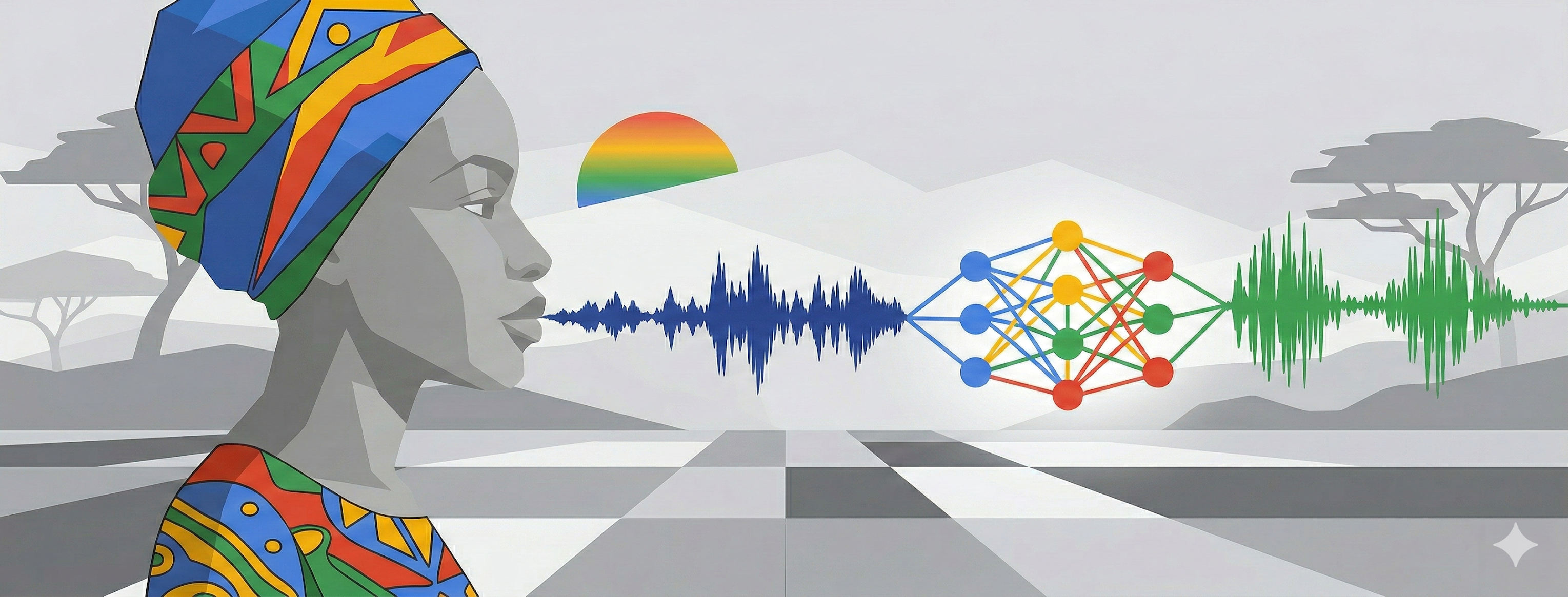
Google Research has introduced WAXAL, a large-scale open resource aimed at advancing speech technology for African languages. This initiative seeks to enhance natural language processing capabilities in underrepresented languages.

Read original

More from Google Research Blog

Google Research Explores AI in Dermatology Assistance© Google Research Blog
Researchresearch

Google Research Explores AI in Dermatology Assistance

Google Research has been delving into how AI can aid individuals in comprehending skin conditions, with their latest findings published in JAMA Dermatology. Their studies reveal that AI tools can significantly enhance users' ability to identify skin conditions compared to traditional search methods. Despite this improvement in condition identification, the AI tools still face challenges in guiding users on the appropriate medical actions to take. This research demonstrates the potential of AI to make dermatological information more accessible to the public, although further refinement is necessary to enhance decision-making support.

Google Research Blog·Jun 12, 2026
UC San Diego Turns Old Phones into Low-Carbon Cloud© Google Research Blog
Researchresearch

UC San Diego Turns Old Phones into Low-Carbon Cloud

In a novel approach to sustainable computing, researchers at UC San Diego, with support from Google, are repurposing retired smartphones into a low-carbon cloud computing platform. By extracting and clustering the motherboards of 2,000 Pixel phones, they aim to create a datacenter that offers low-cost computing power while reducing the need for new hardware. This initiative not only addresses the carbon footprint of manufacturing but also leverages the surprising power of smartphone processors, which can rival modern servers. The project will serve as a testbed for the viability of smartphone-based computing at scale, potentially transforming how educational institutions manage their computing resources.

Google Research Blog·Jun 12, 2026

More in Open Source

Open Sourcecoding

llama.cpp b9622 Release Enhances Vulkan Support

The b9622 release of llama.cpp significantly boosts Vulkan capabilities, particularly for non-contiguous unary and glu operations. By refining index calculations with fastdiv and merging unary operations into a single file, the update enhances both performance and code efficiency. It also tackles a compiler bug and resolves earlier conflicts, ensuring smoother functionality across a broad spectrum of hardware setups. While this update doesn't introduce revolutionary features, it strengthens llama.cpp's role as a flexible tool for developers working with diverse hardware, including macOS, Linux, Windows, and openEuler.

llama.cpp Releases·Jun 14, 2026
Open Sourcecoding

llama.cpp b9624 Release Expands Platform Support

The b9624 release of llama.cpp enhances its utility by introducing build-time gzip compression, which can optimize performance through reduced file sizes. This update continues to cater to developers working on various systems, including macOS, Linux, Windows, and openEuler, with specific builds for architectures like arm64 and x64. The inclusion of ROCm 7.2 for Ubuntu x64 and CUDA 12 and 13 for Windows x64 highlights its adaptability to different hardware environments. While there are no new model architectures, the release strengthens llama.cpp's role as a flexible tool for developers needing compatibility across diverse setups.

llama.cpp Releases·Jun 14, 2026
Open Sourcemodels

llama.cpp b9625 Release Expands Platform Support

The latest b9625 release of llama.cpp continues its trend of broadening platform compatibility, though without any groundbreaking new features. Notably, it includes support for ROCm 7.2 on Ubuntu x64, which is significant for AMD GPU users seeking alternatives to NVIDIA's CUDA. The release also maintains a wide array of builds across macOS, Linux, Windows, and openEuler, though some configurations like KleidiAI on Apple Silicon remain disabled. While this update doesn't introduce new models or quantization methods, it solidifies llama.cpp's role as a versatile inference runtime across diverse systems.

llama.cpp Releases·Jun 14, 2026