Open Source
llama.cpp b10328 Release Adds Docker Tool Isolation
llama.cpp Releaseshigh confidence
Why it matters
- →Tool isolation via Docker enhances security and modularity for developers.
- →Separation of tools into sandbox and Docker environments increases flexibility.
- →Strengthens infrastructure without introducing new models or quantization.
The b10328 release of llama.cpp has introduced initial support for tool isolation via Docker, enhancing the modularity and security of its server environment. This update includes the separation of tools into sandbox and Docker environments, and the renaming of sandbox to isolate. The release also features updates for macOS, Linux, Windows, and openEuler platforms, although no new models or quantization methods are included. This development is significant for developers seeking more secure and flexible deployment options with llama.cpp.
Read originalMore from llama.cpp Releases
Models & Labsmodels
llama.cpp b10412 Release Enhances Backend Sampling
The latest b10412 release of llama.cpp introduces backend sampling for both dflash and dspark, marking a technical enhancement in the platform's capabilities. This update allows for more refined control with the enablement of p_min > 0 in backend sampling, adding a layer of precision for developers. While the release doesn't introduce new models or architectures, it quietly strengthens the platform's backend functionality, making it more versatile for developers working across various systems. This update is a step forward in optimizing the performance and flexibility of llama.cpp's inference capabilities.
llama.cpp Releases
Models & Labsmodels
llama.cpp b10414 Release Adds TQ2_0 Support
The b10414 release of llama.cpp marks a significant enhancement with the addition of GGML_TYPE_TQ2_0 type processing in the Metal backend, enabling ternary operations with 2 bits per element. This update brings a more efficient mul_mv kernel, focusing on float operations and optimizing data handling through techniques like precalculating sums. While the release doesn't feature new models, it refines the platform's performance and broadens its compatibility across systems like macOS, Linux, and Windows. By improving efficiency and versatility, llama.cpp continues to be a valuable tool for developers working with a variety of hardware configurations.
llama.cpp Releases
Models & Labsmodels
llama.cpp b10418 Release Enhances SYCL Support
The b10418 release of llama.cpp brings notable improvements to SYCL support, particularly through the introduction of host pinned memory, which enhances host-to-device memory access. This update also resolves a thread-safety issue, ensuring more stable performance across different hardware setups. While no new models are introduced, the release focuses on strengthening the existing infrastructure, making it more robust for developers working with SYCL. This update is crucial for optimizing performance and ensuring compatibility, especially for those leveraging SYCL in their development environments.
llama.cpp Releases
More in Open Source
 © GitHub Changelog
Open Sourcecoding
GitHub Enhances License Data Quality
GitHub has significantly improved the accuracy of license data for software components by integrating package registries like npmjs.org and PyPI into its dependency graph. This shift reduces the reliance on the ClearlyDefined service, which often produced complex and confusing results. By prioritizing registry data, GitHub has halved the number of missing licenses, enhancing the reliability of dependency insights and software bills of materials. This update also simplifies license tracking by using version ranges, making it easier to manage license changes over time.
GitHub Changelog
 © NVIDIA Blog
Open Sourceagents
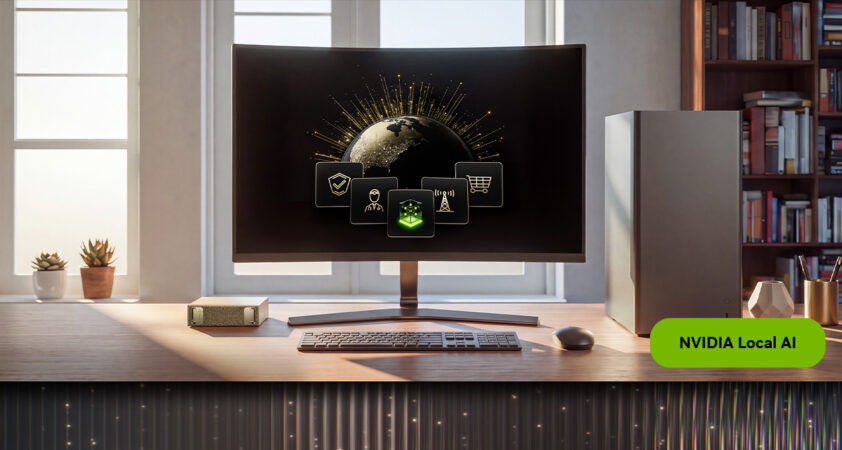
NVIDIA Boosts Local AI with New Open Models
NVIDIA is making strides in the open-source AI ecosystem by releasing several new models and tools that enhance local AI capabilities. Notably, the Cosmos 3 Edge model for robotics and autonomous vehicles, and the MiniMax-H3 model for video and audio generation, are optimized for NVIDIA GPUs, allowing developers to run complex AI tasks locally. This push towards local AI is further supported by the launch of Unsloth Desktop, a comprehensive open-source app for AI model training and inference. These developments signify a shift towards more accessible and efficient AI processing on personal devices, reducing reliance on cloud-based solutions.
NVIDIA Blog
 © Sam Witteveen
Open Sourceagents
NVIDIA Launches NeMo Switchyard for AI Agents
NVIDIA's NeMo Switchyard is a new open-source library designed to optimize AI agent workflows by selecting the most suitable model for each task. This innovation aims to enhance the efficiency of long-running AI agents by improving response times and token usage. By acting as a router, Switchyard intelligently directs workloads across different models, potentially transforming how developers build and deploy AI agents. The open-source nature of Switchyard invites developers to explore and contribute, making it a significant tool for those interested in large language model (LLM) agents.
Sam Witteveen