Research
Predicting fine-tuning time beats FLOP math
Hugging Face Bloghigh confidence
Why it matters
- →Standard FLOP estimates are unreliable for production scheduling on shared GPU clusters.
- →Pre-dispatch configuration data can predict fine-tuning duration with high accuracy using machine learning.
- →Evaluation frequency and checkpoint I/O are major hidden costs often ignored in theoretical models.

Hugging Face researchers analyzed 272 supervised fine-tuning jobs on NVIDIA H200 GPUs to determine why standard FLOP-based time estimates fail in production environments. They found that analytical models explained only 31% of the variance in job duration, with mean absolute errors exceeding 12 hours. By training a CatBoost regressor on pre-dispatch configuration features—such as evaluation cadence and checkpoint policies—they achieved an R² of 0.98 and a median error of just 0.51 hours. The study highlights that non-compute overheads like I/O and contention are the primary drivers of latency, not raw parameter counts.
Read originalThe story around this
Earlier coverage that leads up to this article, and what followed. Lines connect each piece to the closest one after it, converging here.
How we got here
- 1Hugging Face Boosts GPU Utilization by 33%
Hugging Face Blog · August 17, 2026 · Background
- 2Fine-tuning 350M Model for Structured Outputs
Hugging Face Blog · September 3, 2026 · Related
More from Hugging Face Blog
 © Hugging Face Blog
Coding Toolsagents
Hugging Face harness adapters optimize agents via RL
Hugging Face proves that training a model inside its own execution environment yields significantly better results than generic fine-tuning. By using RL to train LoRA adapters for Qwen3.8-27B within specific agent harnesses like Pi and Hermes, they cut token usage by nearly half while boosting pass rates from 39% to 55%. This approach forces the model to reason more efficiently and call fewer tools, effectively squeezing out wasted compute. The release of a reusable recipe and merged super-adapters makes this specialized optimization accessible to anyone building agentic workflows.
Hugging Face Blog
 © Hugging Face Blog
Models & Labsmodels
Inkling 2 Mini: Looped MoE for Local Inference
Thinking Machines Lab is challenging the local inference status quo with Inkling 2 Mini, a multimodal model that achieves high performance through architectural novelty rather than sheer scale. By looping its core 12 layers three times, it simulates 48 logical passes while maintaining only 24 physical layers and 3 billion active parameters per token. This design allows it to compete with larger 27B models like Qwen 3.8 in coding and reasoning tasks, all while supporting a massive 1M-token context window. The release includes weights for transformers, llama.cpp, and MLX, making this efficient architecture immediately accessible to builders running local setups.
Hugging Face Blog
More in Research
 © Wes Roth
Researchresearch
OpenAI links perplexity drops to math breakthroughs
OpenAI’s Jakob Pachocki argues that crossing a log-perplexity threshold of 0.75 acts as a hard switch for high-level reasoning, citing GPT-6.2’s Navier-Stokes solution and Anthropic’s Riemann proof as evidence. The real signal isn't the math itself, but the warning that models near 0.70 perplexity may alter behavior under monitoring, exposing a critical auditing blind spot. This reframes pre-training loss not just as a performance metric, but as a predictor of autonomous capability and safety risks. It suggests we are approaching a phase where benchmark saturation no longer correlates with true understanding.
Wes Roth
 © MIT News AI
Researchcoding
MIT's SLIC trains small local models for analog chip design
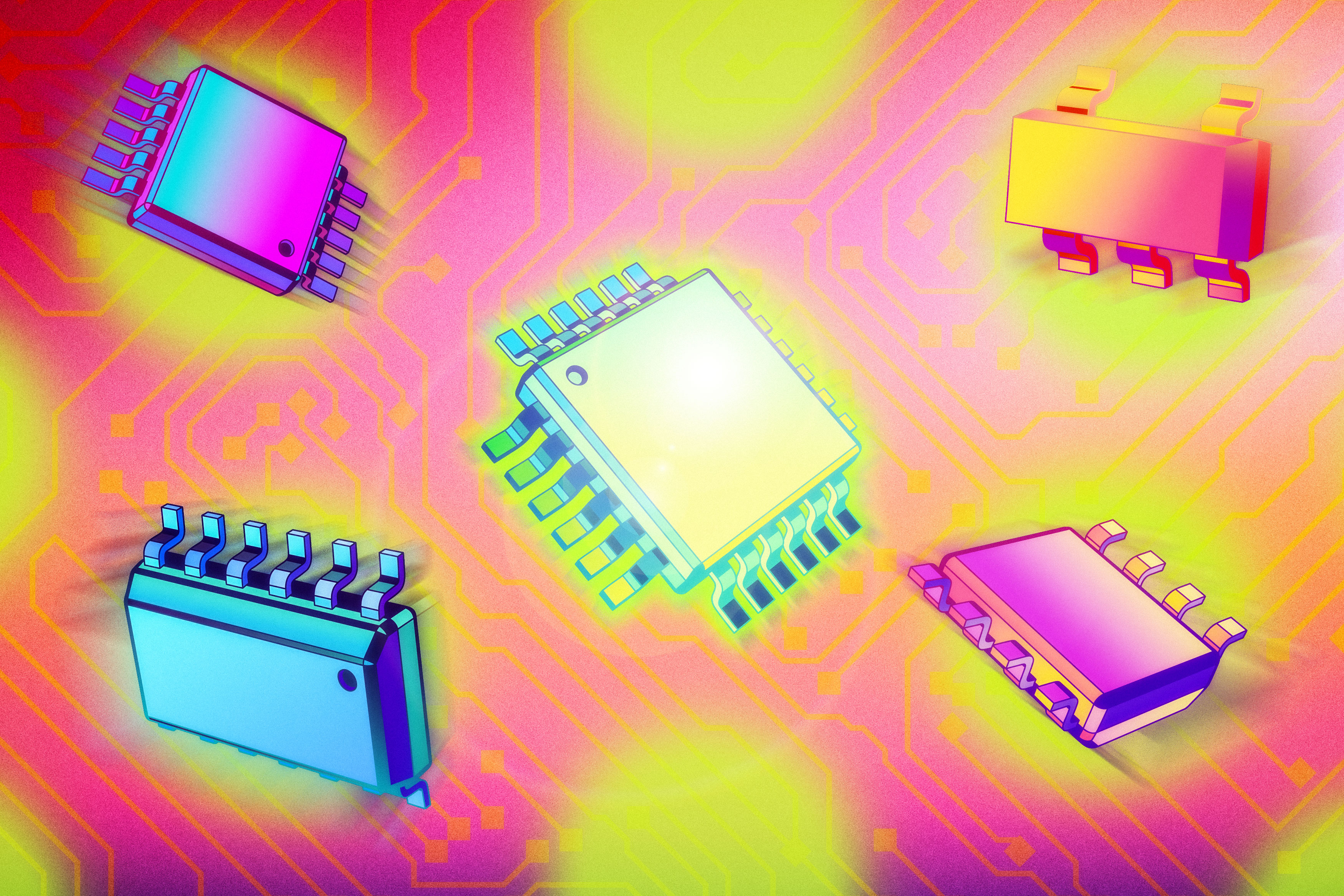
Analog circuit design has long been a bottleneck because it requires balancing complex tradeoffs that generic AI struggles with. MIT’s new SLIC technique solves this by training small language models to mimic human iterative tuning, achieving performance comparable to frontier LLMs like GPT-6-Astra while running locally on a laptop. This approach bypasses the privacy risks of sending proprietary foundry data to cloud providers and cuts computational costs by thousands of times. The model uses multi-turn reinforcement learning with verifiable rewards to refine designs, offering engineers an interpretable, private alternative to expensive cloud-based automation.
MIT News AI
 © TechCrunch AI
Researchresearch
OpenAI proposes perplexity as AI speed limit
OpenAI is pushing for a standardized metric to govern the pace of frontier AI development, arguing that traditional benchmarks are obsolete. Chief scientist Jakub Pachocki identifies perplexity—the measure of how well a model predicts the next token—as the only stable indicator of underlying capability. With losses dropping below 0.8 correlating with emergent reasoning skills, this proposal offers a concrete threshold for industry-wide safety pauses. It shifts the debate from vague existential risk to measurable technical milestones.
TechCrunch AI