Models & Labs
NVIDIA NemoClaw Powers Autonomous AI Engineers
NVIDIA Bloghigh confidence
Why it matters
- →NemoClaw significantly reduces engineering workflow times, enhancing productivity.
- →It provides a secure and customizable environment for deploying AI agents.
- →This innovation could transform industries by automating complex engineering tasks.
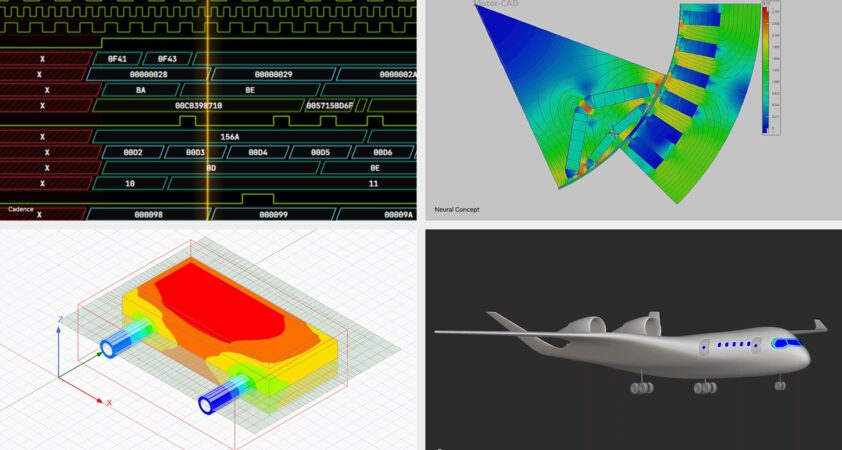
NVIDIA has unveiled NemoClaw, a blueprint for building autonomous AI agents that automate engineering workflows. At GTC Taipei, companies like Cadence and Siemens demonstrated how these agents can cut down simulation and verification times from weeks to hours. NemoClaw integrates with orchestration frameworks and uses NVIDIA's OpenShell for secure operations. This development is set to revolutionize industries such as automotive and aerospace by making engineering processes faster and more secure.
Read originalMore from NVIDIA Blog

More in Models & Labs
Models & Labsmodels
llama.cpp b10955 release addresses heap corruption
The latest release of llama.cpp, b10955, tackles a critical issue of heap corruption by disabling the ggml-cpu precompiled header and fixing CACHE_LINE_SIZE ambiguity. This update ensures consistent CACHE_LINE_SIZE values across C++ kernels and C work-buffer sizing code, preventing heap-buffer-overflow and subsequent crashes. By restoring the natural include order and removing the std::hardware_destructive_interference_size branch, the update makes the value deterministic and include-order independent. This release is a technical fix that stabilizes the runtime environment for developers using llama.cpp.
llama.cpp Releases
Models & Labsmodels
llama.cpp b10956 release enhances SYCL backend
The latest llama.cpp release, b10956, introduces significant improvements to the SYCL backend, particularly for handling large k values in TOP_K operations. By implementing a radix select method, the update allows for efficient GPU-resident processing, avoiding previous limitations that forced operations to fall back to the CPU. This change enhances performance, especially in scenarios requiring large k values, such as qwen4exp's sparse-attention indexer. The update ensures that operations are more efficient and scalable, providing a notable boost in processing speed without regressing any measured shapes.