Open Source
Strata Runs 125B Model on Consumer PC
Lev Selectorhigh confidence
Why it matters
- →Democratizes access to frontier-level model capabilities.
- →Enhances data privacy by keeping processing local.
- →Reduces reliance on expensive cloud infrastructure.
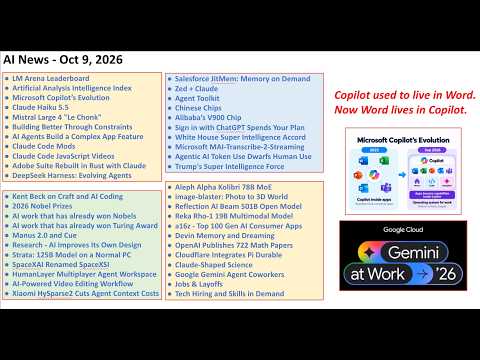
A new development named 'Strata' allows for the execution of a massive 125-billion parameter AI model on normal personal computers without requiring enterprise-grade GPUs. This breakthrough in local inference significantly lowers the barrier to entry for running large language models privately and offline, challenging the necessity of cloud-only AI solutions.
Read originalThe story around this
Earlier coverage that leads up to this article, and what followed. Lines connect each piece to the closest one after it, converging here.
How we got here
- 1Fine-tuning 350M Model for Structured Outputs
Hugging Face Blog · September 3, 2026 · Background
- 2Guide to Running Local AI Models Offline
Lev Selector · September 20, 2026 · Background
More from Lev Selector
© Lev SelectorMarket & Regulationbusiness
White House Announces Super Intelligence Accord
The White House has introduced a new 'Super Intelligence Accord' alongside the formation of a dedicated Super Intelligence Force.
Lev Selector
© Lev SelectorResearchresearch
OpenAI Publishes 722 Math Papers
OpenAI releases a massive collection of 722 research papers focused on mathematical reasoning and verification.
Lev Selector
© Lev SelectorMarket & Regulationbusiness
Alibaba Unveils V900 AI Chip
Alibaba announces its new V900 semiconductor chip, expanding domestic supply for AI training and inference workloads.
Lev Selector
More in Open Source
 © Matt Wolfe
Open Sourceother
Meta Open-Sources Muse AI Gadgets
Meta has open-sourced the code and designs for its Muse AI-powered smart home gadgets.
Matt Wolfe
 © The AI Daily Brief
Open Sourceother
Meta Open Sources Muse Gadget Firmware
Meta has open-sourced the firmware for its Muse hardware gadget, promoting transparency and community development.
The AI Daily Brief
 © The Verge AI
Open Sourceagents
Meta open sources Muse AI agent SDK for custom hardware
Meta is handing the keys to its Muse AI agent by open-sourcing the software needed to run it on custom hardware. Developers can now hook Muse into ESP32 boards or Raspberry Pi setups, effectively turning workbench scraps into personalized AI terminals. This moves Muse beyond a cloud-only interface into tangible, local devices like E Ink displays or HDMI sticks. It signals a shift toward decentralized, user-owned AI interactions rather than relying solely on proprietary apps.
The Verge AI