Models & Labs
NVIDIA Unveils RTX Spark for Next-Gen Gaming
NVIDIA Bloghigh confidence
Why it matters
- →RTX Spark integrates AI and gaming, offering a new level of performance for PC gamers.
- →The platform's support for anti-cheat technologies addresses a critical need in online gaming.
- →NVIDIA's collaboration with major publishers ensures widespread adoption and compatibility.
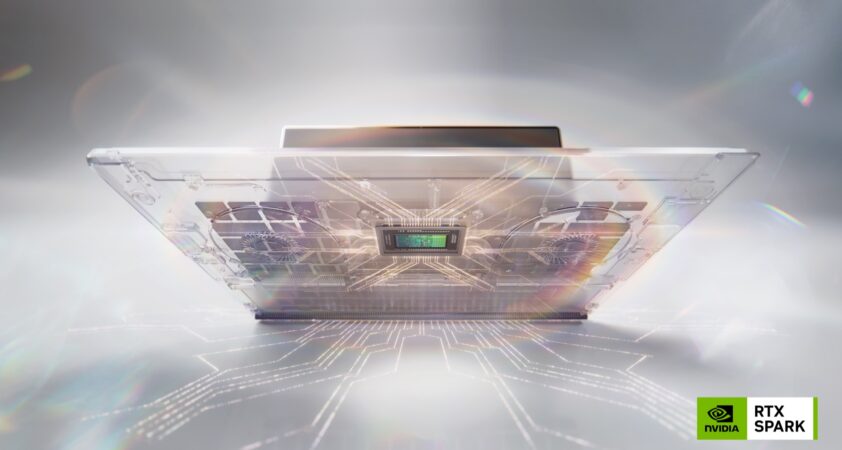
NVIDIA has announced RTX Spark, a new platform designed to enhance PC gaming by integrating AI agents, content creation, and high-performance gaming. Set to launch this fall, RTX Spark will support major games from publishers like Electronic Arts and Ubisoft, ensuring seamless gameplay with improved visual quality. The platform also includes advanced anti-cheat technologies to maintain fair play in multiplayer games. This announcement was made at Gamescom, where NVIDIA also showcased other gaming advancements, including DLSS 4.5 and path tracing for enhanced visual fidelity.
Read originalMore from NVIDIA Blog
 © NVIDIA Blog
Models & Labsmodels
NVIDIA's NVLink Fusion Enhances AI Factory Efficiency
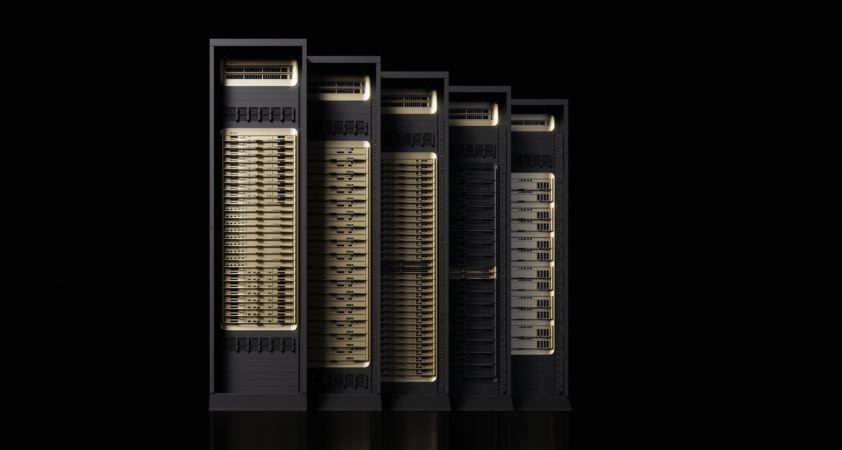
NVIDIA's NVLink Fusion is a game-changer for AI factories, offering a seamless integration of custom XPUs with NVIDIA's robust AI infrastructure. This innovation allows for faster performance and reduced time to market by leveraging NVIDIA's proven technology stack. With NVLink Fusion, companies can focus on innovation while relying on established infrastructure, mitigating risks associated with deploying new AI systems. This development is particularly significant for hyperscalers and AI-native companies aiming to build scalable, efficient AI factories without the constraints of traditional infrastructure limitations.
NVIDIA Blog
 © NVIDIA Blog
Models & Labsmodels
NVIDIA Extends Vera Rubin for Agentic AI Inference
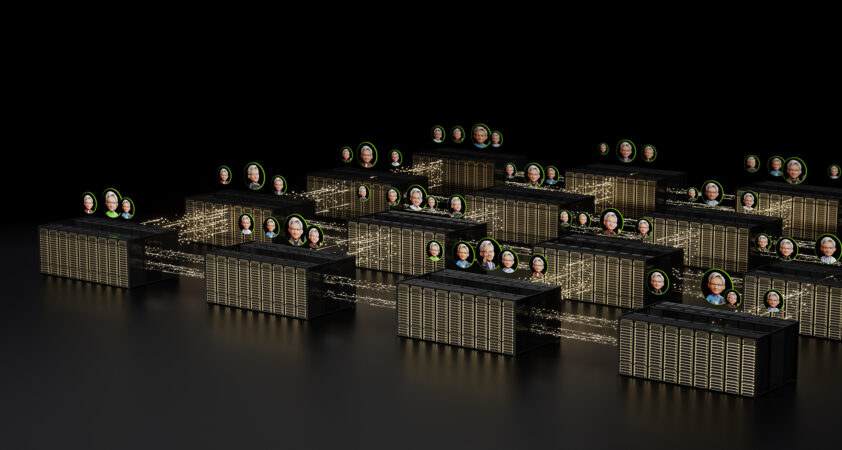
NVIDIA is pushing the boundaries of AI inference with the full production of its Groq 3 LPX, integrated into the Vera Rubin NVL72 platform. This system is designed to handle the demands of agentic AI, delivering 3,400 output tokens per second, which is four times faster than the nearest competitor. By codesigning every layer of the AI stack, NVIDIA aims to optimize performance, throughput, and responsiveness for complex AI tasks. This development marks a significant step in transforming AI infrastructure into a 'token factory' capable of supporting large-scale, interactive AI applications.
NVIDIA Blog
 © NVIDIA Blog
Models & Labsmodels
NVIDIA Vera Rubin NVL72 Boosts AI Agent Efficiency
NVIDIA's Vera Rubin NVL72 sets a new benchmark for efficiency in AI agent workloads, delivering up to 30 times higher throughput per megawatt compared to its predecessor, the GB300 NVL72. This leap in performance is crucial as agentic AI workloads, which involve complex multi-step tasks, demand significantly more computational power. By optimizing both hardware and software, NVIDIA has managed to drastically reduce the cost per million tokens, making large-scale AI deployments more economically viable. This advancement positions NVIDIA as a leader in powering AI factories, especially in energy-constrained environments.
NVIDIA Blog
More in Models & Labs
Models & Labsmodels
llama.cpp b10618 Release Enhances Parsing
The b10618 release of llama.cpp tackles a crucial parsing issue, specifically improving the handling of hyphens in character classes. This update ensures that generated tool-call grammars are parsed correctly, enhancing the software's reliability. With new parser and integration tests included, the release verifies these improvements effectively. While it doesn't introduce major new features, this update strengthens llama.cpp's core functionality, making it more dependable for developers working on different operating systems and hardware configurations.
llama.cpp Releases
Models & Labsmodels
llama.cpp b10620 Release Expands Platform Support
The b10620 release of llama.cpp marks another step in broadening its platform reach, now supporting systems like Ubuntu with Vulkan and ROCm 7.14, alongside Windows with CUDA 13. This update underscores llama.cpp's adaptability, making it a go-to tool for developers working across various hardware configurations, from macOS Apple Silicon to Windows arm64. While the release doesn't introduce new groundbreaking features, it reinforces llama.cpp's role as a flexible inference runtime. By ensuring compatibility with more systems, llama.cpp becomes increasingly accessible to developers, allowing them to leverage its capabilities regardless of their hardware setup.
llama.cpp Releases
Models & Labsmodels
llama.cpp releases version 0.3.0
The latest llama.cpp release, version 0.3.0, brings a notable expansion in platform compatibility and functionality. This update enhances support for macOS, Linux, Windows, and openEuler, accommodating architectures like Apple Silicon and Vulkan. Developers will find the inclusion of CUDA 13 on Windows, albeit in preview, and ROCm 7.14 on Ubuntu particularly useful. While the release doesn't introduce groundbreaking features, it solidifies llama.cpp's role as a flexible tool for developers working across different computing environments. The update ensures that llama.cpp remains a reliable choice for those needing robust support across multiple systems.
llama.cpp Releases