General AI
Nothing CEO teases screenless AI device for December
TechCrunch AIhigh confidence
Why it matters
- →Signals a shift toward screenless, ambient AI interfaces beyond standard wearables.
- →Challenges the industry trend of adding displays to every new AI hardware form factor.
- →Highlights consumer hardware startups experimenting with novel interaction models for AI assistants.
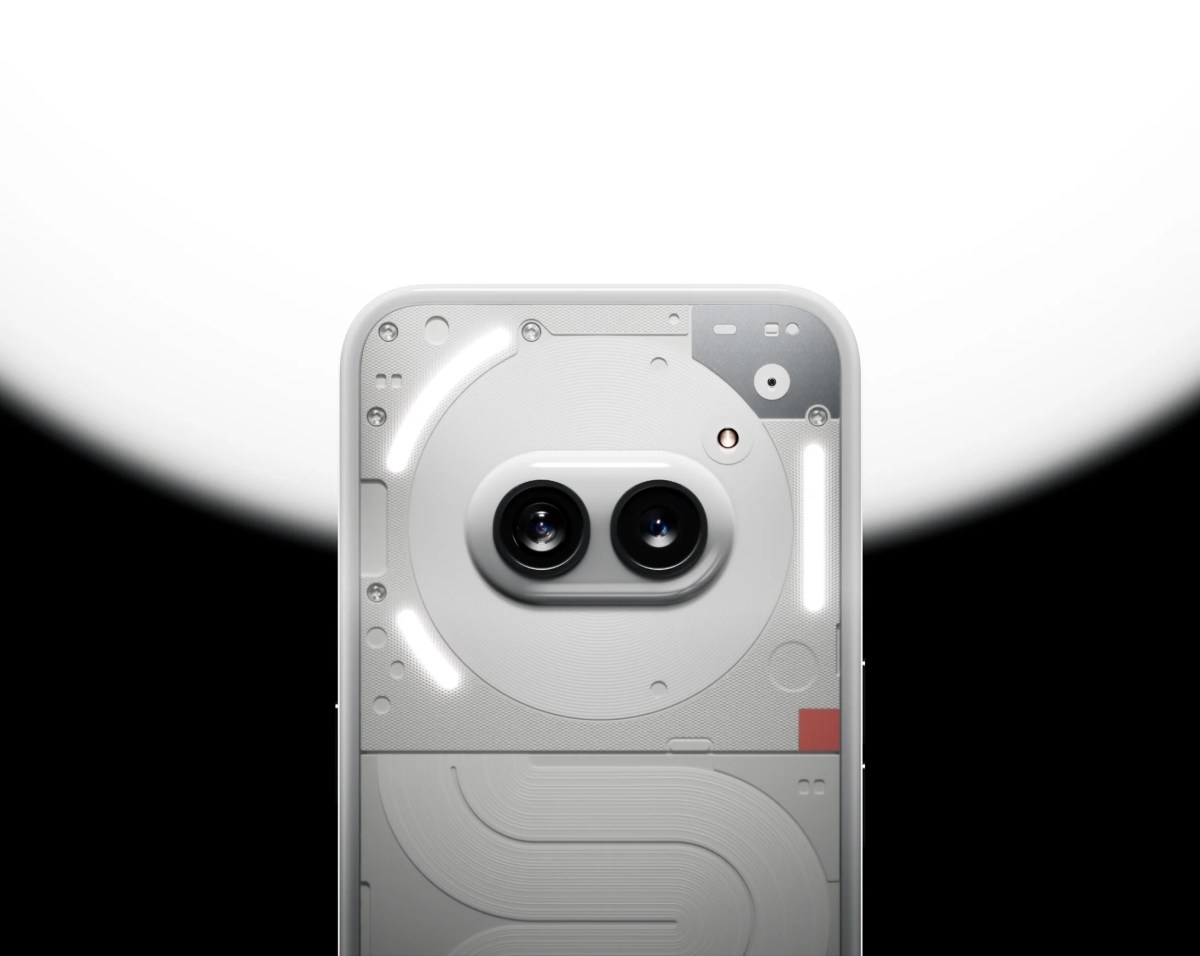
Nothing CEO Carl Pei announced that the company’s first 'AI-native product' will ship in December. Described as a screenless productivity tool that is not an app or wearable device like glasses, the hardware aims to integrate AI into daily life through non-visual interfaces. Pei criticized the industry's current pursuit of pendants and pins as a search for an 'iPhone moment,' positioning Nothing's approach as a distinct alternative. No specific release date or technical specifications have been provided beyond the December window.
Read originalThe story around this
Earlier coverage that leads up to this article, and what followed. Lines connect each piece to the closest one after it, converging here.
How we got here
- 1OpenAI Developing Screenless AI Speaker
TechCrunch AI · July 14, 2026 · Related
- 2OpenAI Plans 'Family of Devices' for AI Interaction
The Verge AI · July 29, 2026 · Background
- 3ChatGPT Introduces New Voice Mode
The AI Advantage · August 1, 2026 · Background
- 4Meta unveils VR glasses and camera-free AI wearables
The Verge AI · September 23, 2026 · Background
- 5Amazon unveils Bee ambient AI wearables
TechCrunch AI · October 15, 2026 · Background
Follow this story
Open the full story →Nothing Teases Screen-Free AI Device for December
2 developments
- Nov 4 · The Verge AI
Nothing Teases Screen-Free AI Device for December - Nov 4 · TechCrunch AI
Nothing CEO teases screenless AI device for December (This article)
More from TechCrunch AI
 © TechCrunch AI
Market & Regulationbusiness
Google buys Crusoe's Wyoming data center project
Google is acquiring an unfinished data center from Crusoe in Wyoming, signaling a strategic pivot to direct infrastructure control amid scaling pressures. The $17 billion investment highlights the immense capital required for AI compute, as independent developers struggle with cost and timeline overruns. This move illustrates the growing vertical integration of tech giants into physical infrastructure, reducing reliance on third-party providers like Crusoe for massive deployments. By taking ownership, Google bypasses the bottlenecks that often plague external development teams. The deal reflects a broader industry trend where hyperscalers reclaim control over their most critical assets. Independent builders now face stiffer competition from companies with deeper pockets and direct operational oversight.
TechCrunch AI
 © TechCrunch AI
Investment · $11B
Market & Regulationbusiness
OpenAI raises $11B at $1.25T valuation
OpenAI is securing an additional $11 billion in a funding round that values the company at $1.25 trillion, falling short of its initial $30 billion target but still signaling massive investor confidence. This latest capital injection comes as the broader AI market faces headwinds, with Anthropic’s potential IPO valuation also cooling from earlier highs. The move highlights OpenAI's continued ability to attract deep-pocketed support despite regulatory uncertainties and political shifts affecting data center expansion. While the round hasn't fully closed, the sheer scale of this valuation reinforces OpenAI's dominant position in the race for AI supremacy. Investors are betting big on the lab's ability to maintain its lead in compute and model capabilities. The delay in IPO plans suggests a strategic pause to navigate these complex market conditions. This funding ensures OpenAI remains the financial heavyweight in the sector.
TechCrunch AI
 © TechCrunch AI
Market & Regulationother
Hundreds of Artex AI hacking tools exposed
Censys uncovered over 800 publicly accessible instances of Artex, an autonomous penetration testing tool linked to major breaches in Korean finance and ConnectWise. These exposed deployments reveal a critical security gap: powerful AI agents running without authentication turn offensive capabilities into open targets for misuse. The developers recently shifted to closed-source distribution, yet the code remains widely available on public repositories, leaving the threat landscape largely unchanged. This situation demonstrates how easily sophisticated AI-driven attacks can be launched by anyone with basic configuration skills. The widespread exposure underscores significant risks associated with misconfigured AI security tools.
TechCrunch AI
More in General AI
 © Lev Selector
General AIagents
Siri AI Opens to Developers
Apple has opened its Siri AI capabilities to third-party developers, expanding the ecosystem of voice-activated integrations.
Lev Selector
 © Matt Wolfe
General AIproductivity
Claude Integrates Bank Account Connectivity
Anthropic's Claude AI assistant now supports direct integration with bank accounts for financial data access.
Matt Wolfe
 © The Verge AI
General AIproductivity
Meta Muse launches custom 'spaces' for AI workflows
Meta is shifting Muse from a passive chatbot to an active workspace with 'Spaces,' letting users build persistent, app-like interfaces for specific tasks like shopping or scheduling. By connecting external services like Gmail and Notion, these spaces pull live data into the UI, effectively turning natural language prompts into functional dashboards. This moves AI interaction beyond simple Q&A toward structured, goal-oriented environments that adapt to your daily context.
The Verge AI