Coding Tools
llama.cpp b11037 fixes GPU inference bugs
llama.cpp Releaseshigh confidence
Why it matters
- →Fixes critical vector alignment bugs that could cause silent inference errors.
- →Updates CUDA libraries to latest versions for better compatibility and performance.
- →Maintains robust ROCm support for AMD GPU users without configuration changes.
llama.cpp has released version b11037, focusing on bug fixes and library updates rather than new features. The update corrects a support condition for GET_ROWS operations and adds stride checking for vec4 alignment, preventing potential data corruption during inference. CUDA libraries are updated to 12.8 and 13.3 across Linux and Windows builds, while ROCm 10.0 support is maintained for AMD GPU users. This patch ensures greater reliability for developers running local models on diverse hardware configurations.
Read originalMore from llama.cpp Releases
Coding Toolscoding
llama.cpp b11036 adds CUDA 13 and ROCm 10.0
This release quietly closes the hardware gap for local inference by adding default builds for CUDA 13 and ROCm 10.0. NVIDIA users on newer driver stacks can finally run without workarounds, while AMD GPU owners get parity with the latest ROCm version. Apple Silicon support is explicitly disabled in this build, a notable regression for Mac users who need to wait for the next patch. The inclusion of OpenVINO and SYCL builds further cements llama.cpp as the universal runtime for diverse hardware, ensuring no major accelerator is left behind.
llama.cpp Releases
Coding Toolscoding
llama.cpp b11039 fixes SWA pattern roundtrip
This release finally closes a gap in how llama.cpp handles sliding window attention patterns during model conversion. Previously, loaders silently ignored array-based SWA configurations from models like OLMo2 and Gemma3n, relying on hardcoded defaults that masked potential precision loss. The new Model-Saver now explicitly writes per-layer SWA flags and MLA geometry, ensuring bit-exact roundtrips for a dozen architectures including Plamo3 and Cohere2. This matters because it guarantees that converted GGUF files preserve the exact inference behavior of their original checkpoints, eliminating silent degradation for complex attention mechanisms.
llama.cpp Releases
Coding Toolscoding
llama.cpp b11040 release with CUDA 13 and ROCm 10
This is a routine maintenance release for llama.cpp, prioritizing stability over new features. The most notable technical shift is the addition of CUDA 13 builds alongside existing CUDA 12 support, giving users access to newer NVIDIA driver stacks without waiting for major version bumps. ROCm 10.0 support remains available for AMD GPU inference, maintaining parity with previous releases. KleidiAI on Apple Silicon has been explicitly disabled in this build, likely due to stability concerns or testing requirements. There are no new model architectures or quantization methods introduced here.
llama.cpp Releases
More in Coding Tools
Coding Toolscoding
Claude Code v2.1.277 fixes critical bugs and adds AGENTS.md
This release stabilizes Claude Code by patching a cascade of crashes and session hangs that plagued recent versions. The most notable functional shift is the fallback to AGENTS.md when CLAUDE.md is absent, aligning with broader industry standards for agent configuration. Gateway improvements allow better proxy handling for egress-bound environments, while numerous fixes address edge cases in file editing, plugin management, and resume functionality. It’s a maintenance-heavy update that restores reliability rather than introducing new capabilities.
Claude Code Releases
Coding Toolscoding
Claude Code v2.1.278 optimizes auto-mode billing
Anthropic quietly fixed a cost leak in Claude Code’s auto mode. By defaulting to the server-side classifier for API and enterprise users, the update eliminates charges for classifier overhead that previously bled into session costs. This shift means developers no longer pay double for the same logic, while still retaining the ability to opt out via environment variables if needed. The change is a subtle but necessary correction to pricing transparency in automated coding workflows.
Claude Code Releases
 © GitHub Changelog
Coding Toolscoding
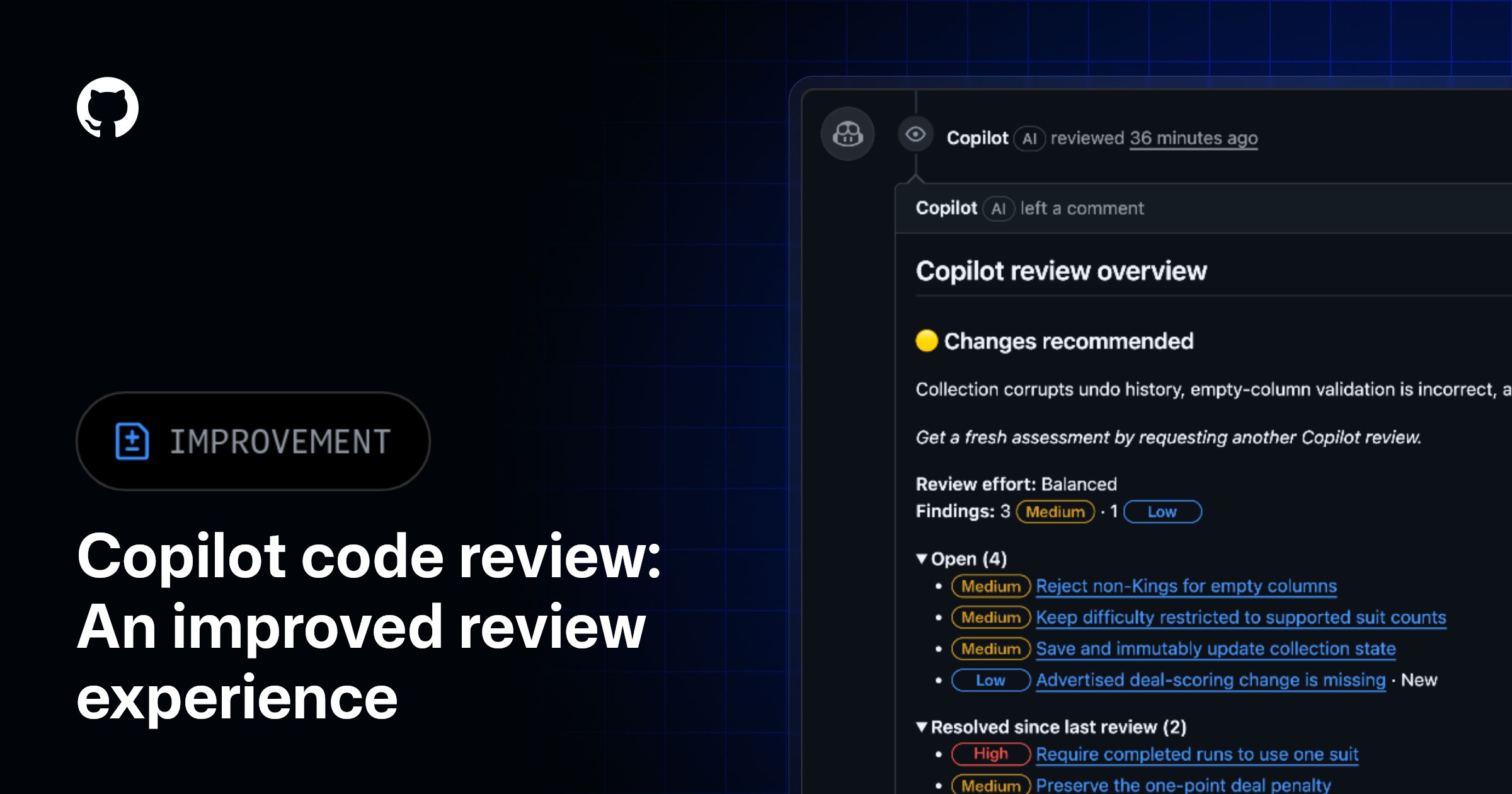
GitHub Copilot Code Review GA with Auto-Resolution
GitHub Copilot’s code review tool has reached general availability, shifting from experimental to a core part of the pull request workflow. The biggest leap is auto-resolution: Copilot now validates whether its own suggestions were actually fixed by subsequent commits and closes them out automatically, saving developers from manual cleanup. It also groups findings into clear states like 'Resolved' or 'Previously missed,' giving a real-time health check of the PR rather than just a static list of errors. This reduces context switching significantly, letting engineers focus on new issues while the AI handles the administrative burden of closing old ones.
GitHub Changelog