Market & Regulation
Bristol Myers Squibb Expands AI Capabilities with NVIDIA
NVIDIA Bloghigh confidence
Why it matters
- →BMS's new AI infrastructure democratizes access to powerful computational resources for all its scientists.
- →The integration of NVIDIA's BioNeMo Agent Toolkit enhances drug discovery processes, potentially leading to faster therapeutic breakthroughs.
- →This expansion highlights the growing role of AI in transforming pharmaceutical research and development.
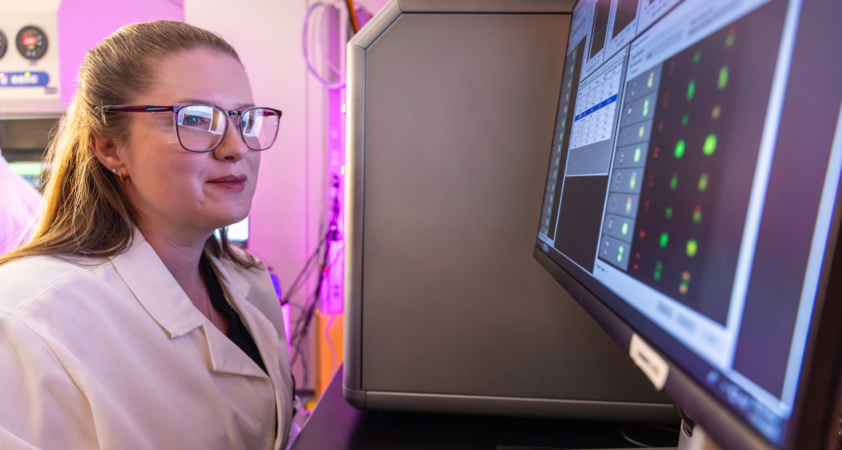
Bristol Myers Squibb is expanding its AI infrastructure by deploying a second NVIDIA DGX SuperPOD, known as the 'SuperDuperPOD', to enhance its drug discovery capabilities. This new system, built on eight DGX Vera Rubin NVL72 systems, will provide researchers with unprecedented access to AI tools, facilitating faster and more efficient drug development processes. The integration of NVIDIA's BioNeMo Agent Toolkit will support BMS in optimizing its drug discovery pipeline, allowing for more effective target identification and lead optimization. This development underscores BMS's commitment to using AI to drive innovation in life sciences.
Read originalMore from NVIDIA Blog
 © NVIDIA Blog
Models & Labsmodels
NVIDIA Showcases AI Advances at SIGGRAPH
NVIDIA's presentation at SIGGRAPH reveals transformative advancements in AI-driven graphics and simulation technologies. The company introduced groundbreaking neural rendering techniques and world models that are set to revolutionize digital content creation across various industries. A standout is the Cosmos 3 Edge model, which supports real-time, on-device processing, crucial for advancing physical AI systems. These innovations aim to bring unprecedented realism and efficiency to virtual worlds, impacting fields from gaming to autonomous systems. NVIDIA's efforts mark a significant shift towards more integrated and powerful AI tools for creators and developers, promising to reshape how digital worlds are built and experienced.
NVIDIA Blog
 © NVIDIA Blog
Models & Labsmodels
NVIDIA Vera Rubin Boosts AI Post-Training Efficiency
NVIDIA's Vera Rubin platform is redefining the economics of AI post-training by maximizing intelligence per dollar. This platform allows for more efficient use of resources, requiring only a quarter of the GPUs compared to previous generations, making continuous post-training economically viable. By integrating with tools like NeMo RL and Nemotron 3 Ultra, Vera Rubin supports large-scale reinforcement learning environments, enhancing the model's ability to adapt and improve in real-time. This shift means AI models can continuously refine their capabilities, offering more value per token served and making AI more adaptable to changing environments.
NVIDIA Blog
More in Market & Regulation
 © TechCrunch AI
Market & Regulationbusiness
Anthropic's $1.5B Copyright Settlement Approved
Anthropic's $1.5 billion settlement over copyright infringement has been approved, marking a pivotal moment in the intersection of AI and copyright law. The settlement compensates authors and publishers $3,000 per work due to Anthropic's use of pirated books for AI training. While the court ruled that training AI on copyrighted text constitutes fair use, it highlighted the illegality of sourcing books from pirate sites. This decision remains a district court ruling and does not establish a binding precedent, leaving the broader legal landscape open. The case highlights ongoing tensions in the AI industry regarding the use of copyrighted materials, as similar lawsuits continue against other major tech companies.
TechCrunch AI
 © The Verge AI
Market & Regulationmusic
Sony sues Udio over 30,000 AI-generated songs
Sony Music Entertainment has intensified its legal confrontation with Udio by filing a lawsuit over the alleged unauthorized use of more than 30,000 songs by the AI music generator. This action follows an earlier lawsuit that was restricted to 333 works due to a judicial ruling. Sony asserts that Udio's AI models were developed using a diverse collection of sound recordings, including those sourced from YouTube. In contrast, Universal Music Group and Warner Music Group have resolved their disputes with Udio and are now working together with the company. Sony aims to prevent further unauthorized use and seeks damages of up to $150,000 for each infringed work. This case exemplifies the ongoing struggle to reconcile AI advancements with existing music copyright frameworks.
The Verge AI
 © TechCrunch AI
Market & Regulationbusiness
Debate Over Open-Weight AI Models Intensifies
The rise of Moonshot's Kimi K3, a significant open-weight language model from China, has sparked a contentious discussion about AI's future in terms of innovation and regulation. OpenAI's Dean W. Ball initially suggested that the US government should impose regulatory barriers to protect American AI companies, but he later withdrew his statement. This debate highlights the tension between proprietary and open-source models, with data security and innovation concerns at the forefront. Advocates for open models argue they could democratize AI development, challenging the dominance of established US labs like OpenAI and Anthropic. Critics, however, worry about the potential impact on US AI leadership and data security. The outcome of this debate could significantly influence the balance of AI power between the US and China.
TechCrunch AI