Coding Tools
GitHub Copilot Dashboard Adds ROI Section
GitHub Changeloghigh confidence
Why it matters
- →Provides a clearer understanding of Copilot's financial impact on productivity.
- →Helps organizations justify AI tool investments with concrete data.
- →Enables targeted enablement programs based on user adoption phases.
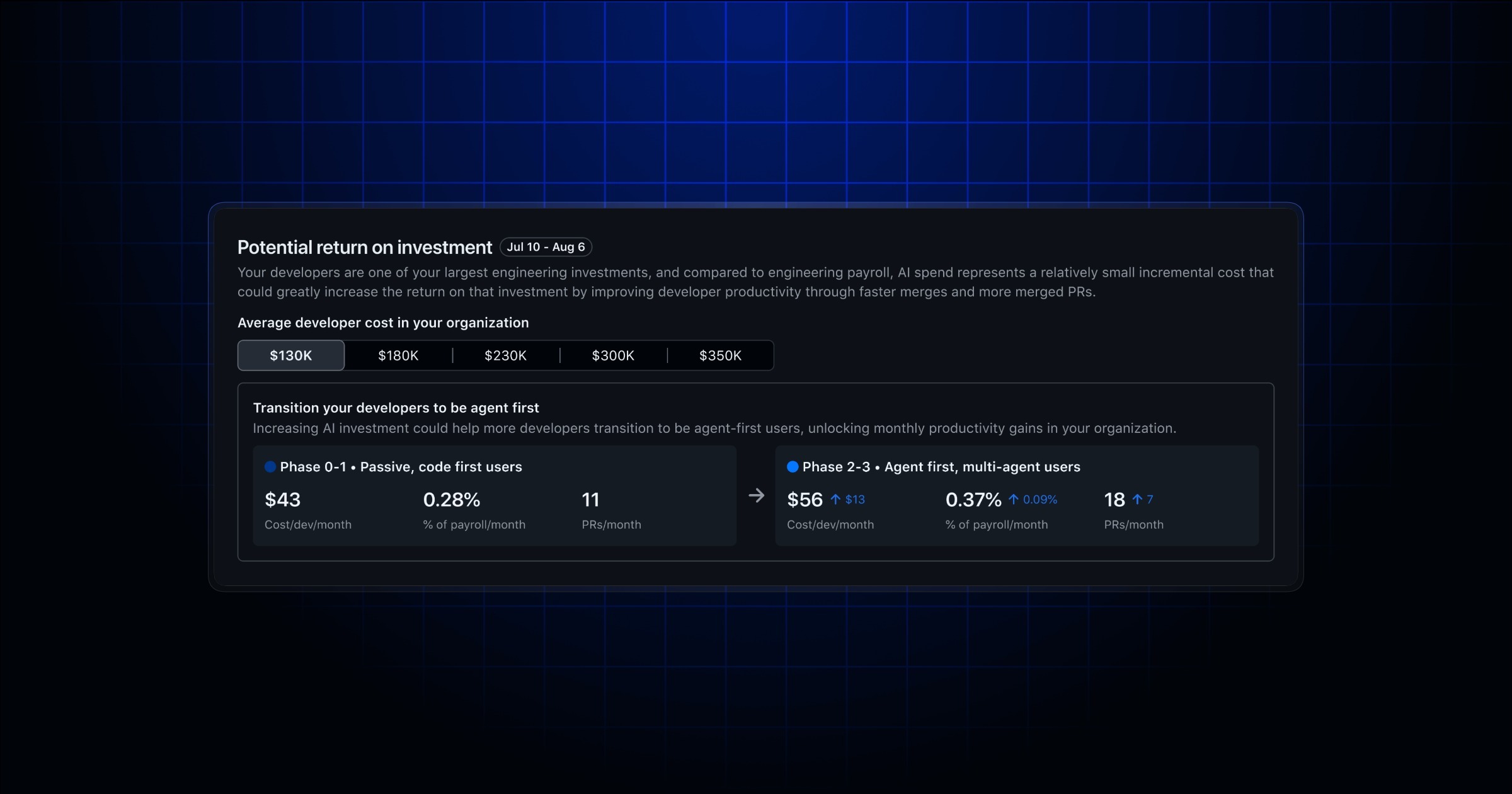
GitHub has updated its Copilot impact dashboard to include a new 'Potential return on investment' section. This addition allows organizations to assess the financial impact of Copilot by comparing costs with pull request outputs. The dashboard now offers insights into different user adoption phases, helping administrators justify investments and optimize usage. This update aims to provide a clearer understanding of Copilot's value in terms of productivity and cost-effectiveness.
Read originalMore from GitHub Changelog
 © GitHub Changelog
Coding Toolscoding
GitHub Copilot Enhances Workflow with New Features
GitHub Copilot's latest updates bring a suite of enhancements aimed at improving workflow efficiency and user interaction. The updates include the ability to see which AI model handled requests, manage multiple sessions with ease, and explore changes without disrupting ongoing work through the new /worktree command. The integrated browser now allows for element-level feedback, and dictation supports multiple languages on-device. These features collectively enhance the user experience by providing more control and flexibility in managing tasks and reviewing changes.
GitHub Changelog
 © GitHub Changelog
Coding Toolscoding
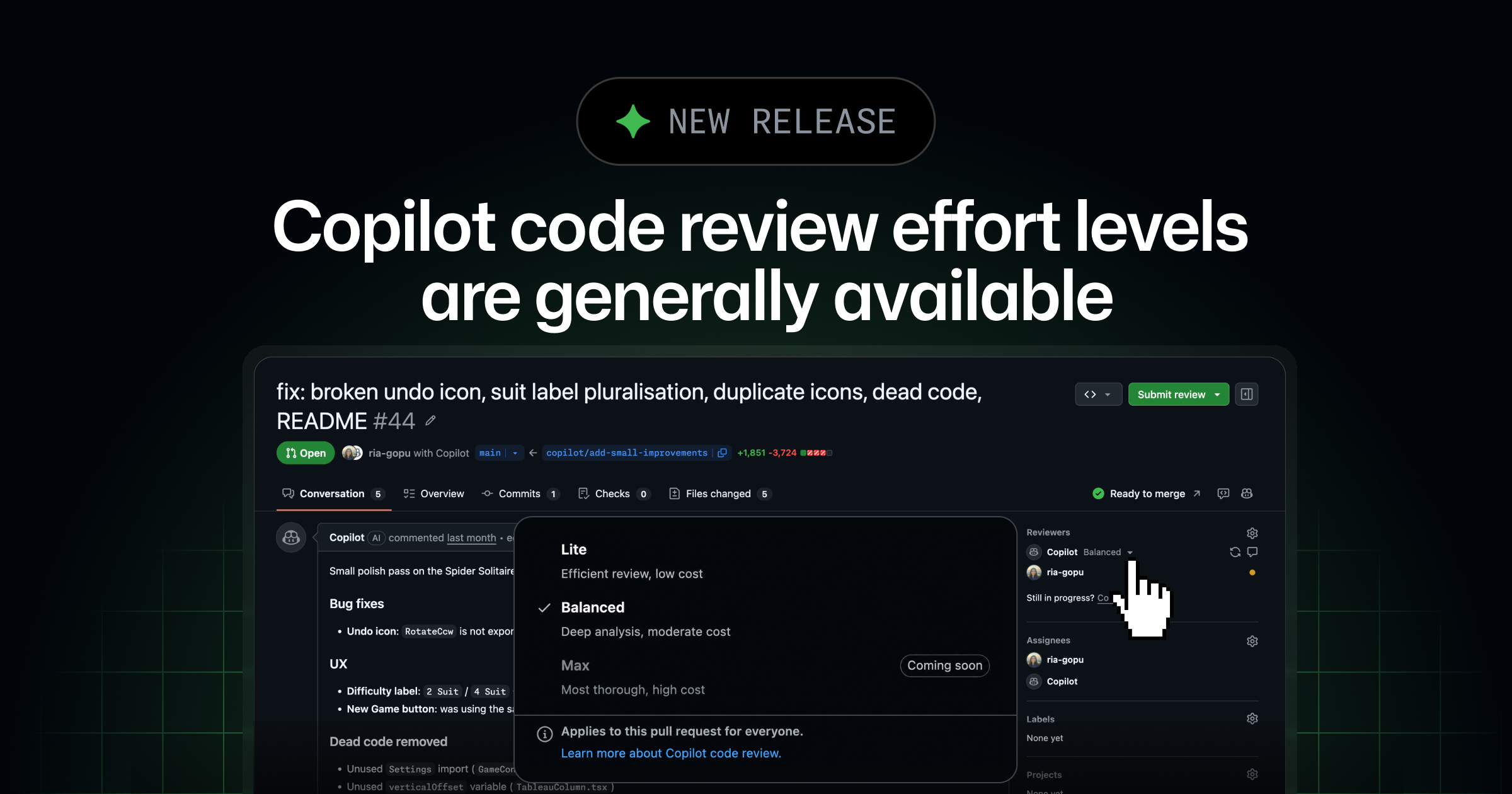
GitHub Copilot Code Review Levels Now Available
GitHub has made its Copilot code review effort levels, Lite and Balanced, generally available. These levels allow developers to tailor the depth of code reviews to the complexity and risk of pull requests. Lite is suited for straightforward changes, while Balanced is designed for more complex or sensitive code. This feature is available across various Copilot plans, enabling organizations to set default review levels that can be inherited by repositories. This development enhances the flexibility and precision of code reviews, making it easier to manage review depth across projects.
GitHub Changelog
 © GitHub Changelog
Models & Labsagents
GitHub API Enhances Agent App Activity Tracking
GitHub's Copilot usage metrics API now provides detailed insights into agent app activity, allowing teams to track usage by individual agents like Claude and Codex. This update enables organizations to distinguish between different agents' activities, offering clarity on which agents are being utilized and how they compare in adoption rates. By breaking down activity per agent, teams can make informed decisions about agent rollouts and licensing based on actual usage data. This enhancement is particularly useful for enterprise owners and billing managers who need precise metrics for strategic planning.
GitHub Changelog
More in Coding Tools
Coding Toolscoding
Claude Code v2.1.224 Update Released
Claude Code's latest update, v2.1.224, introduces significant enhancements for developers using self-hosted environments. Users can now run Claude Code sessions on their own machines, expanding flexibility for Team and Enterprise plans. The update also simplifies plugin installation with a new archive plugin source, allowing installations from a zip over HTTPS. Additionally, cross-session messaging capabilities have been improved, enabling seamless communication between sessions on different machines. These changes enhance the usability and integration of Claude Code, making it a more robust tool for developers.
Claude Code Releases
 © Matt Wolfe
Coding Toolscoding
Meta Muse Code Beta Released
Meta releases the beta version of its Muse Code tool.
Matt Wolfe
Coding Toolscoding
Claude Code v2.1.221 Update Released
The latest update to Claude Code, version 2.1.221, introduces several enhancements and fixes aimed at improving user experience and security. Notably, a new Focus view in VSCode allows users to streamline their workflow by hiding tool activity, while a new 'mask' mode for sandbox credential files enhances security on Linux and WSL. The update also addresses various bugs, including permission-check bypasses and session management issues, ensuring smoother operation across different environments. These changes make Claude Code more robust and user-friendly, particularly for developers working with complex toolchains.
Claude Code Releases