Research
EleutherAI Explores AI Lie Detection in Aletheia's Quest
EleutherAI Bloghigh confidence
Why it matters
- →AI deception detection is crucial as AI systems take on more complex tasks.
- →The competition revealed strengths and limitations of current detection methods.
- →Improved evaluation techniques are needed for future AI advancements.

EleutherAI participated in Aletheia's Quest, a competition aimed at advancing AI lie detection, organized by Cadenza Labs and the National Deep Inference Fabric. The event challenged teams to develop methods for detecting falsehoods in AI outputs using both black-box and white-box approaches. EleutherAI's findings emphasized the effectiveness of black-box monitoring and the challenges of white-box methods in diverse scenarios. The research also pointed out the limitations of current evaluation methods as AI models grow more complex, highlighting the need for better tools to detect nuanced deception.
Read originalMore in Research
 © Google Research Blog
Researchagents
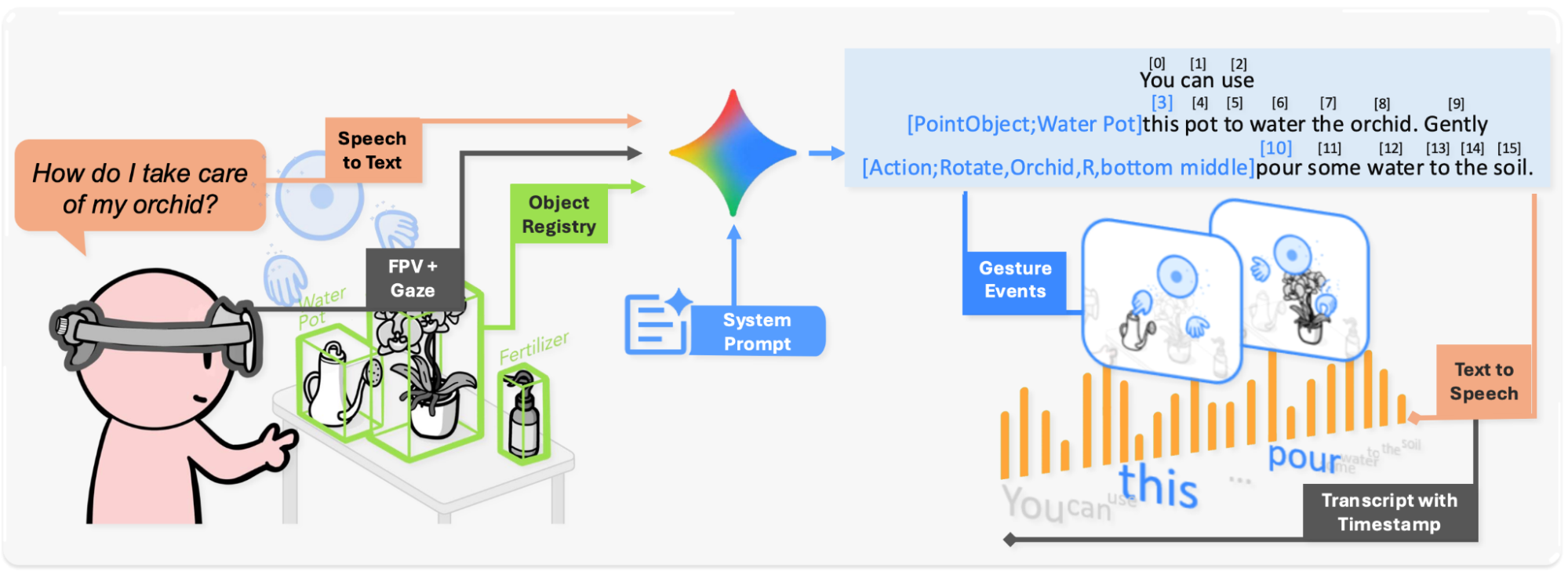
AgentHands: Enhancing XR with Interactive Hand Gestures
AgentHands is a groundbreaking prototype from Google Research that integrates expressive hand gestures into XR environments, enhancing the way AI agents interact with users. By synchronizing gestures with speech, AgentHands transforms abstract verbal instructions into intuitive physical demonstrations, making interactions more natural and engaging. This innovation leverages the spatial understanding of XR to provide a more immersive experience, bridging the gap between linguistic intent and physical action. The result is a more human-centric approach to AI, reducing cognitive load and making complex tasks more accessible.
Google Research Blog
Researchresearch
MIT AI predicts extreme weather without past data
MIT engineers have developed an AI tool that forecasts extreme weather events without relying on historical disaster data. This innovation, called Extreme Event Aware or η-learning, allows for the prediction of statistically-possible events that have not yet occurred, offering new insights for city planners and insurers. By using point statistics and spatial maps, the tool can generate scenarios like a storm with unprecedented rainfall levels. This approach could significantly enhance preparedness for rare but potentially devastating weather events, providing a new layer of resilience planning.
AI News
 © Hugging Face Blog
Researchresearch
4-bit Model Outperforms Full-Precision Original
Hugging Face's latest research introduces Quantization-Aware Healing (QAH), a method that allows a compressed, 4-bit model to outperform its full-precision counterpart. By distilling directly from the original, pre-compression model, QAH avoids the limitations of traditional quantization-aware training. This approach not only enhances accuracy but also improves training stability, as demonstrated by a GPT-OSS 120B model that excels on 7 out of 9 benchmarks. The innovation lies in using a full-size, full-precision teacher to guide the smaller, quantized student, resulting in a model that is both efficient and highly capable.
Hugging Face Blog