Research
MIT Develops New Solvent for Sodium Batteries
MIT News AIhigh confidence
Why it matters
- →The discovery could lead to more efficient and cost-effective sodium-metal batteries.
- →It introduces a new approach to electrolyte design, potentially impacting various energy storage technologies.
- →The use of AI in molecule screening accelerates the discovery process, showcasing the potential of AI in scientific research.
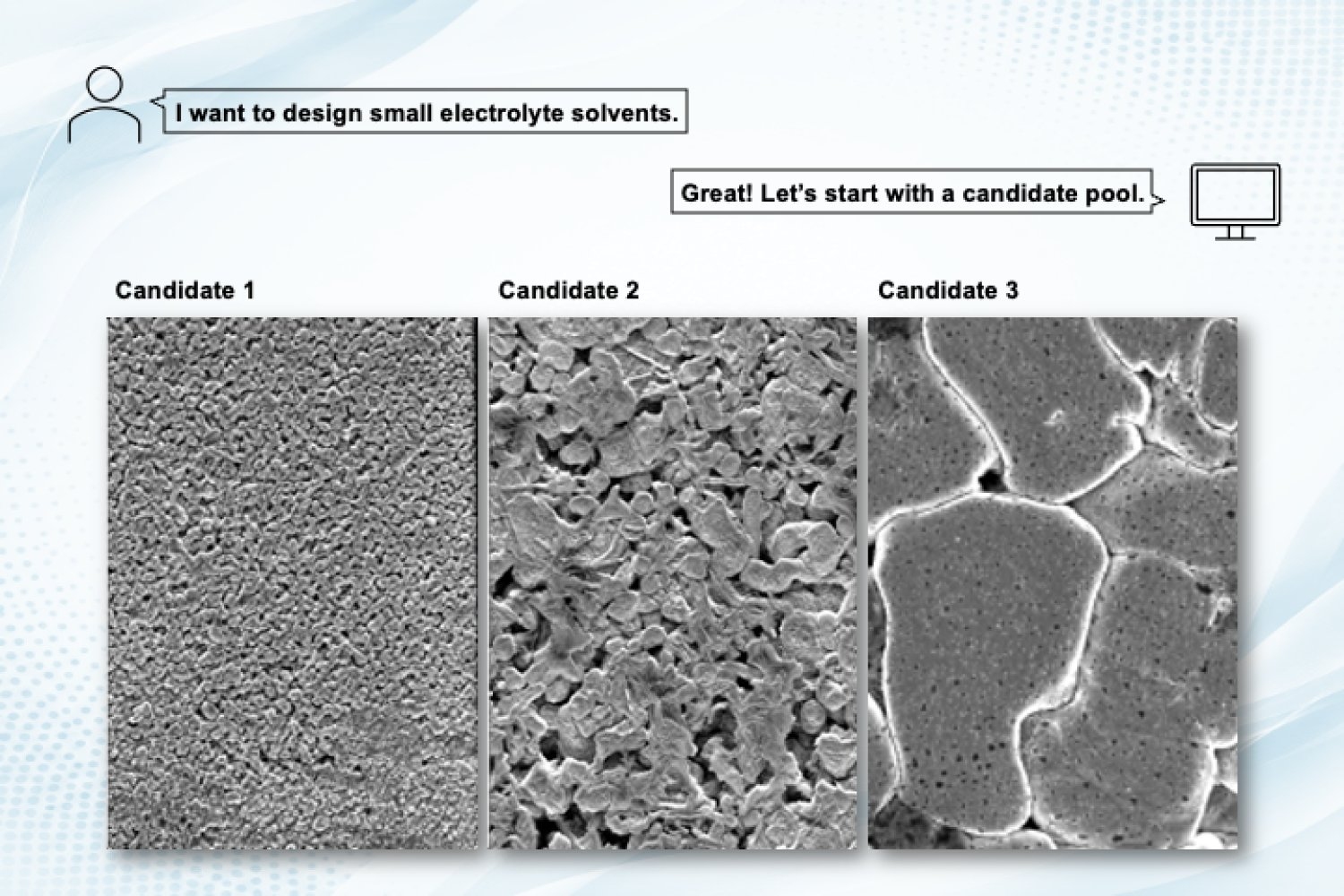
MIT researchers have developed a new solvent, DMFSA, that significantly improves the performance of sodium-metal batteries. This breakthrough addresses the challenge of achieving fast charging and discharging while maintaining long-term stability. Using an AI-guided algorithm, the team screened 100,000 molecules to find the optimal candidate. This advancement could lead to more efficient and cost-effective energy storage solutions, with implications beyond sodium batteries.
Read originalMore from MIT News AI

More in Research
 © The Rundown AI
Researchresearch
OpenAI's Astra Solves 10 Long-Standing Math Problems
OpenAI's unreleased model, Astra, has made significant strides by solving 10 long-standing problems in mathematics and theoretical computer science. These include proving the existence of non-sofic groups and solving Alain Connes’s rigidity conjecture, among others. The solutions were verified using Lean, and the computational cost was surprisingly low, at around $2,000. This breakthrough raises questions about the role of AI in achieving potentially Fields Medal-worthy results, as it demonstrates AI's growing capability to tackle complex problems at a fraction of the traditional cost. The implications extend beyond mathematics, hinting at future applications in fields like drug discovery.
The Rundown AI
Researchresearch