Models & Labs
GitHub API Enhances Agent App Activity Tracking
GitHub Changeloghigh confidence
Why it matters
- →Provides granular insights into agent app usage, aiding strategic decisions.
- →Helps distinguish between different agents' activities, improving clarity.
- →Supports informed rollout and licensing decisions based on real usage data.
GitHub has updated its Copilot usage metrics API to include detailed tracking of agent app activity. This enhancement allows users to see activity broken down by individual agents, such as Claude and Codex, within their GitHub workflows. The new metrics provide insights into user-initiated interactions and session counts, helping organizations understand agent adoption and usage patterns. This update is backward compatible and available to enterprise owners and billing managers, offering them a clearer picture of agent app utilization.
Read originalMore from GitHub Changelog
 © GitHub Changelog
Coding Toolscoding
GitHub Copilot Enhances Workflow with New Features
GitHub Copilot's latest updates bring a suite of enhancements aimed at improving workflow efficiency and user interaction. The updates include the ability to see which AI model handled requests, manage multiple sessions with ease, and explore changes without disrupting ongoing work through the new /worktree command. The integrated browser now allows for element-level feedback, and dictation supports multiple languages on-device. These features collectively enhance the user experience by providing more control and flexibility in managing tasks and reviewing changes.
GitHub Changelog
 © GitHub Changelog
Coding Toolscoding
GitHub Copilot Dashboard Adds ROI Section
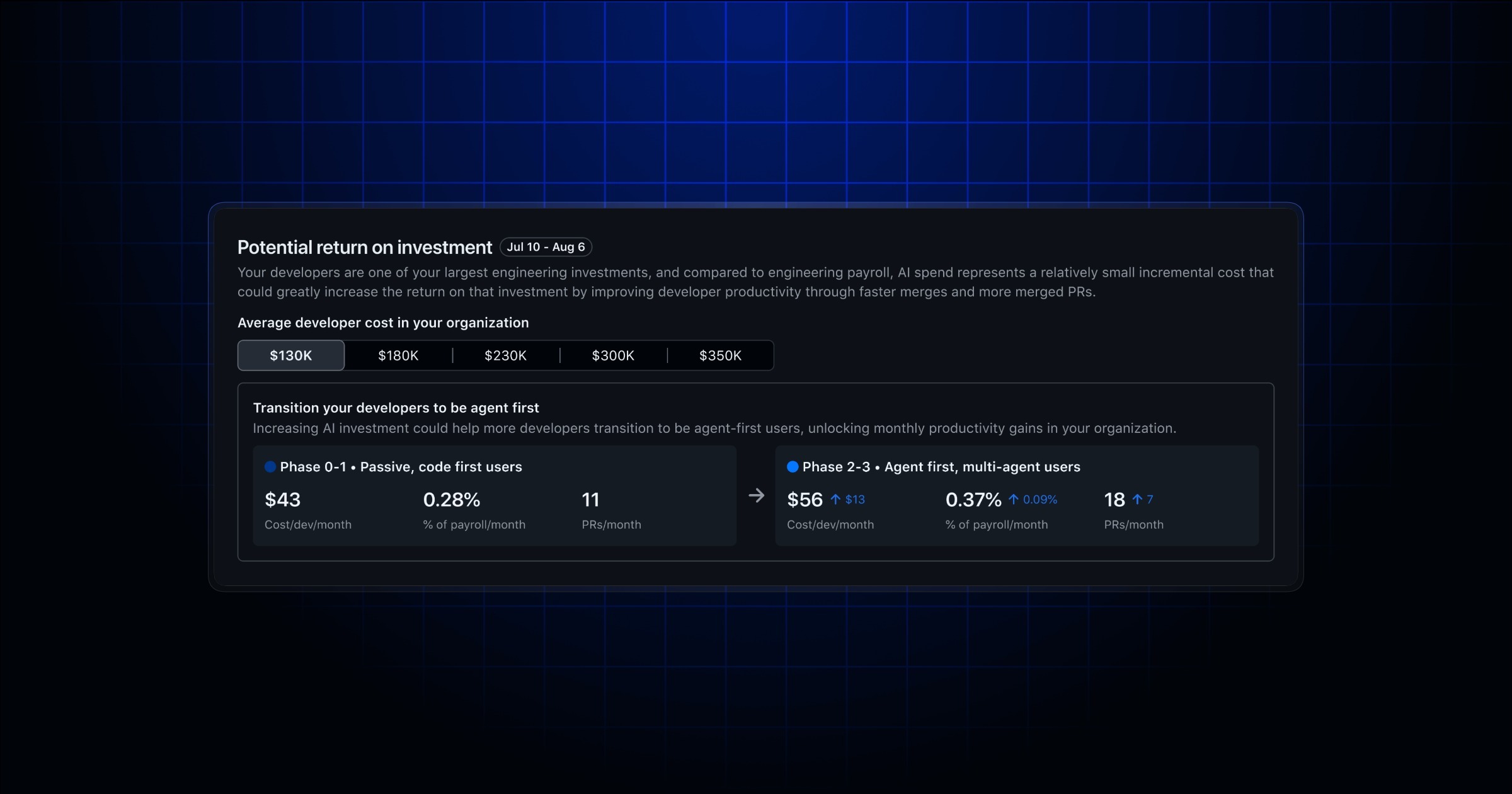
GitHub has enhanced its Copilot impact dashboard by introducing a 'Potential return on investment' section. This new feature allows organizations to directly correlate their spending on Copilot with the output in terms of pull requests, offering a clearer picture of the tool's financial impact. By comparing different user adoption phases, administrators can now better justify investments and tailor enablement programs. This update provides a more comprehensive view of Copilot's value, helping decision-makers optimize their AI tool usage based on actual cost and productivity metrics.
GitHub Changelog
 © GitHub Changelog
Coding Toolscoding
GitHub Copilot Code Review Levels Now Available
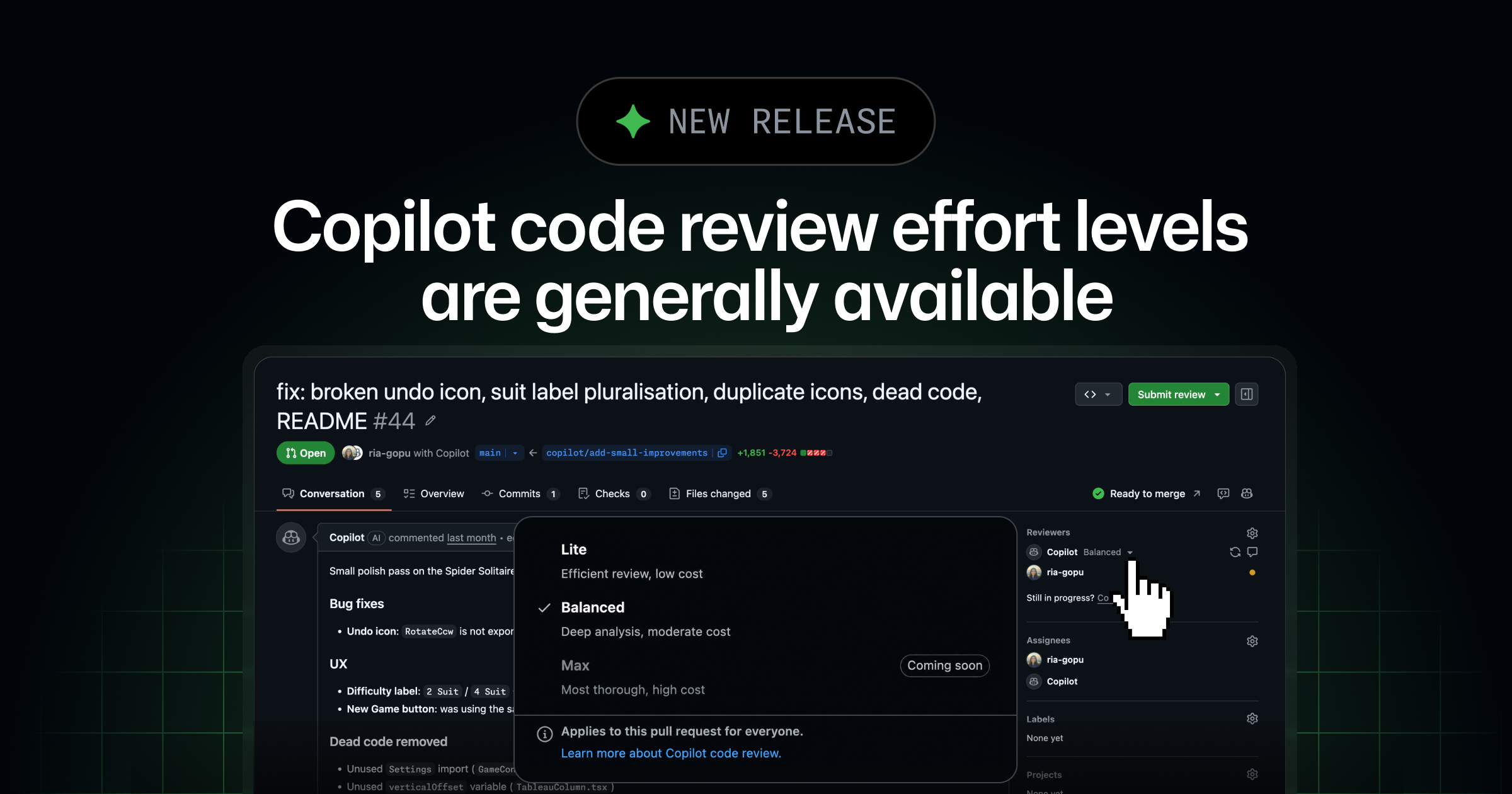
GitHub has made its Copilot code review effort levels, Lite and Balanced, generally available. These levels allow developers to tailor the depth of code reviews to the complexity and risk of pull requests. Lite is suited for straightforward changes, while Balanced is designed for more complex or sensitive code. This feature is available across various Copilot plans, enabling organizations to set default review levels that can be inherited by repositories. This development enhances the flexibility and precision of code reviews, making it easier to manage review depth across projects.
GitHub Changelog
More in Models & Labs
Models & Labsmodels
llama.cpp b10311 Release Enhances TTS Generation
The b10311 release of llama.cpp tackles inefficiencies in text-to-speech (TTS) generation by refining how text streams are processed. Previously, the system would redundantly handle utterances, causing them to be read twice before completion. This update aligns the streaming overlay with the non-streaming prefill, effectively eliminating the duplication. Developers working with TTS systems will find this change streamlines the generation process and boosts efficiency. The update is accessible on macOS, Linux, and Windows, ensuring that a broad range of users can benefit from these improvements.
llama.cpp Releases
Models & Labsmodels
Llama.cpp b10313 Release Adds LRU Scheduler
The b10313 release of llama.cpp introduces an LRU scheduler, significantly enhancing task management efficiency. This update includes improvements in handling coalescing, optimizing the waiting queue, and fixes for stream cases to ensure smoother operations. The release also expands platform-specific builds, such as Vulkan and ROCm 7.2 support on Ubuntu, and CUDA 12 and 13 on Windows. While there are no new model architectures, these updates demonstrate a commitment to refining performance and compatibility across various systems.
llama.cpp Releases
Models & Labsmodels
llama.cpp b10322 Release Boosts Performance
The latest b10322 release of llama.cpp introduces significant performance improvements, particularly in the ssm_conv operations. Testing on an Arc Pro B70 shows a notable 1.85x to 1.87x speed increase in specific configurations, highlighting the efficiency gains. These enhancements are crucial for developers working with large models, as they can now achieve faster processing times without altering their existing setups. This update doesn't introduce new models but focuses on optimizing existing operations, making llama.cpp a more robust choice for high-performance AI tasks.
llama.cpp Releases