Market & RegulationInvestment · $90M
Spiko raises $90m Series B for AI coding agents
Siftedhigh confidence
Why it matters
- →Validates the autonomous coding agent category with significant Series B capital.
- →Highlights Index Ventures' continued bet on specialized AI developer tools.
- →Signals market demand for end-to-end development automation over simple assistance.
Spiko has secured $90 million in Series B funding led by Index Ventures and Speedinvest, valuing the AI coding agent startup at a significant milestone. The company focuses on autonomous software development agents capable of executing complex coding tasks without constant human oversight. This investment comes as venture capital continues to flow into specialized AI infrastructure and developer tools, distinguishing Spiko from broader LLM providers. The funds will likely accelerate product development and market expansion in the competitive AI engineering sector.
Read originalThe story around this
Earlier coverage that leads up to this article, and what followed. Lines connect each piece to the closest one after it, converging here.
How we got here
- 1Conduct raises $60M for AI operating system
Sifted · June 17, 2026 · Background
- 2Prime Intellect raises $130M to empower AI agents
TechCrunch AI · July 8, 2026 · Background
- 3Lingverse Raises $29M for iKairos Wearable AI
WIRED AI · July 23, 2026 · Background
- 4Index Ventures raises $2B to invest in AI
Sifted · August 3, 2026 · Background
- 5Instinct Raises $250M for AI Assistants
Crunchbase News · August 28, 2026 · Background
- 6Cognition Raises $2B in Series E Funding
Crunchbase News · September 11, 2026 · Background
- 7Instinct AI raises $1B on agent hype
WIRED AI · September 24, 2026 · Background
What happened next
- 8Nous Research raises $90M at $1.5B valuation for AI agents
TechCrunch AI · October 7, 2026 · Background
More from Sifted
Market & Regulationother
Mistral faces open model 'abliteration' risk
Abliteration is emerging as a critical vulnerability for open-weight providers like Mistral. This technique lets users extract specific capabilities from model weights without full fine-tuning, effectively bypassing safety guardrails and licensing restrictions. The method poses a significant risk by enabling the repurposing of proprietary data for unintended or malicious uses. As these extraction techniques become more sophisticated, the sustainability of the open-source AI business model may require stricter technical safeguards or legal frameworks. Companies releasing open models face a stark choice between maintaining strict control or risking their core IP being repurposed for malicious ends. The issue strikes at the heart of the open-source ecosystem, where revenue relies on trust that shared weights won't be easily weaponized. This shift forces a reevaluation of how open-weight models are distributed and protected in an increasingly hostile landscape.
Sifted
General AIagents
Revolut launches agentic shopping features
Revolut is moving beyond simple chatbots by introducing agentic capabilities that allow users to delegate complex shopping tasks directly within the app. This shift marks a significant step in AI commerce, transforming passive assistants into active buyers who can search, compare, and potentially execute transactions autonomously. For a fintech giant with millions of daily users, this integration brings autonomous agents from experimental tech to mainstream consumer finance. It signals that the next battleground for AI isn't just generating content, but executing real-world economic actions on behalf of the user.
Sifted
Investment
Market & Regulationother
Ex-OpenAI robotics startup enters insolvency
The collapse of this factory automation venture signals a harsh reality check for the physical AI sector. Despite backing from high-profile talent and capital, the inability to scale manufacturing operations has led to insolvency proceedings. This isn't just a single company failure; it underscores the immense difficulty of bridging the gap between sophisticated robotic algorithms and reliable industrial deployment. The market is learning that software prowess does not automatically translate to hardware success. Investors are now questioning whether the hype around embodied AI can survive the brutal economics of physical production. This event serves as a stark reminder that technical capability alone cannot overcome fundamental operational hurdles in the real world.
Sifted
More in Market & Regulation
 © TechCrunch AI
Investment · $870M
Market & Regulationbusiness
TypeSafe AI raises $870M for non-text model Jev
TypeSafe AI’s $870 million raise signals a pivot away from the text-generation arms race toward structured decision-making. Jev bypasses LLMs entirely, outputting calibrated probabilities instead of tokens to automate enterprise workflows faster and cheaper. With claims that a third of Fortune 500 companies are already using it, this validates a niche but high-value market for non-linguistic AI. The funding from Andreessen Horowitz and Sequoia confirms investors are betting on automation over conversation.
TechCrunch AI
 © WIRED AI
Market & Regulationbusiness
Big Five Publishers Use AI Behind Closed Doors
While the Big Five publicly condemn author-generated AI, internal leaks reveal a stark hypocrisy: HarperCollins, Simon & Schuster, and Hachette are quietly deploying LLMs for publicity copy, cover art, and even rejection letters. This isn't just about efficiency; it's a cultural rupture where staff are 'voluntold' to champion tools that replace human judgment in creative workflows. The revelation exposes a dangerous gap between corporate PR and operational reality, proving that enterprise adoption is already deep enough to trigger internal revolts over ethics and copyright risks.
WIRED AI
 © Lev Selector
Market & Regulationbusiness
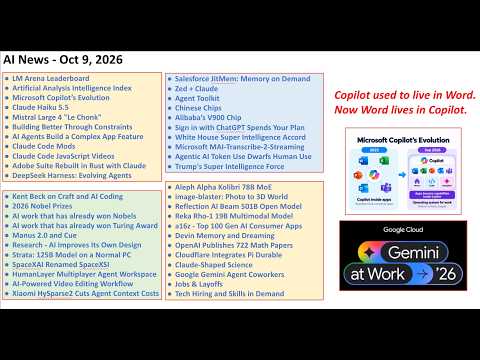
White House Announces Super Intelligence Accord
The White House has introduced a new 'Super Intelligence Accord' alongside the formation of a dedicated Super Intelligence Force.
Lev Selector