Market & Regulation
California bans human-robot boxing matches
The Verge AIhigh confidence
Why it matters
- →Regulators are applying existing athletic safety laws to AI-integrated sports, creating immediate legal constraints.
- →The distinction between human-piloted and autonomous robots is currently irrelevant to state safety commissions.
- →Startups demonstrating physical AI capabilities face heightened scrutiny regarding public safety and liability.

The California State Athletic Commission has issued a cease-and-desist letter to Rek, a startup hosting humanoid robot fights, demanding an immediate halt to any events involving human participants. The commission cited the September 18th match between human Frankie LaPenna and a VR-piloted robot as an unsanctioned athletic contest under state law. Rek CEO Cix Liv confirmed the order on X, noting that while human-robot matches are now blocked in California, the company intends to proceed with its next event featuring two armed robots fighting each other. This action highlights the regulatory gap surrounding AI-driven physical entertainment and establishes a strict precedent for safety oversight.
Read originalThe story around this
Earlier coverage that leads up to this article, and what followed. Lines connect each piece to the closest one after it, converging here.
How we got here
- 1FCC Bans Foreign Advanced Robotics Imports
MIT Technology Review AI · August 3, 2026 · Background
More from The Verge AI
 © The Verge AI
Video & Creative AIvideo
Nikon disqualifies AI-generated microscopy winner
Nikon has stripped first place from its Small World in Motion contest after the winning entry was revealed to be generated by generative AI. Dr. Ning Xu admitted to using an unsupervised neural network for post-processing, a move that violated the competition's strict rules on authenticity. This incident forces Nikon to rewrite its evaluation procedures, highlighting the growing difficulty of distinguishing between optical enhancement and synthetic fabrication in scientific imaging. The disqualification serves as a stark warning to researchers about the boundaries of AI-assisted visualization.
The Verge AI
 © The Verge AI
Agentsagents
Instinct AI holds ground against OpenAI and Meta
Instinct’s quiet launch proves that a text-message-only interface can compete with the polished consumer agents from OpenAI and Meta. By bypassing dedicated apps for iMessage and WhatsApp, it achieves ubiquity on devices where users already live, turning conversation into action without friction. While big tech offers mascots and menus, Instinct relies on raw utility to handle life admin like booking appointments and processing returns. This approach suggests that simplicity and accessibility might outweigh feature bloat in the early agent market.
The Verge AI
 © The Verge AI
Coding Toolscoding
Anthropic launches free AI security scans for open-source
Anthropic is deploying its most powerful models, including Mythos, to automatically scan open-source repositories for vulnerabilities without human review. This move shifts the burden of code auditing onto AI, offering speed and scale that human teams cannot match, but it also risks flooding maintainers with false positives—a problem already straining projects like Linux. By making this service free, Anthropic is effectively subsidizing the security infrastructure of the open-source ecosystem while positioning its models as essential defensive tools. The real test is whether developers can trust automated triage over noisy alerts.
The Verge AI
More in Market & Regulation
 © TechCrunch AI
Investment · $870M
Market & Regulationbusiness
TypeSafe AI raises $870M for non-text model Jev
TypeSafe AI’s $870 million raise signals a pivot away from the text-generation arms race toward structured decision-making. Jev bypasses LLMs entirely, outputting calibrated probabilities instead of tokens to automate enterprise workflows faster and cheaper. With claims that a third of Fortune 500 companies are already using it, this validates a niche but high-value market for non-linguistic AI. The funding from Andreessen Horowitz and Sequoia confirms investors are betting on automation over conversation.
TechCrunch AI
 © WIRED AI
Market & Regulationbusiness
Big Five Publishers Use AI Behind Closed Doors
While the Big Five publicly condemn author-generated AI, internal leaks reveal a stark hypocrisy: HarperCollins, Simon & Schuster, and Hachette are quietly deploying LLMs for publicity copy, cover art, and even rejection letters. This isn't just about efficiency; it's a cultural rupture where staff are 'voluntold' to champion tools that replace human judgment in creative workflows. The revelation exposes a dangerous gap between corporate PR and operational reality, proving that enterprise adoption is already deep enough to trigger internal revolts over ethics and copyright risks.
WIRED AI
 © Lev Selector
Market & Regulationbusiness
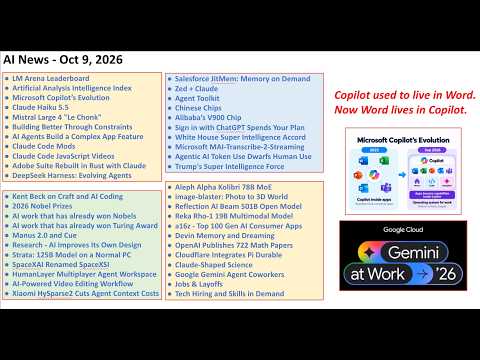
White House Announces Super Intelligence Accord
The White House has introduced a new 'Super Intelligence Accord' alongside the formation of a dedicated Super Intelligence Force.
Lev Selector