16 × AIAI signal, amplified
AI newsTopicsAboutSources
TelegramFollow on Telegram
AI newsTopicsAboutSources
16 × AIAI signal, amplified

An AI news engine that ingests trusted sources, scores with Claude, and posts only what clears the bar.

Follow on Telegram →

Subscribe

  • Telegram
  • RSS
  • All channels

Newsletter

Used only to send this newsletter. Privacy

Legal

  • Privacy
  • Imprint
© 2026 16 × AI. All rights reserved.A new issue every two days.
Home/Research
Research

AI-optimized RNA vaccines stable at room temperature

MIT News AI·September 28, 2026·high confidence

Why it matters

  • →AI-driven formulation design drastically reduces the experimental trial-and-error needed to stabilize fragile biologics.
  • →Heat-stable mRNA vaccines eliminate the ultracold storage requirement, enabling distribution in regions lacking cold-chain infrastructure.
  • →The approach is platform-agnostic, allowing similar optimization for Pfizer-style LNPs and non-vaccine therapeutics like microneedle patches.
AI-optimized RNA vaccines stable at room temperature
©MIT News AI

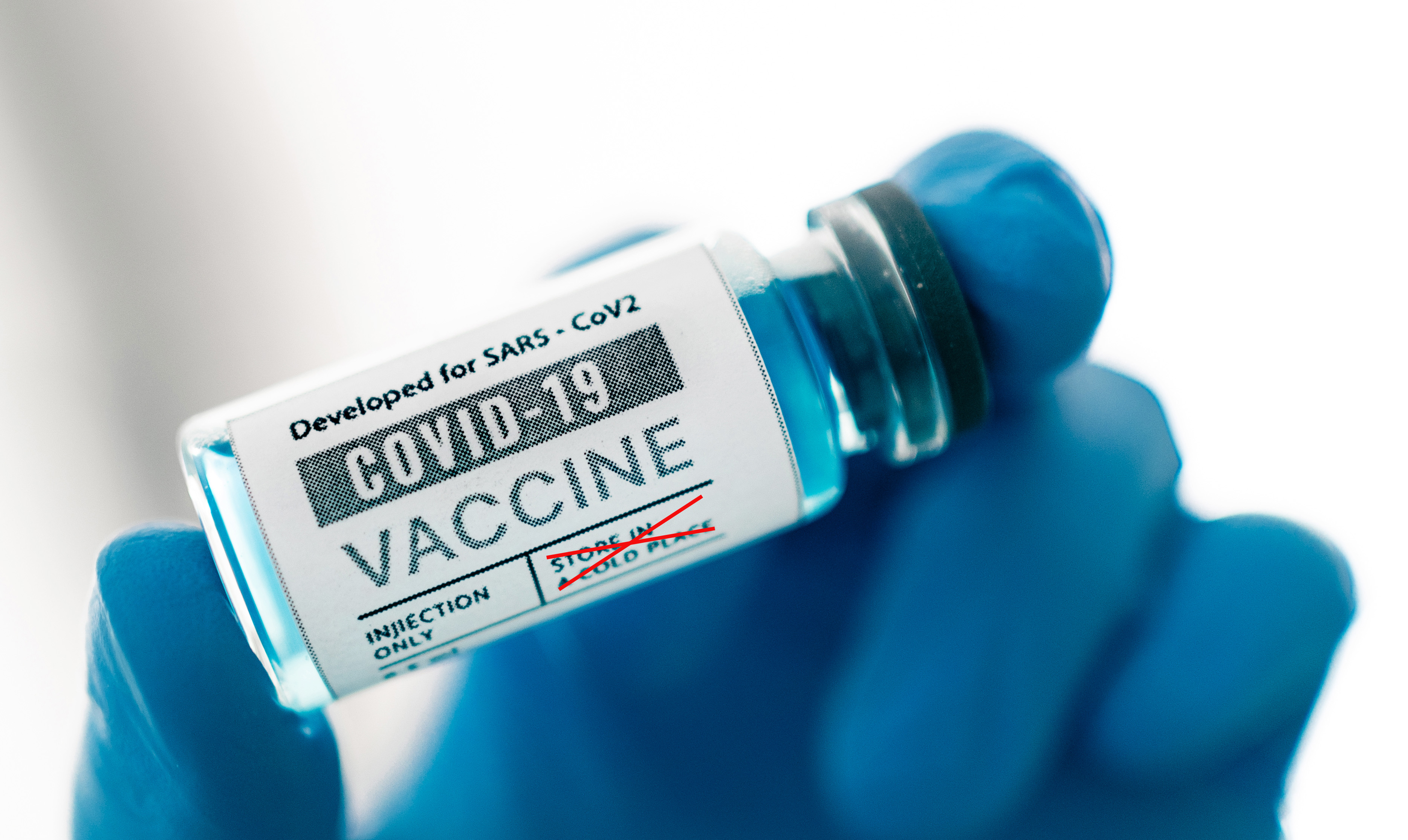
Researchers at MIT have developed a machine learning algorithm that optimizes lipid nanoparticle (LNP) formulations for mRNA vaccines, enabling stability at room temperature. By analyzing nearly 50 FDA-approved excipients, the AI predicted combinations that protected RNA from degradation, allowing Moderna-style vaccines to remain effective after one year at room temperature or two months at 98°F. In mouse trials, these heat-stable vaccines elicited immune responses comparable to standard refrigerated doses and were successfully integrated into microneedle patches. The study, published in Nature Biotechnology, demonstrates that AI can accelerate the development of thermostable drug delivery systems for broader global access.

Read original

More from MIT News AI

MIT challenges algorithmic monoculture fears© MIT News AI
Researchresearch

MIT challenges algorithmic monoculture fears

A new MIT study dismantles the alarmist narrative that widespread adoption of a single AI algorithm inevitably leads to systemic exclusion. By modeling hiring scenarios, researchers prove that while monoculture reduces individual discovery, it can actually increase candidate bargaining power and overall hiring volume. The real risk is informational stagnation, which the paper suggests can be mitigated through ensemble methods or injected randomness. This shifts the debate from moral panic to technical optimization of algorithmic diversity.

MIT News AI·Sep 29, 2026

More in Research

Anthropic claims AI found Crispr-like enzyme© WIRED AI
Researchresearch

Anthropic claims AI found Crispr-like enzyme

Anthropic’s Claude identified a novel reverse transcriptase system in jumbo phages that resembles CRISPR, but the scientific community remains skeptical. While the speed of discovery is impressive, experts note the finding lacks wet-lab validation and may simply be pattern recognition on known data. The real story isn't a new gene-editing tool, but the opaque nature of how an AI model sifts through genomic databases to propose hypotheses that humans must still verify.

WIRED AI·Sep 29, 2026
ProvenanceGuard verifies MCP agent source attribution© Hugging Face Blog
Research
research

ProvenanceGuard verifies MCP agent source attribution

Most fact-checkers for AI agents only check if a claim is true in the evidence pool, ignoring where it came from. ProvenanceGuard fixes this by tracking source identity through every step of verification, catching cases where a true fact is wrongly attributed to the wrong tool or document. In medical agent tests, it caught 138 out of 139 incorrect attributions that standard verifiers missed, proving that provenance matters as much as truth in multi-tool environments. This shifts the focus from simple RAG retrieval to rigorous source-aware auditing for high-stakes applications.

Hugging Face Blog·Sep 29, 2026
Anthropic's AI discovery claim sparks scientific debate© MIT Technology Review AI
Researchresearch

Anthropic's AI discovery claim sparks scientific debate

Anthropic claims its Claude agents found a novel DNA pattern in molecular biology, but biologists argue this is merely data filtering, not a true discovery. The controversy reveals the gap between AI's ability to process vast datasets and the human judgment required for scientific breakthroughs. Critics point out that identifying patterns is routine work, while understanding function is where real science happens. This incident raises questions about how we define AI's role in research and whether companies are overhyping incremental progress as revolutionary. The debate underscores the tension between AI companies' marketing of autonomous discovery and the scientific community's rigorous standards for what constitutes novel knowledge. One biologist noted his team had already discovered this specific pattern, raising concerns about potential data contamination despite Anthropic's denial.

MIT Technology Review AI·Sep 28, 2026