Models & Labs
FLUX 3: A New Multimodal Model by Black Forest Labs
Replicate Bloghigh confidence
Why it matters
- →FLUX 3 integrates multiple sensory inputs, enhancing the realism of generated content.
- →It allows for seamless video transformations, offering new creative possibilities.
- →The model's ability to understand physical dynamics sets a new standard for multimodal AI.
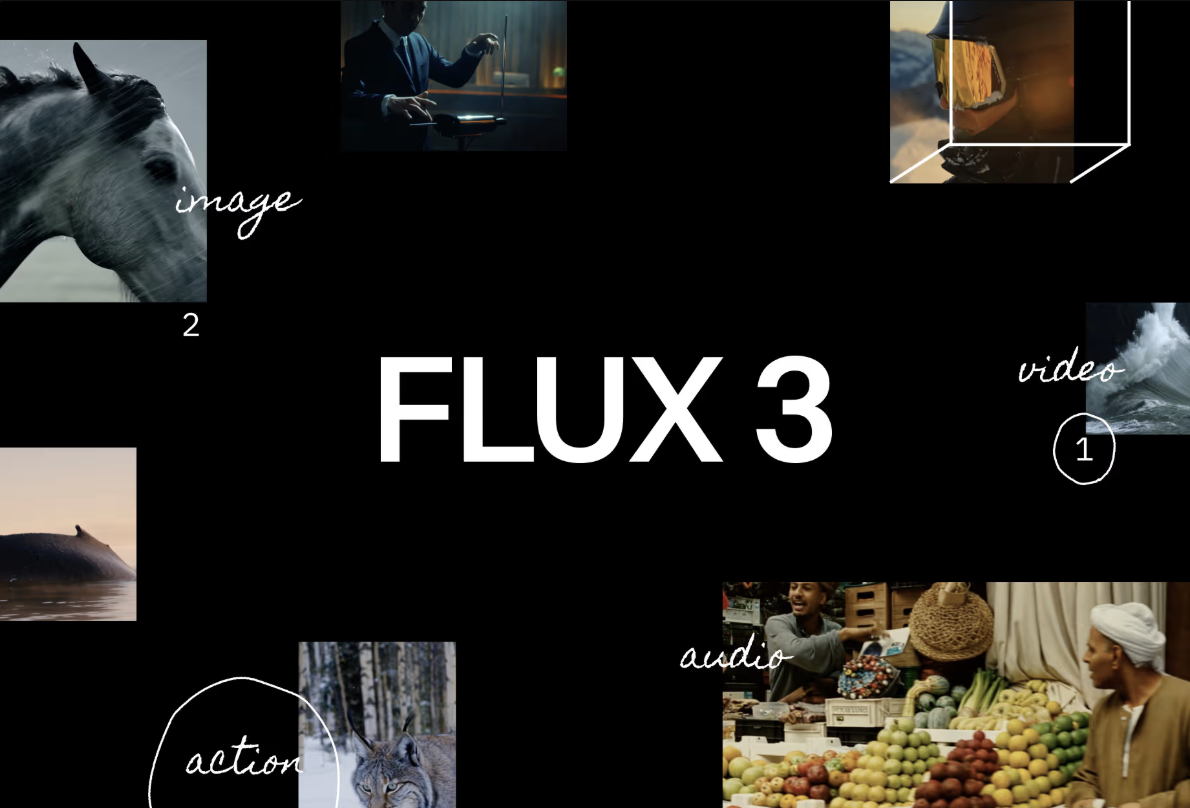
Black Forest Labs has introduced FLUX 3, a new multimodal foundation model designed to generate outputs by learning from images, audio, and video. This model aims to encapsulate the laws of physics, allowing for more realistic and dynamic content creation. FLUX 3 can handle a range of prompts, from simple to detailed, and produce hyper-realistic scenes. It also supports seamless video transformations and stylized outputs, making it a versatile tool for creators. This development represents a significant advancement in the field of multimodal AI.
Read originalThe story around this
Earlier coverage that leads up to this article, and what followed. Lines connect each piece to the closest one after it, converging here.
More in Models & Labs
Models & Labsmodels
llama.cpp b12029 adds CUDA 13 and Snapdragon support
This release quietly cements llama.cpp as the universal inference runtime by finally supporting NVIDIA's latest CUDA 13 stack alongside AMD's ROCm 10.0. The inclusion of native builds for Linux arm64 with Snapdragon chips, covering CPU, Adreno GPU, and Hexagon NPU, signals a serious push into mobile edge deployment. While Apple Silicon KleidiAI is disabled in this specific build, the broader hardware coverage means developers no longer need to compile from source for most modern accelerators. It’s less about new features and more about removing friction for anyone running local models on bleeding-edge or diverse hardware.
llama.cpp Releases
 © The Verge AI
Models & Labsother
