Coding Tools
GitHub Copilot Expands Code Review Capabilities
GitHub Changeloghigh confidence
Why it matters
- →Copilot can now handle larger and more complex pull requests, increasing its utility for developers.
- →Organizations can use Copilot code review without needing individual licenses, simplifying billing.
- →Feedback on comment resolution helps improve the tool's accuracy and effectiveness.
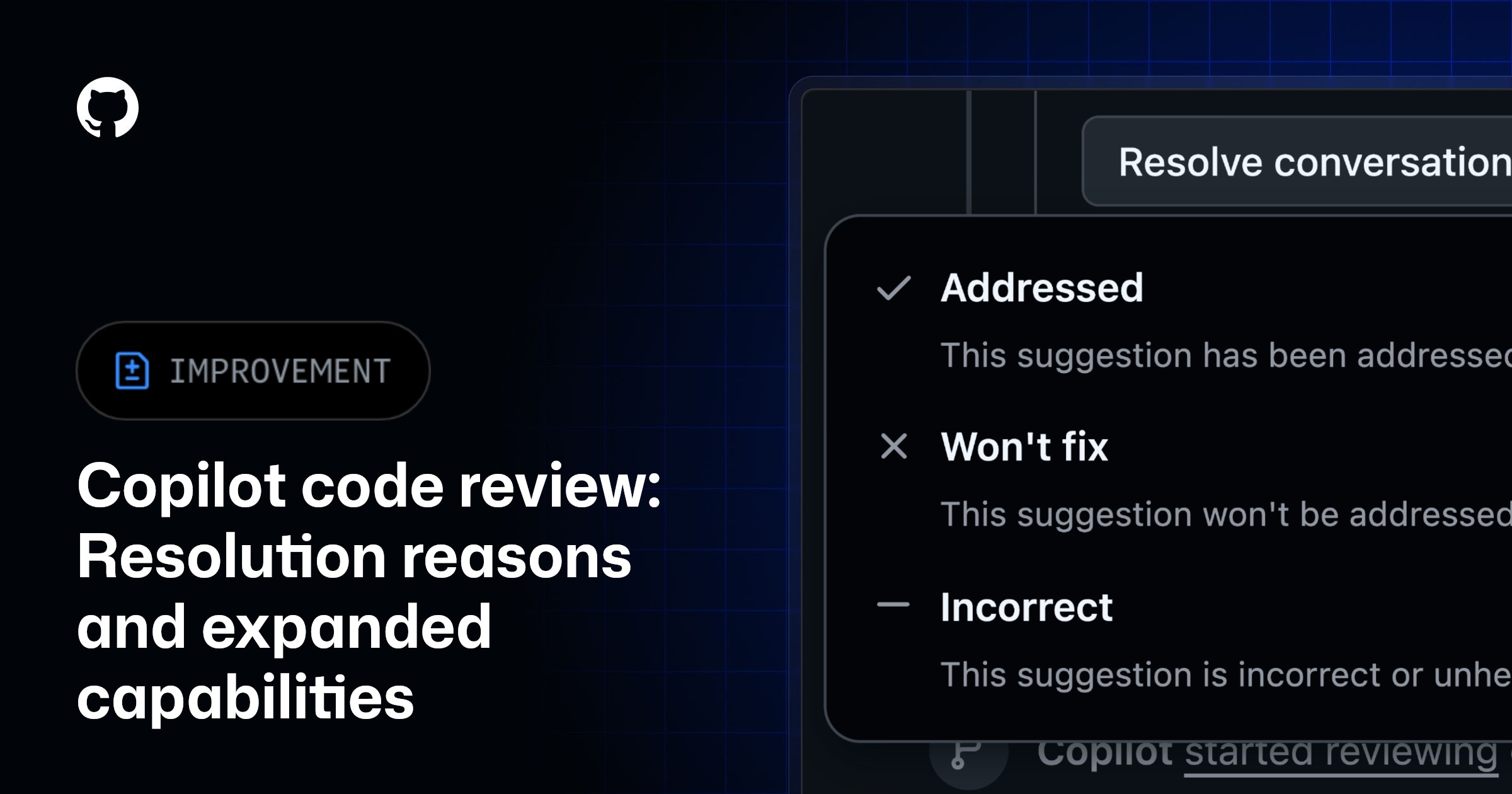
GitHub has enhanced its Copilot code review tool, enabling it to review pull requests from bots and handle very large pull requests without previous size limitations. This update allows organizations to use Copilot code review without individual licenses, billing directly to the organization. Users can now specify reasons for resolving comments, offering feedback to improve the tool. These changes make Copilot code review more adaptable and efficient for large projects and automated processes.
Read originalMore from GitHub Changelog
 © GitHub Changelog
Market & Regulationcoding
GitHub Actions Retention Policy Update Announced
GitHub is updating its Actions retention policy to include checks, workflow runs, and statuses, aligning them with the existing retention settings for artifacts and logs. Starting October 1, 2026, these elements will be automatically cleaned up after the configured retention period, which defaults to 90 days. This change aims to reduce stale data and improve the efficiency of GitHub Actions. Users are encouraged to review and adjust their retention settings to manage storage costs effectively, as this update could impact billable storage usage.
GitHub Changelog
 © GitHub Changelog
Market & Regulationbusiness
GitHub Enforces Global Model Policy for Copilot
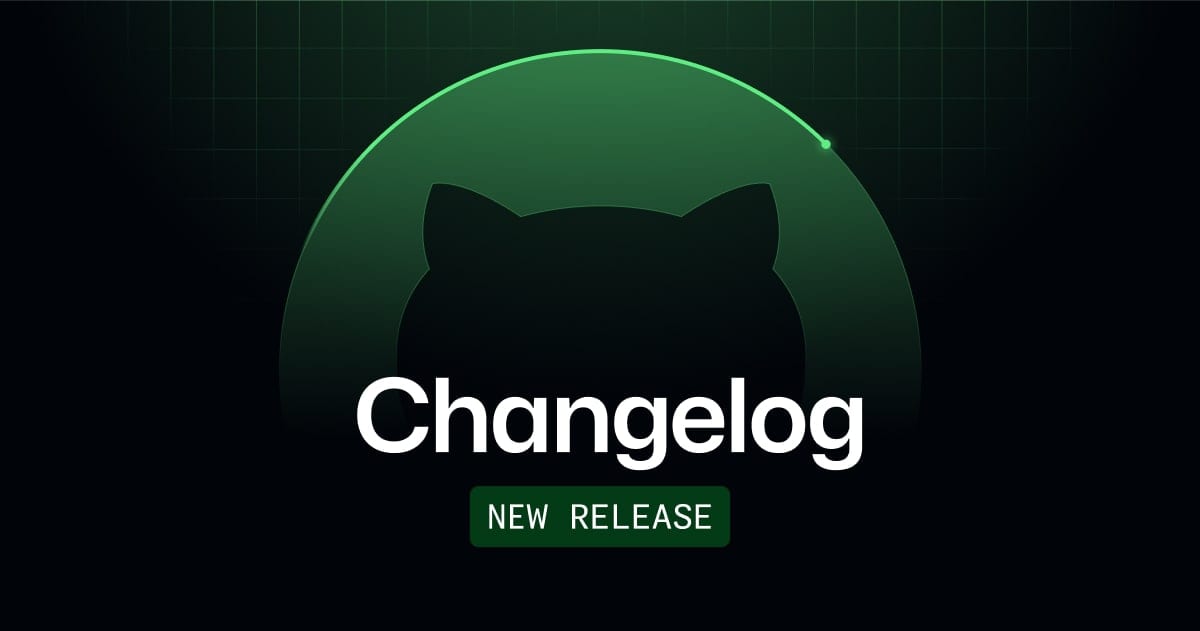
GitHub is rolling out a global model policy for its Copilot Business and Enterprise plans, impacting how AI models are managed across organizations. This policy allows administrators to set default states for models, which will automatically follow the organization's policy unless explicitly configured otherwise. Open-weight models and those requiring data retention are excluded from default enablement, ensuring compliance with data agreements. This move aims to streamline model management and ensure consistent policy application across enterprises, offering flexibility while maintaining control over AI model usage.
GitHub Changelog
 © GitHub Changelog
Market & Regulationbusiness
GitHub Apps Gain Access to Enterprise Billing Data
GitHub has enhanced its enterprise offerings by allowing GitHub Apps to access enterprise billing data, a move that simplifies financial management for organizations. Previously, billing data access was tied to personal access tokens of enterprise owners, which posed challenges when roles changed. Now, with app installation access tokens, enterprises can seamlessly integrate billing data into finance and BI systems without dependency on individual tokens. This change not only streamlines billing automation but also offers higher rate limits, making it a significant improvement for enterprise users.
GitHub Changelog
More in Coding Tools
Coding Toolscoding
Claude Code v2.1.247 Update Released
The latest Claude Code update, version 2.1.247, brings significant improvements to user interaction and functionality. A notable addition is the SendFeedback tool, which allows users to easily draft feedback reports when issues occur, enhancing the feedback process. The update also introduces a cost-optimization feature for Claude API users, enabling them to better manage expenses through various cost levers. Numerous bug fixes have been implemented to improve stability, such as resolving session management and keyboard shortcut issues. These enhancements collectively make Claude Code a more reliable and efficient tool for developers, offering a smoother experience.
Claude Code Releases
Coding Toolscoding
Claude Code v2.1.248 Update Released
The latest update to Claude Code, version 2.1.248, introduces several enhancements and fixes aimed at improving user experience and functionality. Notably, it adds a restricted mode to limit command execution and introduces a cache TTL for agent prompts, enhancing performance in long sessions. The update also addresses various bugs, such as prompt-cache misses and session management issues, ensuring smoother operation. These changes make Claude Code more robust and user-friendly, particularly for developers managing complex workflows.
Claude Code Releases
 © Matt Wolfe
Coding Toolsproductivity
Free Business Productivity App 'Control Center' Launched
Matt Wolfe has launched 'Control Center', a free productivity app designed to centralize business operations. The app is available for download and customization on GitHub.
Matt Wolfe