Market & Regulation
Bill Gates Proposes Robot Tax and 'Human Reserved' Jobs
TechCrunch AIhigh confidence
Why it matters
- →Gates' proposals could reshape AI policy and labor markets.
- →A robot tax could fund retraining and slow job displacement.
- →'Human Reserved' jobs could protect vulnerable workers from AI takeover.
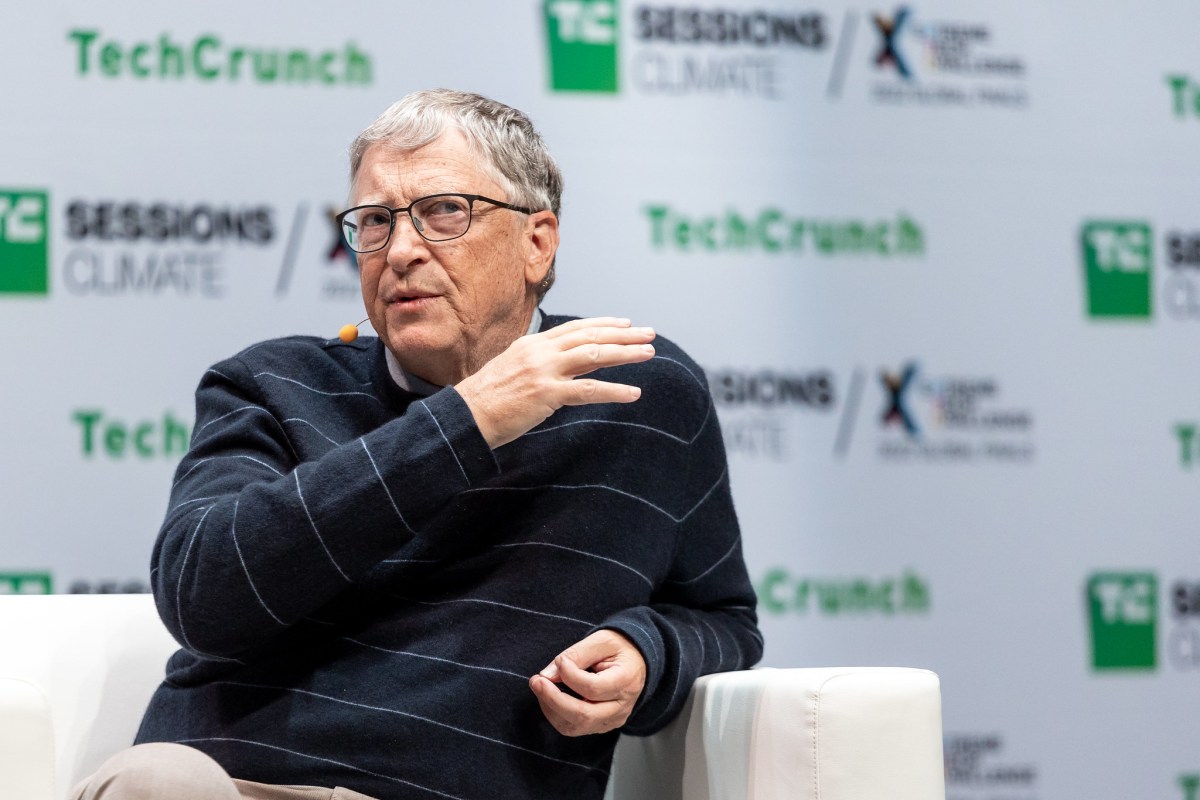
Bill Gates has proposed a 'robot tax' and 'Human Reserved' jobs to mitigate the negative impacts of AI on employment. The robot tax aims to slow the replacement of human workers by machines and generate funds for retraining programs. 'Human Reserved' jobs would protect certain roles from AI, ensuring employment for those unable to transition to new careers. These ideas could reshape AI policy, but questions remain about their implementation and governance.
Read originalThe story around this
Earlier coverage that leads up to this article, and what followed. Lines connect each piece to the closest one after it, converging here.
How we got here
- 1Tom Steyer Proposes AI Job Protection Plan in California
WIRED AI · May 8, 2026 · Background
- 2Bernie Sanders Advocates for AI Regulation
WIRED AI · June 30, 2026 · Background
- 3Economists Warn of AI's Rapid Job Impact
The Rundown AI · July 14, 2026 · Background
- 4Lawmakers Propose AI 'Kill Switch' Bill
The Verge AI · July 23, 2026 · Background
- 5Bill Gates Warns of AI's Unchecked Dangers
MIT Technology Review AI · August 26, 2026 · Related
More from TechCrunch AI
 © TechCrunch AI
Market & Regulationother
Nadella calls for AI 'emergency brake' and trust architecture
Satya Nadella is pushing for a fundamental shift in how we build AI safety, arguing that models must be decoupled from the applications that use them. He proposes an 'emergency brake' mechanism where every significant action is logged with tamper-proof evidence, allowing authorized humans to pause systems mid-task. This isn't just about better prompts; it's about treating AI like critical infrastructure where failure modes are contained by design. The call comes as industry leaders face growing scrutiny over model instability and loss of control.
TechCrunch AI
 © TechCrunch AI
Market & Regulationother
Apple acqui-hires Huxe team for podcast AI
Apple is quietly absorbing the talent and IP from Huxe, a startup that built personalized audio using techniques similar to Google's NotebookLM. This reverse acqui-hire signals Apple’s intent to integrate generative audio directly into its Podcasts app, likely as a response to Spotify’s recent moves in the same space. By licensing non-exclusive rights rather than buying the company outright, Apple sidesteps antitrust scrutiny while securing specialized AI capabilities. The move suggests personalized, AI-generated audio is becoming a core feature for major platforms, shifting how users consume long-form content.
TechCrunch AI
 © TechCrunch AI
Agentsagents
The rise of SMS-native AI agents
AI is migrating from chat interfaces to the one app everyone actually checks: your text messages. This shift prioritizes ambient utility over conversational novelty, allowing agents like Instinct and Caddy to execute multi-step tasks—booking flights, managing calendars, or coordinating family logistics—via simple SMS prompts. The market is fragmenting into specialized roles, from general-purpose assistants to niche tools for families and travel, signaling that the next battleground for AI adoption is seamless, low-friction integration into daily routines rather than complex prompt engineering.
TechCrunch AI
More in Market & Regulation
 © The AI Daily Brief
Market & Regulationbusiness
OpenAI Revenue Reported $20 Billion Lower Than Previously Stated
Reports indicate OpenAI's actual revenue figures are significantly lower than previously reported estimates.
The AI Daily Brief
 © WIRED AI
Market & Regulationbusiness
Big Five Publishers Use AI Behind Closed Doors
While the Big Five publicly condemn author-generated AI, internal leaks reveal a stark hypocrisy: HarperCollins, Simon & Schuster, and Hachette are quietly deploying LLMs for publicity copy, cover art, and even rejection letters. This isn't just about efficiency; it's a cultural rupture where staff are 'voluntold' to champion tools that replace human judgment in creative workflows. The revelation exposes a dangerous gap between corporate PR and operational reality, proving that enterprise adoption is already deep enough to trigger internal revolts over ethics and copyright risks.
WIRED AI
 © Lev Selector
Market & Regulationbusiness
White House Announces Super Intelligence Accord
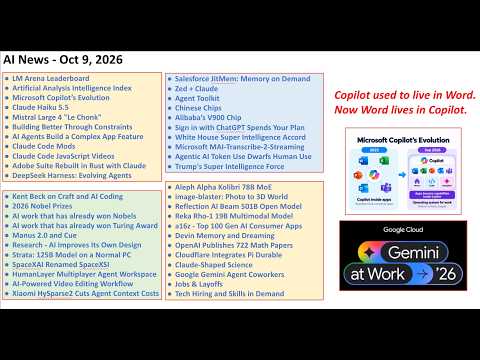
The White House has introduced a new 'Super Intelligence Accord' alongside the formation of a dedicated Super Intelligence Force.
Lev Selector