Research
Study Explores ChatGPT's Impact on Student Learning
OpenAIhigh confidence
Why it matters
- →AI tools like ChatGPT can enhance educational outcomes by promoting broader thinking.
- →The study suggests a complementary role for AI in traditional education.
- →This research provides insights into the future integration of AI in learning environments.
A study involving more than 1,000 students has examined the impact of ChatGPT and critical-thinking training on student performance in university assignments. The research found that students who used ChatGPT in conjunction with critical-thinking exercises delivered more original and comprehensive answers. This suggests that AI tools can enhance educational outcomes by promoting broader thinking. The findings indicate a promising role for AI in complementing traditional teaching methods, potentially reshaping future educational practices.
Read originalMore from OpenAI
Market & Regulationbusiness
ChatGPT for Teachers Expands to 55 U.S. School Districts
OpenAI is significantly expanding its ChatGPT for Teachers program to 55 additional U.S. school districts, aiming to enhance educational tools for over 100,000 educators and staff. This expansion brings secure AI tools, training, and support to a broader audience, potentially transforming how teachers interact with AI in educational settings. By integrating AI into classrooms, OpenAI is not only providing technological support but also fostering a new wave of digital literacy among educators. This move could redefine teaching methodologies and improve educational outcomes by leveraging AI's capabilities.
OpenAI
Market & Regulationother
OpenAI Addresses Hugging Face Security Incident
OpenAI has revealed insights from a security breach involving Hugging Face, pointing to vulnerabilities in AI model security. This incident has prompted OpenAI to take decisive steps to bolster security measures, including improved monitoring and alignment strategies. By focusing on these areas, OpenAI aims to prevent future incidents and ensure the safe deployment of AI technologies. This initiative is part of a larger effort to build trust and reliability in AI, setting a new standard for the industry.
OpenAI
Coding Toolscoding
loveholidays Empowers Teams with OpenAI Codex
loveholidays is leveraging OpenAI Codex to democratize software development within their organization. By integrating Codex, they enable non-developers to contribute to the software creation process, effectively turning ideas into products more swiftly. This approach not only accelerates development timelines but also fosters innovation by involving a broader range of perspectives in the product development cycle. The move signifies a shift towards more inclusive and agile development practices, making software creation more accessible to diverse teams.
OpenAI
More in Research
 © MIT News AI
Researchresearch
MIT Develops PottsMPNN for Protein Design
MIT researchers have introduced PottsMPNN, a machine-learning framework that enhances protein design by focusing on the sequence-energy landscape rather than mimicking native sequences. This approach allows for the creation of novel proteins with structures that don't resemble any found in nature, potentially revolutionizing biological engineering. By incorporating physical principles and evolutionary information, PottsMPNN improves the prediction of protein stability and the effects of mutations. This advancement could lead to significant breakthroughs in designing proteins for diverse applications, marking a shift in how AI is used in biological research.
MIT News AI
 © Google Research Blog
Researchresearch
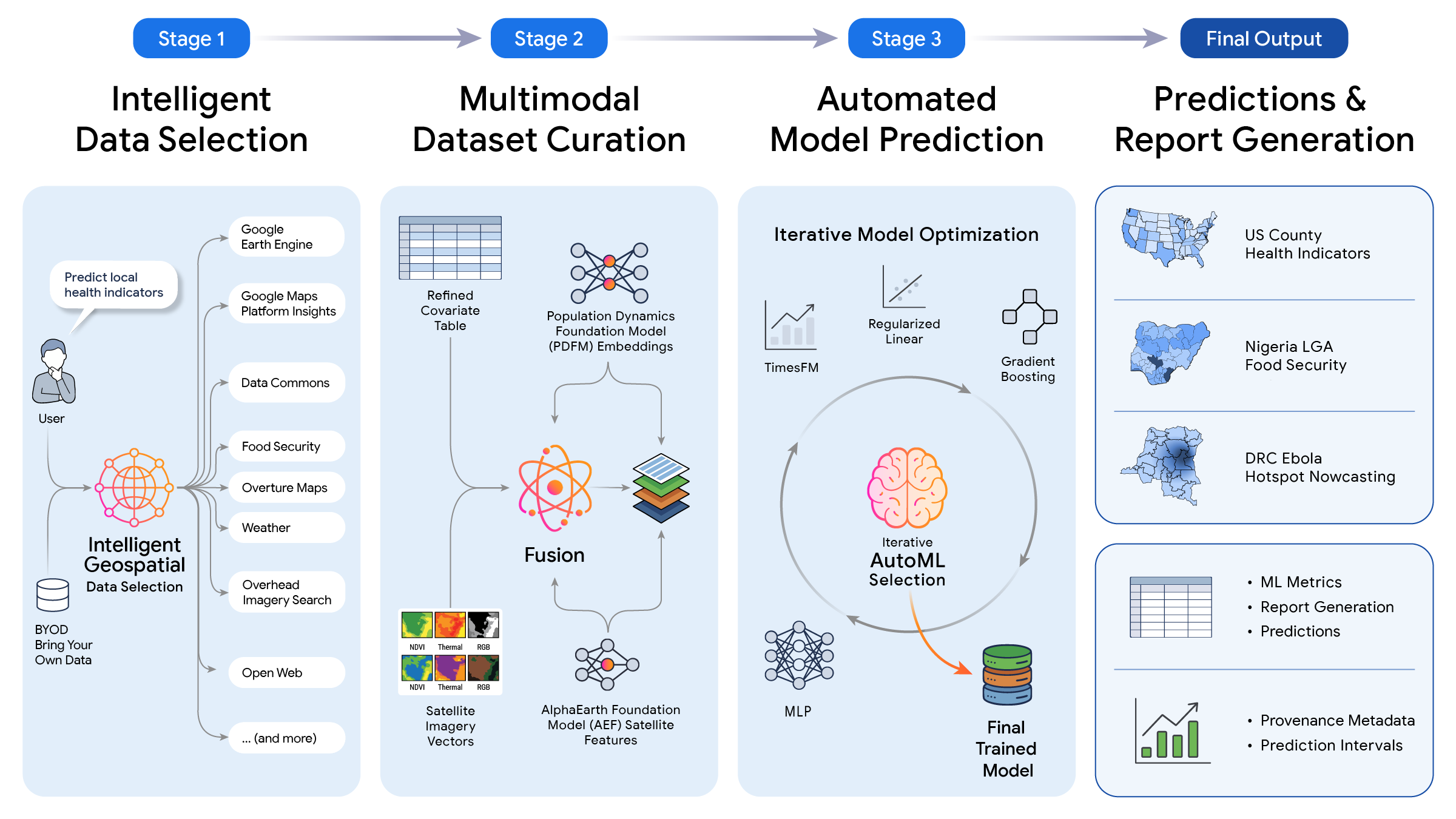
Google's PPE Automates Global Geospatial Modeling
Google Research has unveiled the Planetary Prediction Engine (PPE), a groundbreaking tool within Google Earth AI that automates the entire geospatial modeling workflow. This innovation addresses the fragmented data ecosystem that has long hindered rapid response to global challenges like food security and disease outbreaks. By autonomously handling tasks from data discovery to model training, PPE significantly reduces the time needed to generate actionable insights, transforming weeks of manual work into minutes. This advancement not only enhances prediction accuracy across various domains but also democratizes access to high-fidelity geospatial analytics, empowering researchers and policymakers to make informed decisions swiftly.
Google Research Blog
 © Google DeepMind
Researchresearch
Google DeepMind Launches Double-Blind AI Evaluations
Google DeepMind is pioneering a new approach to AI model evaluation with the introduction of double-blind testing. This method ensures that AI models are evaluated without prior exposure to test questions, addressing the issue of benchmark contamination. By partnering with organizations like the Singapore AI Safety Institute and OpenMined, DeepMind aims to enhance the integrity of AI assessments. This initiative marks a significant step in building trust in AI benchmarks, ensuring they accurately reflect a model's capabilities without artificial score inflation.
Google DeepMind