Models & Labs
Google unveils SensorFM for wearable health data
Google Research Bloghigh confidence
Why it matters
- →SensorFM represents a shift from single-outcome models to a generalist approach in wearable health research.
- →It effectively handles fragmented data, a common issue with wearable devices, through self-supervised learning.
- →The model's adaptability across multiple health domains could enhance personalized health insights.

Google Research has launched SensorFM, a foundation model for wearable health data, trained on over a trillion minutes of sensor data from five million participants. This model aims to provide a general-purpose representation of human physiology, applicable to 35 health prediction tasks. SensorFM uses self-supervised learning to handle fragmented data, a common challenge with wearable devices. The model's ability to transfer across various health domains marks a shift towards more comprehensive and adaptable wearable health research.
Read originalThe story around this
Earlier coverage that leads up to this article, and what followed. Lines connect each piece to the closest one after it, converging here.
How we got here
- 1AI Model Predicts Heart Failure Worsening
MIT News AI · March 12, 2026 · Background
- 2ChatGPT Enhances Health Intelligence with GPT-5.5
OpenAI · June 18, 2026 · Background
- 3Fitbit Air: A Smarter AI Health Approach
The Verge AI · June 23, 2026 · Background
What happened next
- 4MIT's PhysioNet Sets Global Standard for Data Sharing
MIT News AI · July 29, 2026 · Background
- 5Google Pixel Watch 5 Enhances AI Health Features
The Verge AI · August 12, 2026 · Related
- 6Samsung unveils AI models for wearable health data
AI News · August 14, 2026 · Related
- 7AI Tool Prioritizes Biomarkers from Wearable Data
Google Research Blog · August 21, 2026 · Same story
- 8Google unveils GlucoFM for glucose monitoring
Google Research Blog · August 26, 2026 · Same story
More in Models & Labs
 © TechCrunch AI
Models & Labsagents
Microsoft launches Nvidia Spark AI PCs with agent-ready Windows 11
Microsoft is finally shipping the hardware promised alongside Nvidia’s RTX Spark chip, targeting developers who want to run local AI agents without cloud dependency. The Surface Laptop Ultra and Dev Box feature unified memory and specialized cooling designed specifically for on-device model orchestration. More importantly, Windows 11 now includes Execution Containers, a sandboxing layer that lets multiple AI agents operate safely alongside user data. This moves the platform from just hosting models to actively managing agent context and actions locally. It signals a shift where the OS itself becomes the runtime environment for autonomous software.
TechCrunch AI
 © GitHub Changelog
Models & Labscoding
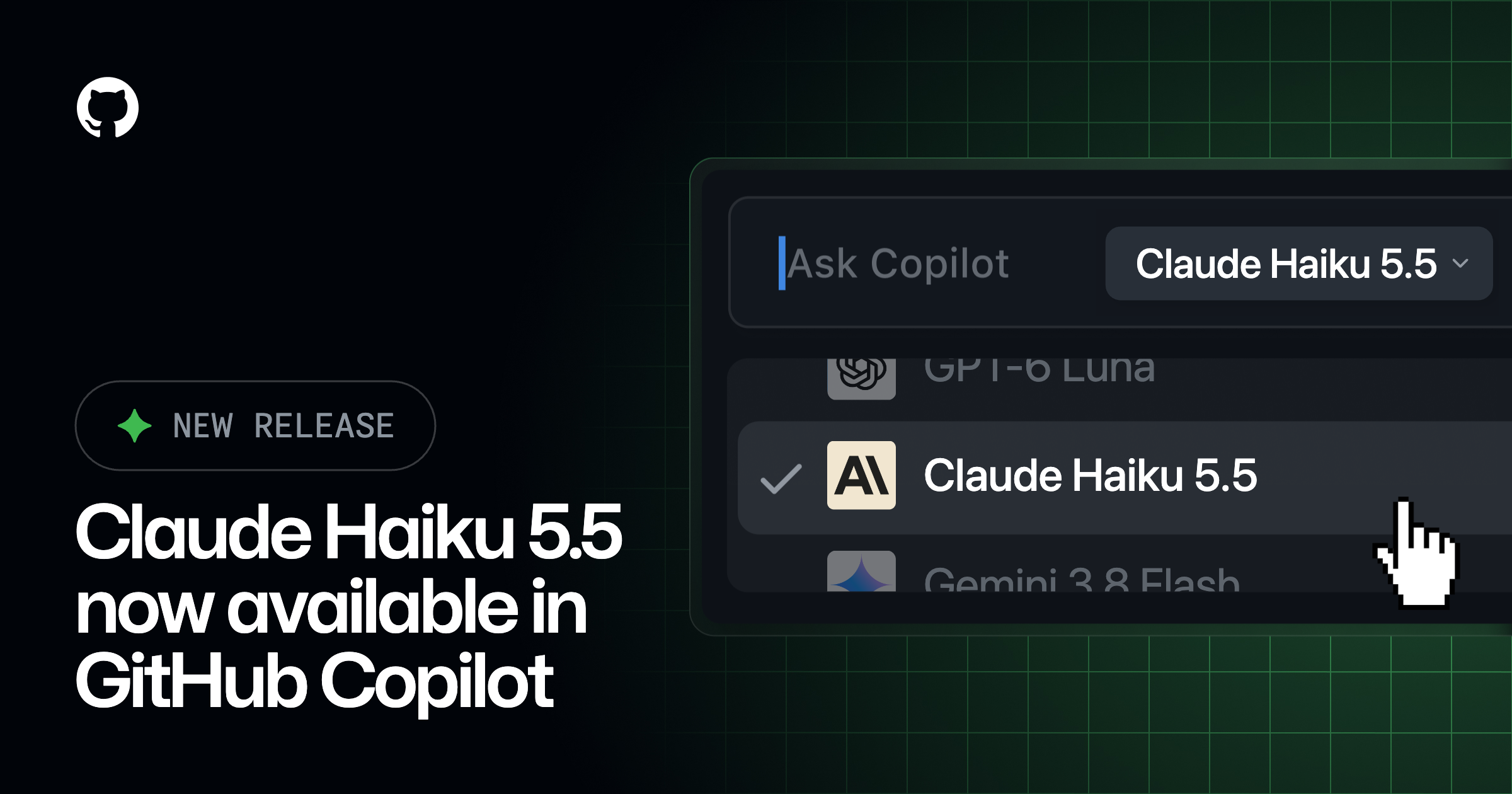
Claude Haiku 5.5 arrives in GitHub Copilot
Anthropic’s latest lightweight model is now live inside GitHub Copilot, targeting high-volume coding tasks like subagents and terminal work. Early benchmarks suggest it matches Sonnet 5 on many coding challenges while consuming significantly fewer tokens and steps. This availability across VS Code, JetBrains, and mobile apps gives developers a faster, cheaper option for routine edits without sacrificing quality. The gradual rollout means most users will see it soon, with admin controls allowing enterprises to manage access via model policies.
GitHub Changelog
 © The Verge AI
Models & Labsother
Microsoft Surface Laptop Ultra launches with Nvidia RTX Spark
The Surface Laptop Ultra marks the commercial debut of Nvidia’s RTX Spark, an Arm-based chip designed to bring serious local AI inference to Windows laptops. Starting at $2,599, this device signals a shift toward premium hardware capable of running large models locally, moving beyond cloud dependency for enterprise and creative workflows. Microsoft pairs this with 'Hybrid Intelligence' features in Copilot, allowing the agent to access local files and take OS-level actions like filing taxes or managing emails. This isn't just a new laptop; it's the first concrete proof that Arm-based PC silicon can handle the thermal and memory demands of 120B+ parameter models on-device.
The Verge AI