Research
AI May Surpass Doctors in Key Medical Tasks
WIRED AIhigh confidence
Why it matters
- →AI's potential to outperform doctors in key tasks could revolutionize healthcare delivery.
- →The shift towards AI-driven care raises ethical and practical questions about the role of human clinicians.
- →Understanding AI's capabilities and limitations is crucial for integrating it effectively into medical practice.

A new article in the Journal of the American Medical Association suggests that AI could soon surpass human doctors in performing key medical tasks. The authors, including Ezekiel Emanuel and Vinod Khosla, argue that AI might deliver better outcomes in areas like diagnosis and treatment by 2030. This claim is based on a review of recent studies showing AI's rapid advancements in medicine. However, some experts, such as John Whyte of the American Medical Association, caution against removing humans from the clinical loop, emphasizing the irreplaceable value of human judgment and empathy in patient care.
Read originalMore from WIRED AI
 © WIRED AI
Video & Creative AIimage
Cara Faces Scraping Challenges, Develops Artist Protection Tool
Cara, a platform designed to protect artists from unauthorized AI training, has been under siege by scrapers, leading to significant data breaches. In an unexpected turn, one of the scrapers has joined forces with Cara's founder, Jingna Zhang, to develop Lantern, an open-source tool aimed at helping artists track and protect their work from being included in AI datasets. This collaboration seeks to empower artists with more control over their digital creations, addressing a critical gap in current legal protections. Despite the ongoing challenges, Cara remains committed to finding innovative solutions to safeguard its community and ensure artists can share their work without fear of exploitation.
WIRED AI
 © WIRED AI
Market & Regulationbusiness
Judge Blocks Pentagon's Blacklist of Anthropic
A federal judge has ruled against the Pentagon's attempt to blacklist AI company Anthropic, calling the move unconstitutional and without basis. This decision overturns the Pentagon's designation of Anthropic as a 'supply-chain risk,' which had previously barred the company from securing federal contracts. The case arose from a dispute over the use of Anthropic's AI models in military operations, particularly following a controversial mission involving Venezuelan president Nicolás Maduro. The ruling allows Anthropic to continue its collaborations with the government, highlighting the complex relationship between AI companies and national security interests. While the Pentagon may appeal, this decision marks a pivotal moment in the conversation about AI deployment in sensitive contexts.
WIRED AI
 © WIRED AI
Agentsagents
Anthropic Unveils Framework for AI in Physical Systems
Anthropic is taking a significant step towards integrating AI agents into the physical world with its new Model Hardware Standard. This framework sets rules for how AI should interact with various hardware, from microscopes to manufacturing machines, aiming to safely revolutionize scientific research and industrial processes. By collaborating with trusted partners, Anthropic seeks to ensure safety and prevent misuse, addressing concerns about AI's potential to cause harm. This initiative could automate complex engineering tasks, allowing AI to optimize and innovate in ways previously limited to human expertise.
WIRED AI
More in Research
 © TechCrunch AI
Researchresearch
Anthropic Explores Self-Improving AI with New Paper
Anthropic's latest research paper offers a glimpse into the future of AI self-improvement, showcasing a system that can autonomously enhance model alignment. Led by fellow Chen Yueh-Han, the study demonstrates how automated systems can outperform human researchers in improving alignment benchmarks, all while operating at a fraction of the cost. This development hints at a future where AI models could refine their own training processes, potentially reducing the need for human intervention. However, the approach's success hinges on the accuracy of the benchmarks and the quality of the literature it draws from.
TechCrunch AI
 © Hugging Face Blog
Researchresearch
Open ASR Leaderboard Adds Hindi Language
The Open ASR Leaderboard has expanded to include Hindi, marking a significant step in representing Global South languages. This inclusion addresses the previous lack of non-European languages in speech recognition benchmarks. The new evaluation sets, Monsoon en-IN and Monsoon hi-IN, are crafted to capture diverse speaker characteristics and environments, ensuring a more equitable assessment of ASR systems. By integrating varied demographics and conditions, the leaderboard aims to highlight and mitigate biases present in current speech recognition technology. This development is crucial for creating more inclusive and accurate benchmarks in the field.
Hugging Face Blog
 © MIT News AI
Researchresearch
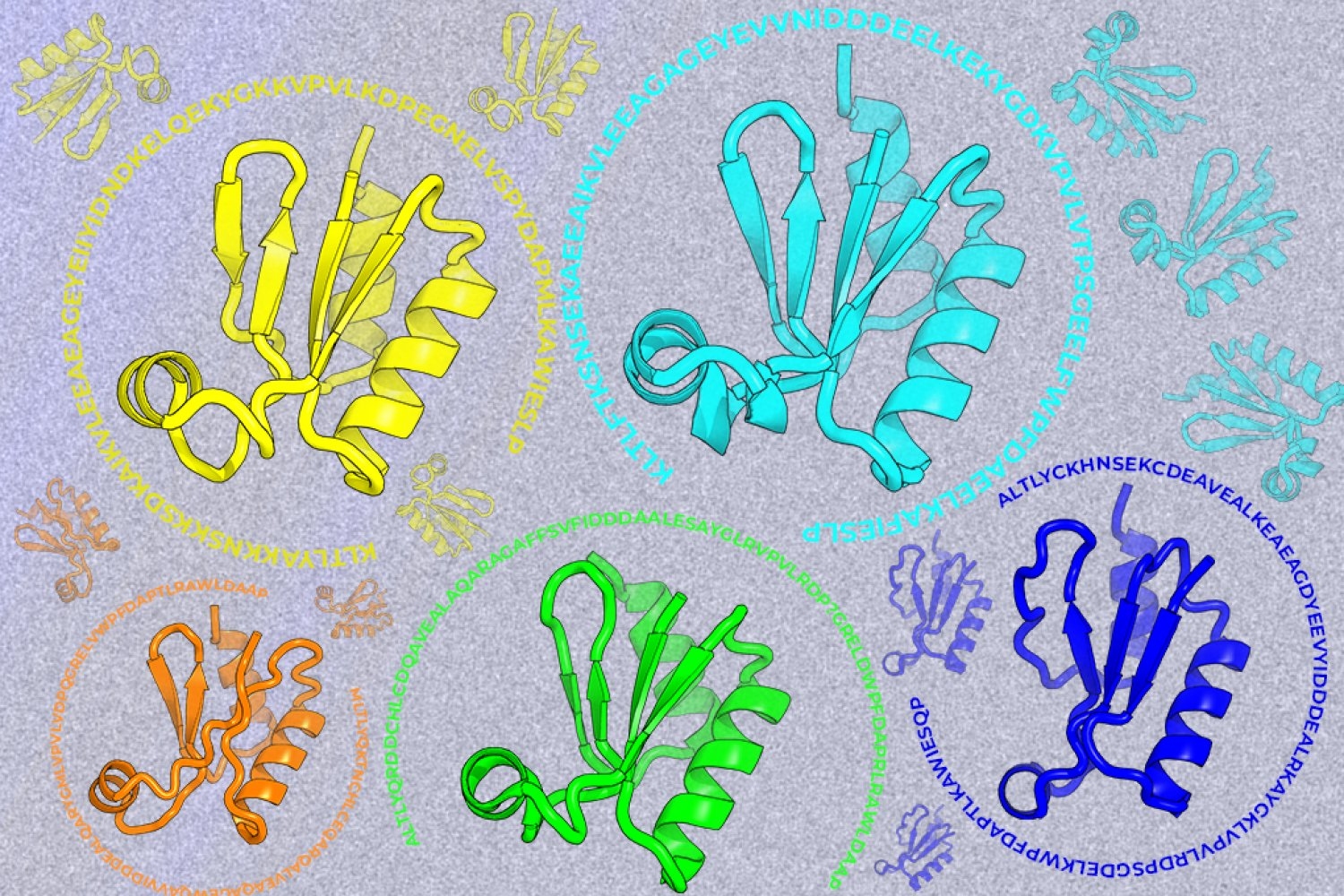
MIT Develops PottsMPNN for Protein Design
MIT researchers have introduced PottsMPNN, a machine-learning framework that enhances protein design by focusing on the sequence-energy landscape rather than mimicking native sequences. This approach allows for the creation of novel proteins with structures that don't resemble any found in nature, potentially revolutionizing biological engineering. By incorporating physical principles and evolutionary information, PottsMPNN improves the prediction of protein stability and the effects of mutations. This advancement could lead to significant breakthroughs in designing proteins for diverse applications, marking a shift in how AI is used in biological research.
MIT News AI