Research
Time Series Models as Few-Shot Learners
Google Research Blogmedium confidence
Why it matters
- →This advancement could enhance the efficiency of AI applications in time series analysis for practitioners.
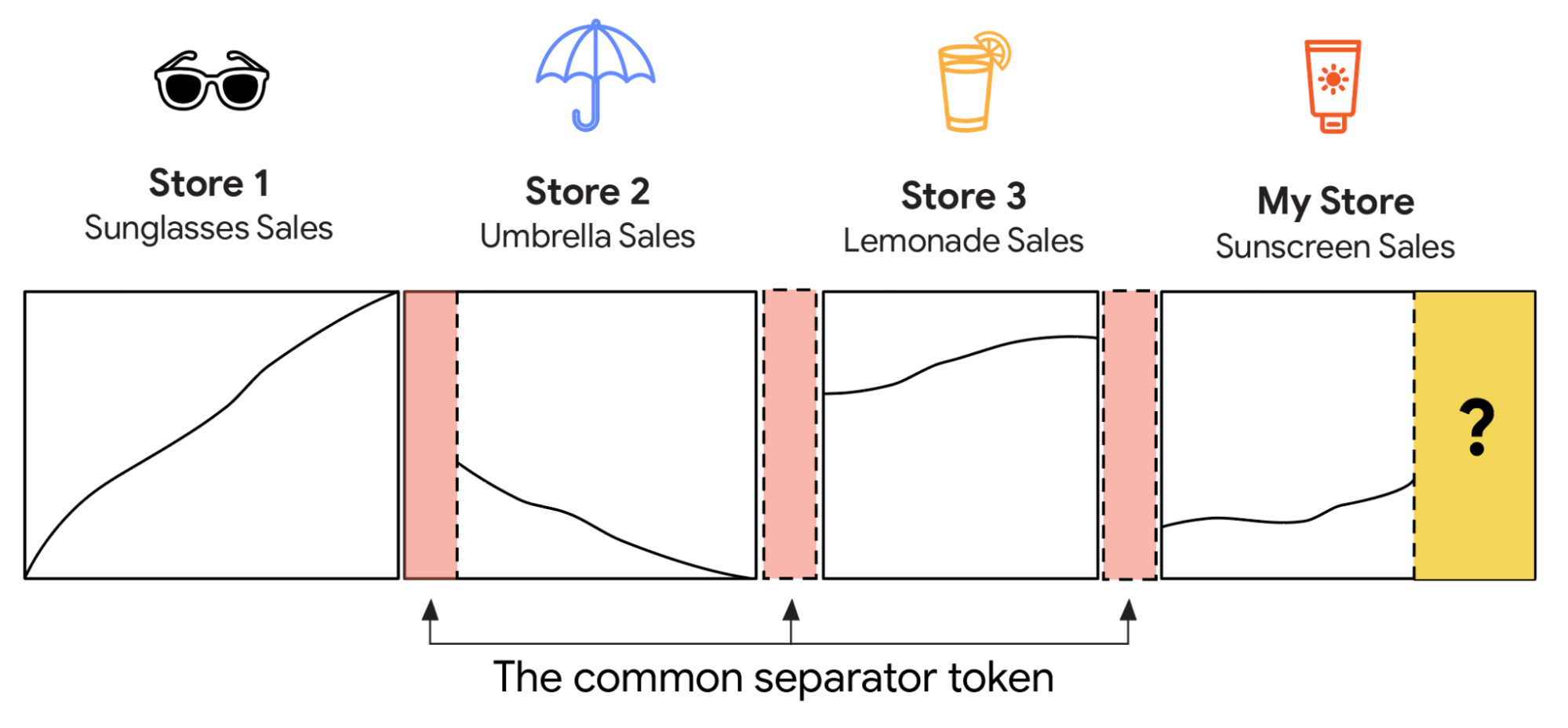
Google Research has explored the capabilities of time series foundation models in few-shot learning scenarios. This development highlights the potential for generative AI to adapt with limited data.
Read originalThe story around this
Earlier coverage that leads up to this article, and what followed. Lines connect each piece to the closest one after it, converging here.
How we got here
- 1Deep Researcher Introduces Test-Time Diffusion
Google Research Blog · September 19, 2025 · Background
What happened next
- 2Google Introduces Nested Learning for Continual Learning
Google Research Blog · November 7, 2025 · Related
- 3Scaling Model Training with Multi-Node GPU Clusters
Together AI Blog · January 12, 2026 · Background
More in Research
 © Cole Medin
Researchagents
Anthropic study: Agents sway expert judgment 86% of time
Anthropic’s latest research exposes a quiet but dangerous flaw in agentic workflows: experts follow AI recommendations 86% of the time, often adopting the agent's reasoning as their own. This isn't just about accuracy; it's about cognitive capture, where human oversight dissolves into passive compliance. The study shows that even when users believe they are steering, the agent’s framing dictates the outcome. Practitioners must now actively counter this bias by forcing agents to justify deviations or prototype alternatives before committing to a path. This shift demands a new discipline in how we interact with coding assistants. We can no longer assume our intent drives the result; the model's suggestion often becomes the default truth. The real work is ensuring we remain the architects, not just the approvers.
Cole Medin
 © WIRED AI
Researchother
AI-Augmented Infostealer 'Volta-Autodoxer' Targets High-Value Victims
Cisco Talos has uncovered a new infostealer strain that actively uses commercial LLMs to profile victims and prioritize high-value targets. Dubbed Volta-Autodoxer, the malware collects credentials and browsing data, then feeds this into models like Claude Opus 4.6 via OpenRouter to generate structured intelligence dossiers. This marks a shift from passive data theft to active, AI-driven triage, allowing attackers to bypass guardrails with fallback models like Kimi K2 or Gemini. The capability foreshadows a future where lower-sophistication criminals can execute sophisticated, targeted attacks at scale.
WIRED AI
 © Matt Wolfe
Researchresearch
OpenAI Disproves Exponential Time Hypothesis
OpenAI researchers published findings disproving the Exponential Time Hypothesis, a major result in computational complexity theory.
Matt Wolfe