Models & Labs
llama.cpp b10813 Release Enhances OpenCL Support
llama.cpp Releaseshigh confidence
Why it matters
- →Enhances performance for devices using Adreno GPUs with optimized memory paths.
- →Expands compatibility with various hardware configurations, including Vulkan and ROCm support.
- →Incremental improvements increase the versatility of llama.cpp for developers.
The b10813 release of llama.cpp brings notable improvements to OpenCL support, specifically adding the Adreno xmem SDPA path. This enhancement, developed with the assistance of OpenAI Codex, is designed to optimize performance on devices with Adreno GPUs. The update also includes various platform-specific enhancements, such as Vulkan and ROCm support on Ubuntu, and CUDA support on Windows. These changes aim to make llama.cpp more adaptable and efficient across different hardware setups.
Read originalMore from llama.cpp Releases
Models & Labsmodels
llama.cpp b10794 Release Expands Platform Support
The latest b10794 release of llama.cpp continues its trend of broadening platform compatibility, now supporting a wide array of systems including macOS, Linux, Windows, and openEuler. Notably, this update includes support for Vulkan and ROCm 10.0 on Ubuntu, as well as CUDA 13 on Windows, which enhances performance options for developers using these platforms. While the release doesn't introduce new model architectures, it solidifies llama.cpp's position as a versatile inference runtime across diverse hardware configurations. This update is a testament to llama.cpp's commitment to accessibility and performance optimization for developers working with AI models.
llama.cpp Releases
Models & Labsmodels
llama.cpp b10795 release enhances SYCL fusion
The b10795 release of llama.cpp brings notable improvements in SYCL fusion, specifically by combining operations like RMS_NORM+MUL+ADD and ADD+ADD. This enhancement, under GGML_SYCL_ENABLE_FUSION, boosts performance for supported data types, while unsupported combinations revert to standard methods. The update continues to support a wide array of platforms, including macOS with Apple Silicon, Ubuntu with Vulkan, and Windows with CUDA 12 and 13. This makes llama.cpp a robust choice for developers working across different hardware environments, ensuring efficient AI processing and broad compatibility.
llama.cpp Releases
Models & Labsmodels
llama.cpp b10796 Release Adds n_expert_used_max Function
The latest release of llama.cpp, b10796, introduces the n_expert_used_max function, enhancing the model's ability to handle expert layers. This update addresses previous issues where models with expert layers failed to load due to missing checks. By implementing this function, the software can now better manage the number of experts per layer, ensuring smoother model loading and operation. This release doesn't introduce new models but focuses on refining the existing infrastructure to support more complex configurations.
llama.cpp Releases
More in Models & Labs
 © The AI Advantage
Models & Labsmodels
GPT-6 Astra: Exploring New AI Capabilities
GPT-6 Astra is making a significant impact with its diverse capabilities, as evidenced by a range of real-world applications. The model has been employed to construct a 3D city simulator in just five days and transform Van Gogh paintings into a walkable town, demonstrating its adaptability. It has also been used to automate intricate tasks such as auditing financial models and reconciling budgets, indicating its potential in both creative and practical fields. This release represents a notable advancement in AI's ability to tackle complex tasks, expanding the possibilities of what AI can achieve in real-world scenarios.
The AI Advantage
 © GitHub Changelog
Models & Labscoding
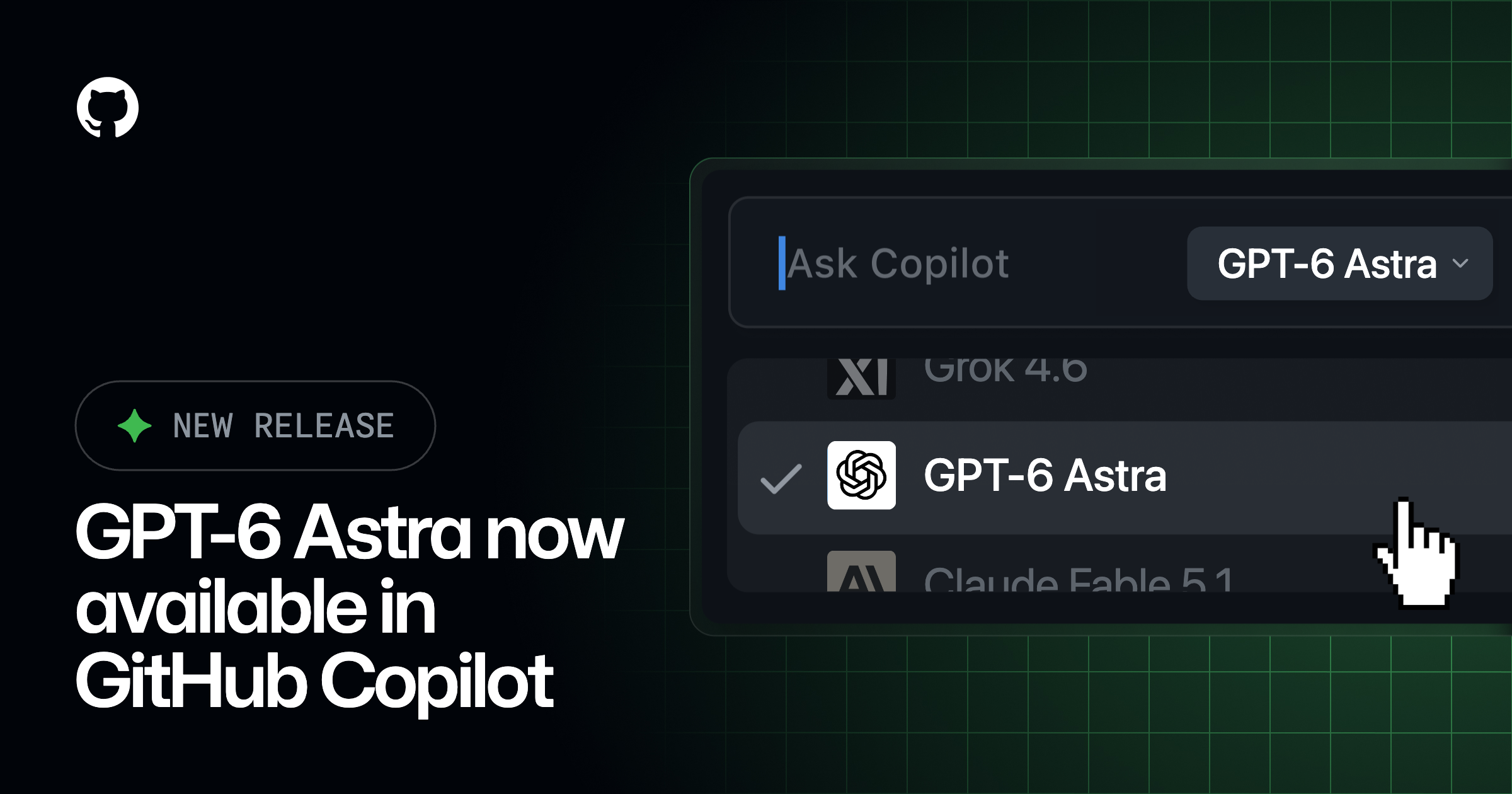
GPT-6 Astra now in GitHub Copilot
OpenAI's GPT-6 Astra is now part of GitHub Copilot, bringing advanced capabilities for complex coding tasks. This model excels in planning and validating its processes, which translates to more efficient coding with fewer steps. Users of Copilot Pro+, Max, Business, and Enterprise can now access GPT-6 Astra through tools like Visual Studio Code and JetBrains IDEs. This integration signifies a major leap in AI-driven coding assistance, enabling developers to tackle more sophisticated tasks with greater ease. The rollout is gradual, ensuring a smooth transition for users adopting this new model.
GitHub Changelog
 © The Verge AI
Models & Labscoding
Microsoft Unveils Project Zenith for Developers
Microsoft's Project Zenith aims to create a distraction-free Windows experience tailored for developers. By integrating AMD's Ryzen AI Halo chips, these devices allow developers to run large AI models locally, reducing reliance on cloud resources. Preconfigured with essential tools like Visual Studio Code and GitHub Copilot, Project Zenith devices streamline the development process. This initiative reflects Microsoft's commitment to evolving Windows in response to developer needs, enhancing productivity by minimizing system distractions.
The Verge AI