16 × AIAI signal, amplified
AI newsAboutSources
TelegramFollow on Telegram
AI newsAboutSources
16 × AIAI signal, amplified

An AI news engine that ingests trusted sources, scores with Claude, and posts only what clears the bar.

Follow on Telegram →

Subscribe

  • Telegram
  • RSS
  • All channels

Legal

  • Privacy
  • Imprint
© 2026 16 × AI. All rights reserved.Curated by Claude. Posts every 6 hours. No newsletter, no funnel.
Home/Models & Labs
Models & Labs

VQ-Diffusion Simplifies Image Generation

Hugging Face Blog·November 30, 2022·high confidence

Why it matters

  • →VQ-Diffusion offers a new approach to image generation by using discrete diffusion processes.
  • →It improves computational efficiency compared to traditional autoregressive models.
  • →The method is accessible through Hugging Face's Diffusers library, enabling easy experimentation.
VQ-Diffusion Simplifies Image Generation
©Hugging Face Blog

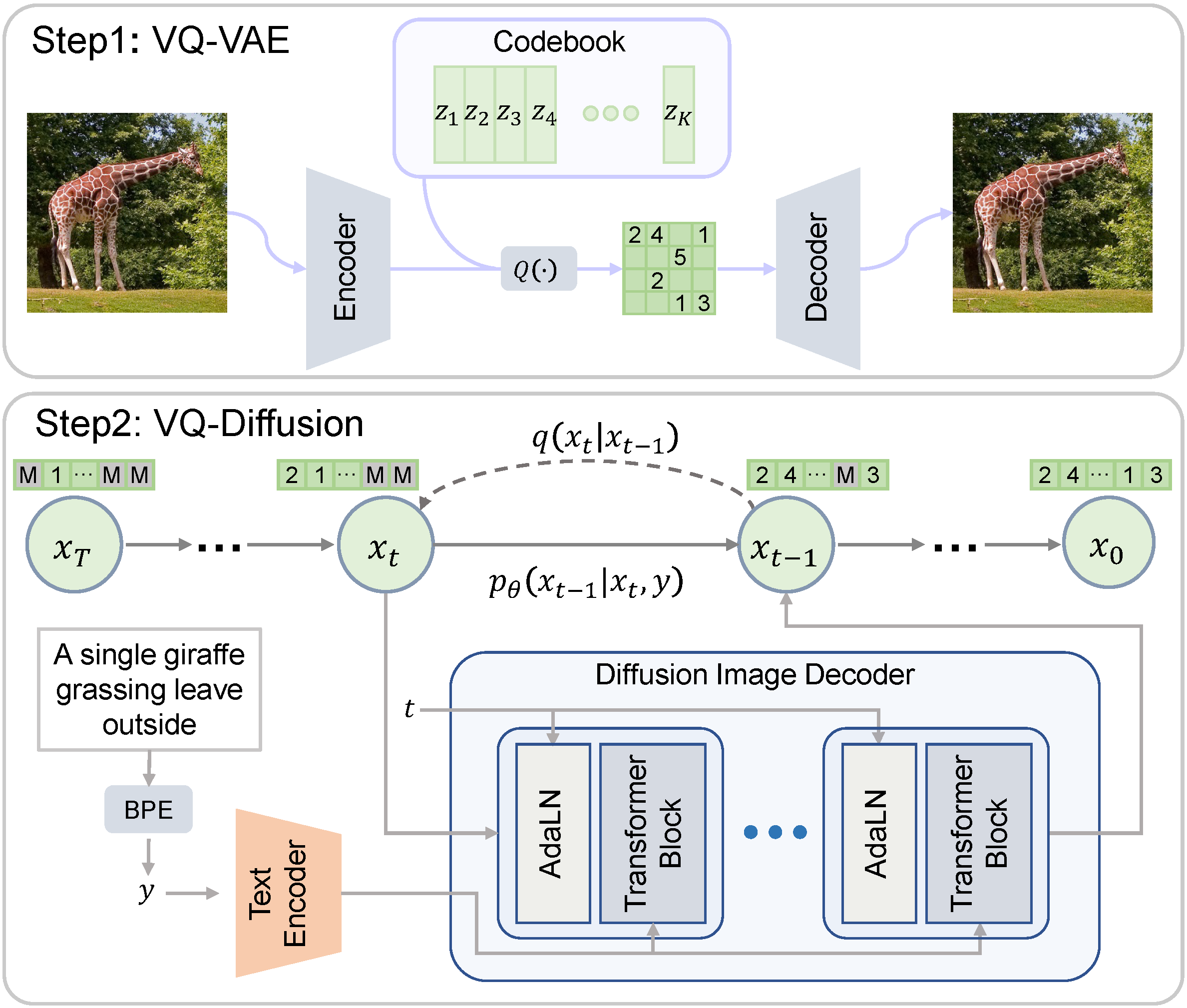
Hugging Face's Diffusers library now supports VQ-Diffusion, a novel approach to image generation using discrete diffusion processes. This method encodes images into discrete tokens via a VQ-VAE encoder, reducing dimensionality and improving computational efficiency. VQ-Diffusion addresses common issues in autoregressive models, such as inference speed and error accumulation. Developers can easily implement this model with a few lines of code, making it an accessible tool for exploring advanced image synthesis techniques.

Read original

More from Hugging Face Blog

Hugging Face Launches olmo-eval for LLM Development© Hugging Face Blog
Models & Labsmodels

Hugging Face Launches olmo-eval for LLM Development

Hugging Face has introduced olmo-eval, a new evaluation workbench designed to streamline the iterative process of developing large language models (LLMs). Building on the Open Language Model Evaluation Standard (OLMES), olmo-eval offers enhanced flexibility and modularity, allowing developers to easily configure and run benchmarks across model checkpoints. Unlike traditional evaluation tools, olmo-eval supports agentic and multi-turn evaluations, providing a more nuanced analysis of model improvements. This tool is particularly useful for developers who need to quickly assess the impact of changes in data, architecture, or hyperparameters during the model development cycle.

Hugging Face Blog·Jun 12, 2026
Profiling PyTorch: From nn.Linear to Fused MLP© Hugging Face Blog
Researchresearch

Profiling PyTorch: From nn.Linear to Fused MLP

Hugging Face's blog post dives into the profiling of PyTorch operations, focusing on the shift from basic matrix operations to using nn.Linear and constructing a Multilayer Perceptron (MLP). The article reveals how nn.Linear manages operations by integrating bias addition into the matrix multiplication kernel, effectively reducing overhead. It also examines the limited impact of torch.compile on single operations, pointing out its potential in more complex scenarios. These insights are crucial for developers aiming to optimize deep learning models on GPUs, as they provide a deeper understanding of how to maximize performance and efficiency.

Hugging Face Blog·Jun 11, 2026

More in Models & Labs

Models & Labsmodels

vLLM v0.23.0 Release Enhances Model Support

The vLLM v0.23.0 release marks a significant step forward with enhancements across various components. DeepSeek-V4 has been optimized further, decoupling its metadata from previous versions and adding new attention kernels. Model Runner V2 now supports more dense models by default, improving performance for Llama and Mistral. The Rust frontend has matured with new endpoints and tool parsers, while compatibility with Transformers v5 ensures broader model support. These updates collectively enhance the robustness and versatility of vLLM, making it a more powerful tool for developers working with large language models.

vLLM Releases·Jun 14, 2026
Models & Labsmodels

Llama.cpp b9626 Release Adds Cohere2-MoE Support

The latest b9626 release of llama.cpp introduces architectural support for the cohere2-MoE model, marking a significant update for developers working with this model. This release also includes various technical improvements such as the removal of redundant checks and enhancements in tensor handling, which streamline the model's performance. By adding cohere2moe to the Llama Model Saver supported list, the update broadens the toolkit available for AI practitioners. While these changes may seem incremental, they collectively enhance the robustness and flexibility of llama.cpp, making it a more versatile tool for AI development.

llama.cpp Releases·Jun 14, 2026
Models & Labsmodels

llama.cpp b9627 Release Expands Platform Support

The b9627 release of llama.cpp continues to enhance its platform reach, though it doesn't introduce any groundbreaking features. This update includes support for a wide array of systems, from macOS and iOS to various Linux distributions and Windows configurations, including CUDA and Vulkan support. Notably, the release maintains its focus on making llama.cpp a versatile tool across different hardware setups, but it doesn't introduce new model architectures or quantization methods. This iteration is more about solidifying its presence across multiple operating systems rather than introducing novel capabilities.

llama.cpp Releases·Jun 14, 2026